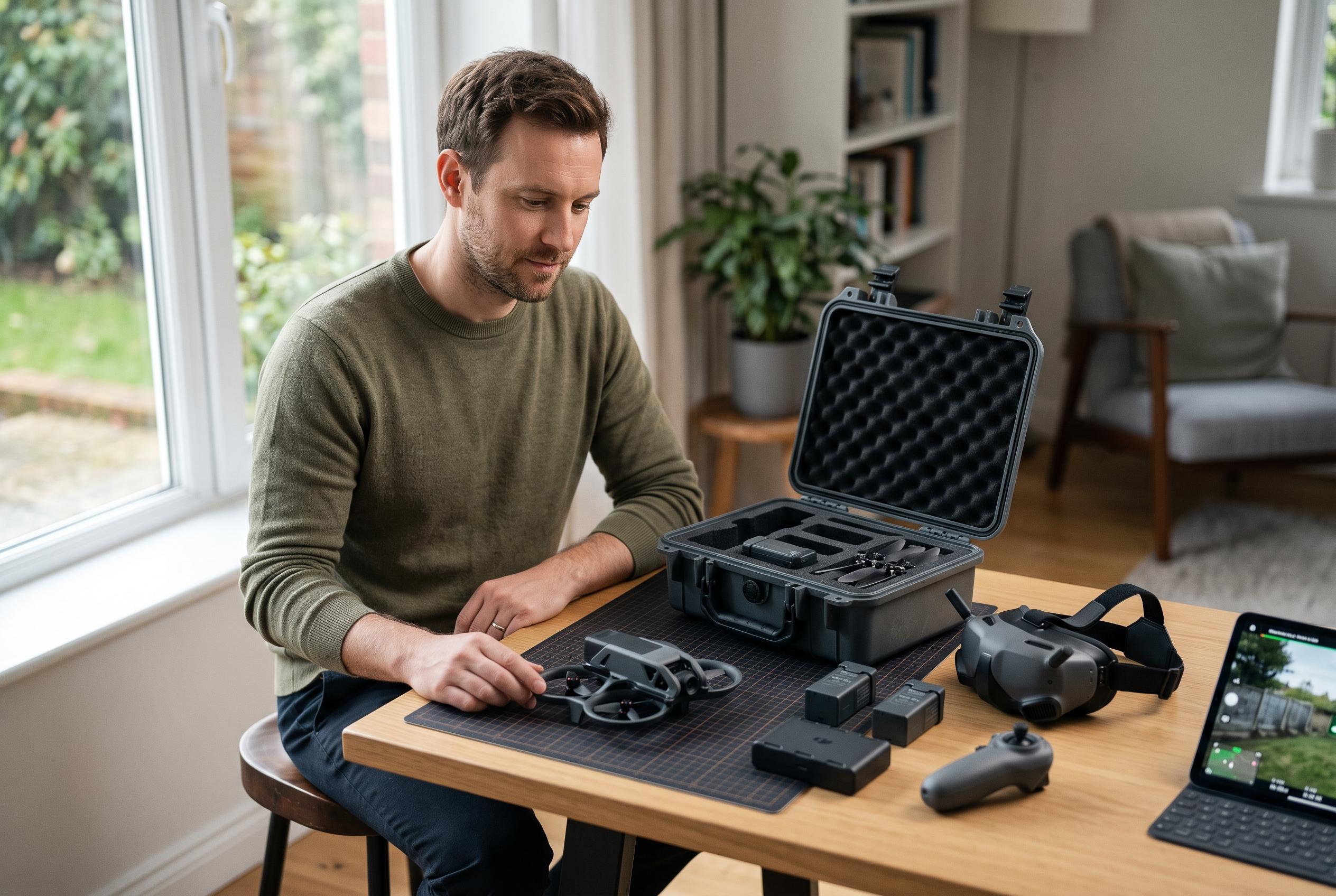

The DJI Avata 2 Fly More Combo emerges as the most practical and approachable option for newcomers seeking high-quality cinematic footage, blending advanced features with beginner-friendly design and an all-in-one package.
The DJI Avata 2 Fly More Combo stands out as the strongest beginner FPV drone for video because it combines serious imaging hardware with a learning curve that is far less punishing than traditional manual FPV systems. According to DJI’s specifications, it uses a 1/1.3-inch sensor, records up to 4K at 60fps, and offers a 155-degree field of view, which gives footage the wide, immersive look filmmakers expect from FPV without demanding advanced stick work from the outset.
What makes the Fly More Combo especially compelling is the completeness of the package. DJI says it includes the drone, DJI Goggles 3, the RC Motion 3 controller, three batteries, a charging hub and a carrying bag, so new pilots can begin flying without having to build a kit from separate parts. That matters for beginners, because the quickest route to usable footage is usually the one with the fewest compatibility problems.
The Avata 2’s appeal is not only in the image quality, but also in the way it is designed to be flown. DJI describes the drone as having RockSteady 3.0+ and HorizonSteady electronic stabilisation, a single-axis mechanical gimbal, and downward and backward visual positioning systems. In practice, that combination is aimed at making fast, close-in camera moves look smoother and feel more manageable, particularly for pilots moving up from standard camera drones.
Its propeller guards and Turtle Mode also reduce the cost of early mistakes. DJI says the guards are built in, while Turtle Mode can right the drone after a crash, which is useful when a novice pilot is learning in confined spaces or around obstacles. Those are not substitutes for skill, but they do lower the penalty for a bad landing or an overconfident turn.
For filmmakers, the Avata 2 sits in a useful middle ground. It is more approachable than a fully manual freestyle build, yet far more expressive than a conventional stabilised camera drone when the brief calls for fly-throughs, chase shots or low-altitude movement through tight areas. DJI also positions it with multiple flight modes, including Normal, Sport and Manual, which gives users a path to progress as their confidence improves.
That balance explains why the Avata 2 is the safest recommendation for most first-time FPV buyers who want genuine video performance rather than a toy-like introduction to flight. It is still not the right choice for everyone: pilots who want pure manual freestyle will outgrow the motion-controller approach, and those seeking the lightest possible travel setup will need a smaller platform. But for beginners who want cinematic FPV footage quickly and with fewer moving parts, the Avata 2 remains the most practical starting point.
Disclaimer: This content is intended for informational purposes only. Readers are advised to exercise their own judgement, conduct due diligence, or consult a qualified expert before acting on any information provided.