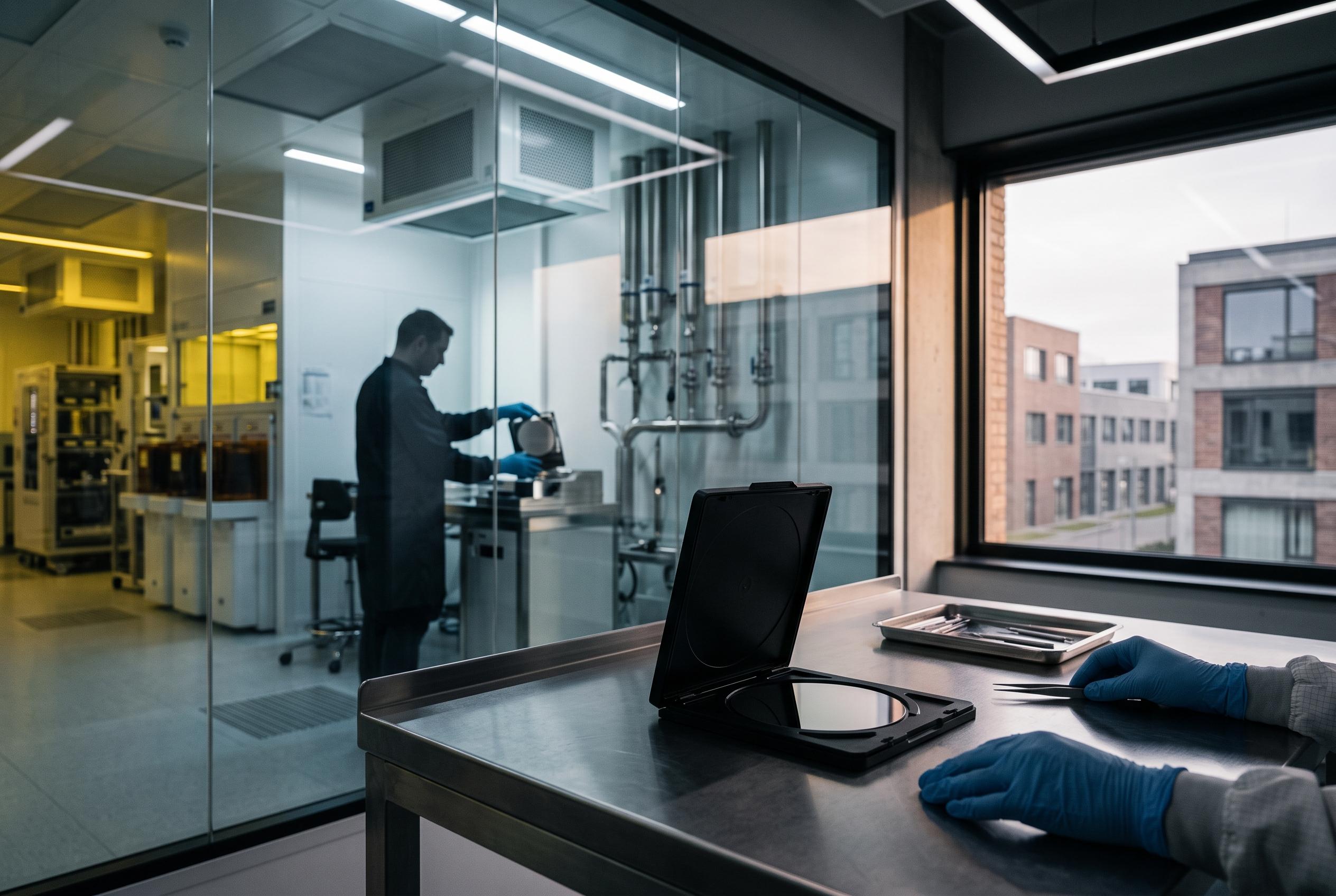

ASML’s omission of European sales in 2026 highlights the continent’s declining role in advanced chip manufacturing, prompting calls for greater demand stimulation within the EU.
ASML’s warning that it sold no lithography equipment into Europe in the first half of 2026 has sharpened the debate over the continent’s semiconductor strategy, even as the Dutch group remains one of Europe’s most valuable companies. Speaking on Dutch television, Frank Heemskerk, the company’s executive vice-president for public affairs, said the region was not investing enough and that no new chip factories were being built there. He argued that Brussels should do more than subsidise production capacity and should instead help build demand for European-made chips.
The company’s own reporting underlines the scale of the shift. ASML’s presentations for investors show Europe accounted for 5% of revenue in 2024 and 1% in 2025, before falling to 0% in the first two quarters of 2026, according to its earnings statements. That decline does not mean ASML has lost interest in the region. Rather, it reflects where the most advanced wafer-fabrication spending is happening: in Taiwan, South Korea, the United States and Japan, where new semiconductor plants are being financed on a far larger scale.
Even so, Europe is not standing still. Intel has said it will invest €5 billion in its Fab 34 site near Leixlip in Ireland to expand production on Intel 4 and Intel 3 process technologies. In Germany, the European Semiconductor Manufacturing Company, backed by TSMC, Bosch, Infineon and NXP, is building a new €15 billion plant near Dresden for mature process nodes used in automotive and other applications. Infineon opened its €5 billion Smart Power Fab in Dresden in July 2026, which it described as the biggest investment in its history, while GlobalFoundries began work in March on a major expansion of its own Dresden site. These projects show that capacity is still being added, but much of it is aimed at established technologies rather than the most advanced logic manufacturing.
That distinction matters for ASML. Its most profitable systems are the EUV and, eventually, High-NA EUV scanners used in leading-edge chip production. The European projects now under way are largely focused on mature nodes and other specialty processes that require less sophisticated equipment. Reuters reporting on ASML’s second-quarter results shows the company still expects strong global demand, driven by artificial intelligence investment and customers’ own capacity plans, with 2026 net sales forecast at €43 billion to €45 billion. The immediate problem, therefore, is not a lack of business for ASML overall, but the absence of European demand for its most advanced tools within the bloc itself.
Disclaimer: This content is intended for informational purposes only. Readers are advised to exercise their own judgement, conduct due diligence, or consult a qualified expert before acting on any information provided.