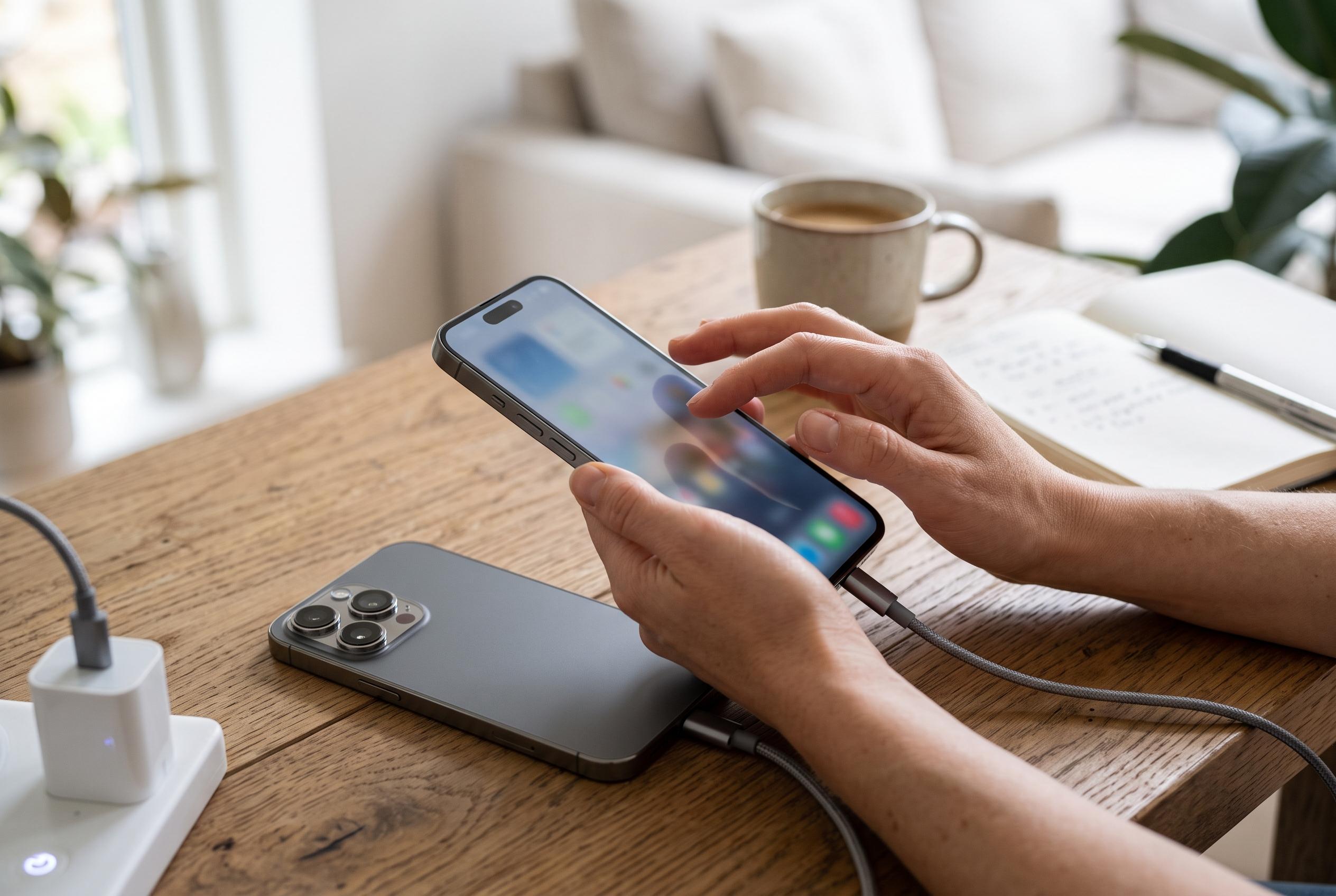

The iPhone 18 Pro Max brings subtle design tweaks, a new camera with variable aperture, faster processing, and improved battery life, making it a compelling upgrade for most users.
Apple’s iPhone 18 Pro Max arrives as the sort of update that looks modest on paper but is more substantial once tested in detail. Reviewers at GSMArena say the handset pairs a larger battery, faster wired charging and a new A20 Pro processor with a display refinement that makes the front of the phone feel more open. The result is a premium device that is stronger on endurance and speed than on outright novelty.
One of the most visible changes is the smaller Dynamic Island. According to teardown reporting cited by iFixit, Apple has repositioned Face ID hardware to reduce the cut-out area, and the effect is not only cosmetic: the status bar can now carry more live information at once. GSMArena’s testing also found the 6.9-inch LTPO OLED panel to be capable of strong brightness levels, with particularly useful low-end dimming for night use.
The camera system is the more interesting technical shift. Tom’s Guide reported that the main 48-megapixel lens now uses a physical variable-aperture mechanism, allowing the phone to switch between four fixed settings. That gives users more direct control over exposure and, in some situations, more natural-looking blur and better low-light performance. It is, however, a change limited to the main camera rather than the telephoto module, and reviewers note that it is more useful for creative control and video work than for radically changing portrait behaviour.
Performance gains are also significant. MacRumors described the A20 Pro as Apple’s first 2nm smartphone chip, and GSMArena’s benchmark results point to a sizeable leap over the previous generation, both in general processing and in memory-intensive workloads. The company has also enlarged the vapour chamber to help with heat management. In everyday use, that should translate into a faster and more consistent flagship experience, even if the improvements are less dramatic than the marketing might suggest.
Battery life is another area where the phone appears to justify its size. Tom’s Guide said an iFixit teardown identified a 5,567mAh battery in the iPhone 18 Pro Max, while a European variant uses a 5,391mAh pack. GSMArena’s own testing still showed strong endurance, with active use stretching to well over 19 hours, and charging to 50% in 15 minutes when paired with a suitable high-wattage adapter. Apple has also raised repair and purchase costs, with Tom’s Guide noting a $100 increase at the base tier and a higher battery repair fee.
The main caveat lies in storage. Tom’s Hardware reported that higher-capacity versions, especially the 1TB model, use QLC NAND rather than TLC, which can lead to steep drops in sustained write performance once the cache is exhausted. That matters most for users who record large amounts of 4K or ProRes video, transfer big files or rely on heavy local storage workflows. For most buyers, the safer choices appear to be the 256GB or 512GB versions.
Taken together, the iPhone 18 Pro Max is best understood as an evolutionary flagship with one genuinely notable camera innovation, materially better battery life and very strong performance. GSMArena’s verdict is that owners of the iPhone 17 Pro Max have little reason to rush, but users on an iPhone 15 Pro Max or older should see clear gains in speed, endurance and imaging. For those buyers, the new model looks like a more persuasive step forward than Apple’s year-on-year pitch might imply.
Disclaimer: This content is intended for informational purposes only. Readers are advised to exercise their own judgement, conduct due diligence, or consult a qualified expert before acting on any information provided.