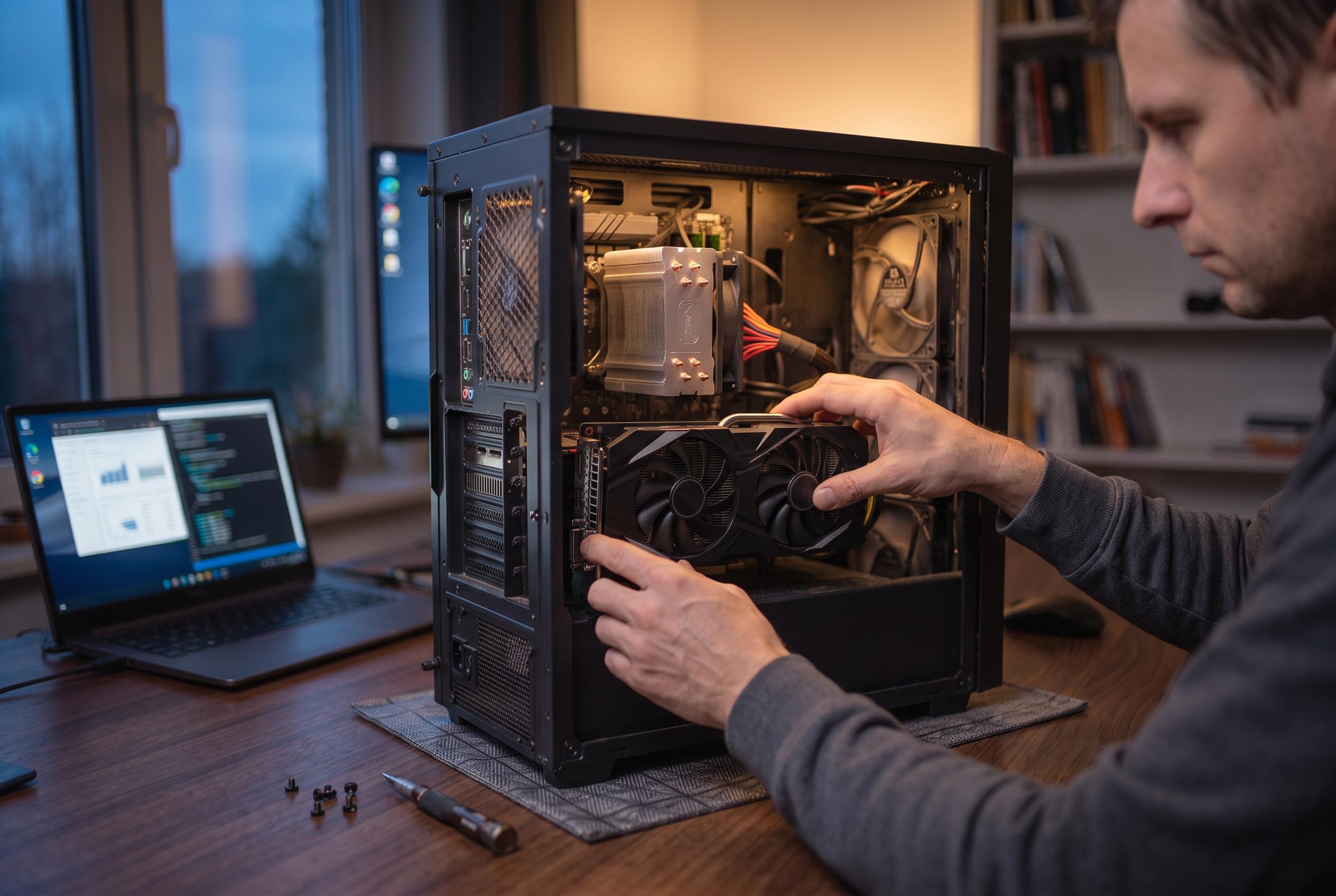

With new GPU releases stalled and prices soaring, consumers are increasingly turning to older graphics cards such as the Nvidia RTX 3050 and Intel Arc A380 as viable, budget-friendly alternatives amid ongoing shortages and market imbalance in 2026.
Logical Increments has rewritten its GPU guidance again as the 2026 graphics-card market
continues to move in the wrong direction for buyers. The site says the latest changes reflect
a mix of soaring prices, constrained supply and the growing risk that today’s sensible mid-range
options could disappear from shelves before anything cheaper arrives. That judgement sits
against a broader market picture in which recent reporting has pointed to shortages in video
memory, reduced production of existing GeForce models and little sign of fresh relief from new
launches. TechRadar reported in February that Nvidia might not introduce any new gaming GPUs
in 2026, while also suggesting output cuts for current RTX 5000 cards.
The practical effect, according to the new recommendations, is a retreat from the latest
generations and a renewed focus on whatever remains available at reasonable cost. Logical
Increments says it is again looking at AMD’s RX 7000 family and Nvidia’s RTX 4000 series as
fallbacks, not because they are suddenly ideal, but because the newest cards have become too
expensive to justify in many builds. That is consistent with Tom’s Hardware’s reporting in
August, which linked stubbornly high GPU pricing to weak discounting and rising VRAM costs.
The most telling change is the return of older cards to the recommendation lists. Logical
Increments says the Intel Arc A380 remains a viable budget choice after driver improvements and
persistently poor competition at the low end, while the Nvidia RTX 3050 has also re-entered the
discussion as an alternative for modest systems. The site describes both cards as compromises
born of scarcity rather than enthusiasm, but the conclusion is clear: when newer parts cannot be
bought at sane prices, older hardware can become the most rational option. That theme also
matches PC Build Helper’s guidance, which says an upgrade only makes sense when a user is
actually hitting limits such as frame-rate shortfalls, VRAM exhaustion or a need for higher
resolution.
At the higher end, the revised chart is equally stark. Logical Increments has moved the RTX 5060
into the “Very Good” tier, placed the 5060 Ti in both 8GB and 16GB forms into stronger but more
cautious positions, and restored the RTX 4080 and RTX 4090 to the conversation because the
overall market has become so distorted. In the site’s view, the problem is not that these cards
are suddenly better value, but that the alternatives have become even less defensible. That
reading aligns with broader industry commentary suggesting that no near-term new GPU wave is
likely to reset prices quickly, with some outlets saying the next major Nvidia cycle may slip well
beyond the current generation’s normal lifespan.
The larger message is that GPU buying in 2026 has become an exercise in compromise rather than
upgrading on instinct. PC4Games, in an updated guide on gaming-PC upgrades, still advises users
to replace the graphics card before most other components when performance demands justify it,
but that advice assumes a market with workable choice. Right now, Logical Increments is
effectively warning that the right purchase may be whichever card can still be found at a price
that does not punish the buyer for waiting too long. For many readers, the best strategy may be
less about chasing the newest badge and more about buying only when the system truly needs it.
Disclaimer: This content is intended for informational purposes only. Readers are advised to exercise their own judgement, conduct due diligence, or consult a qualified expert before acting on any information provided.