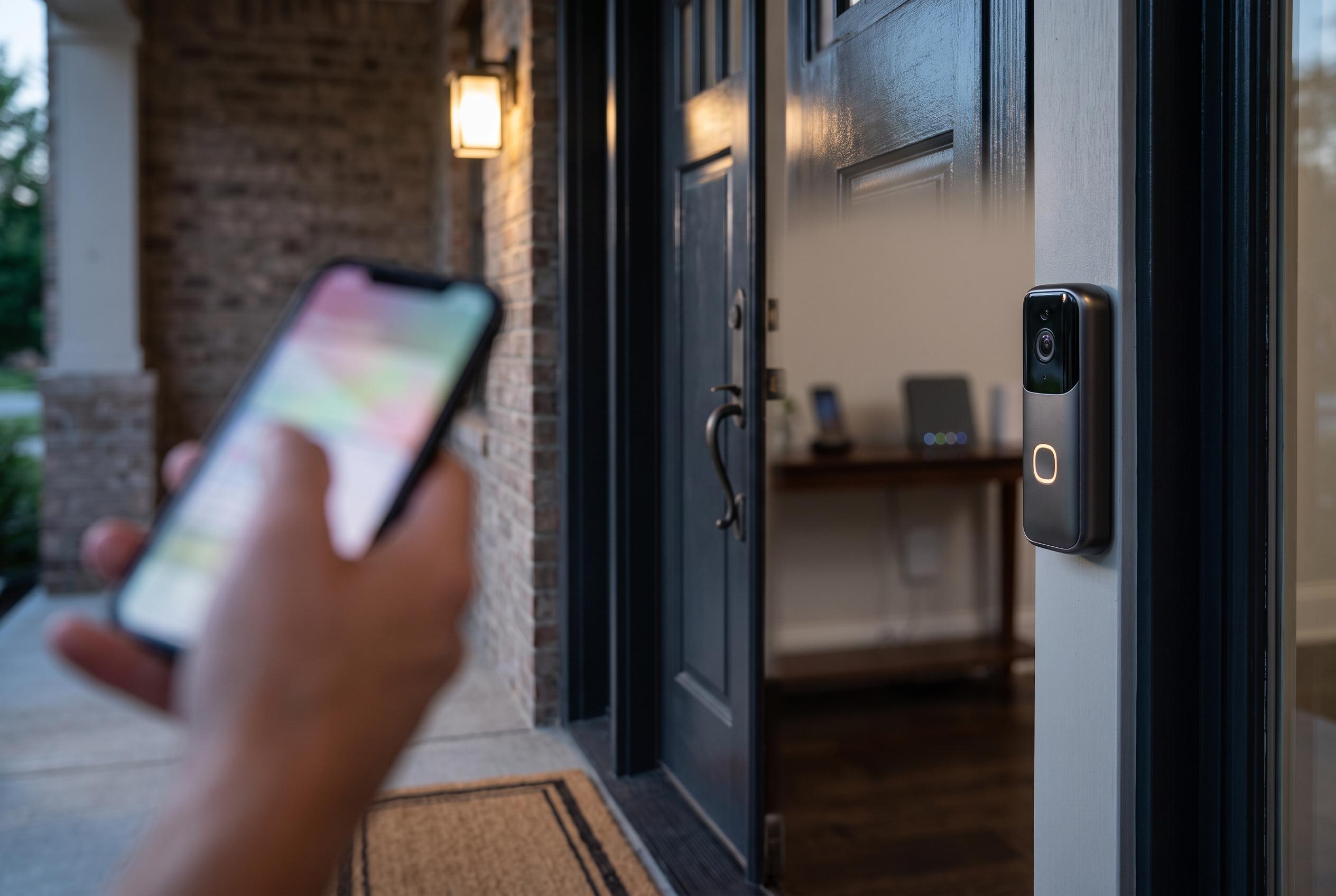

As video doorbells become a staple in home security, consumers must navigate evolving features, compatibility issues, and security concerns amid a crowded marketplace dominated by major brands like Arlo, Ring, and Google.
Video doorbells have moved from novelty to a practical part of home security. For flats and houses alike, they let residents see and speak to visitors from a phone, tablet or computer, whether they are in bed, at work or away from home. The main decision is no longer whether to buy one, but which ecosystem it should join: Google, Amazon or Arlo. In practice, the best choice is usually the one that fits the platform already used for cameras, speakers and smart locks, because mixing systems often means extra apps and, in some cases, another subscription.
Arlo’s Essential Video Doorbell Wire-Free is one of the clearest examples of a doorbell built for flexibility. Arlo says installation is split into two stages: first pairing the device in the Arlo Secure app, then mounting it to the wall with a charger-ready battery already topped up. The company also states that the unit runs on battery power, can be linked to an existing chime for trickle charging, and does not require a wired doorbell to be present. That makes it easier to fit in homes where cabling is inconvenient or absent. Arlo also highlights a direct Wi-Fi connection without a hub, a built-in siren and a weather-resistant body, while reviews from TechRadar have praised its video quality and the full-length view of visitors at the door. The downside is that full functionality depends on Arlo Secure, with current pricing in the source material listed at €7.99 a month for one camera and €19.99 for the multi-camera tier, plus an optional indoor chime.
Ring remains the most feature-rich option for many buyers, particularly those already using Alexa. The Ring Video Doorbell 4 keeps the familiar design and adds Wi-Fi ac support, while retaining battery power and straightforward guided setup through the app. Its camera offers a 180-degree field of view, and Ring’s detection can distinguish people, parcels, vehicles and recognised faces. The company has also expanded its software package: according to the information provided, Ring Home now replaces the older Protect plans, with Home Basic at €3.99 a month for one device, Home Standard at €9.99 for the whole home and Home Premium at €19.99 for continuous recording on compatible devices. More recently, TechRadar reported that Ring has launched a battery-powered 4K model with improved night vision and a solar charging option, underlining the company’s push towards easier installation and higher-resolution video.
Google’s Nest Doorbell takes a more restrained approach. Google has been phasing out the Nest-branded range, and the doorbell is now described as more of an option for bargain hunters than a first-choice purchase. The software side has also changed: the dedicated Nest app has given way to Google Home, with web access no longer available in the same way as before. That may matter to users who prefer checking notifications on a desktop. The device still offers facial recognition and motion alerts, but the video format is more vertical and the overall image quality is lower than before, although still usable. The source material also notes that Google Home Premium replaced Nest Aware on 1 October 2025, with the Standard plan offering 30 days of event history. Battery life remains modest, with roughly a month on a charge at best, so buyers should not expect the longest runtime in the category.
One brand is notably absent from the recommendations. Frandroid says it no longer suggests Eufy products in its smart-home buying guides after security researcher Paul Moore identified a flaw that could allow remote access to data and recordings. That is a serious warning in a category built around trust. It is a reminder that the appeal of cloud-based convenience must always be balanced against how footage is stored, who can reach it and whether the manufacturer has a strong record on data protection. For many buyers, that issue will matter as much as resolution or motion detection.
The practical buying advice remains the same. A video doorbell must suit the existing electrical setup, because many models are designed to replace a wired chime and need a suitable voltage supply. If wiring is not available, battery models avoid much of the installation hassle. Buyers should also think carefully about Wi-Fi range, because old walls can weaken the signal and poor connectivity quickly reduces image quality. Full HD is the minimum worth considering, while newer devices now go beyond that. A good camera should also handle low light properly, capture parcels on the ground and offer two-way audio that is clear enough for both speech and background noise outside the home. In many cases, the strongest choice is not the most technically ambitious product, but the one that integrates cleanly with the rest of the household without creating extra friction.
Disclaimer: This content is intended for informational purposes only. Readers are advised to exercise their own judgement, conduct due diligence, or consult a qualified expert before acting on any information provided.