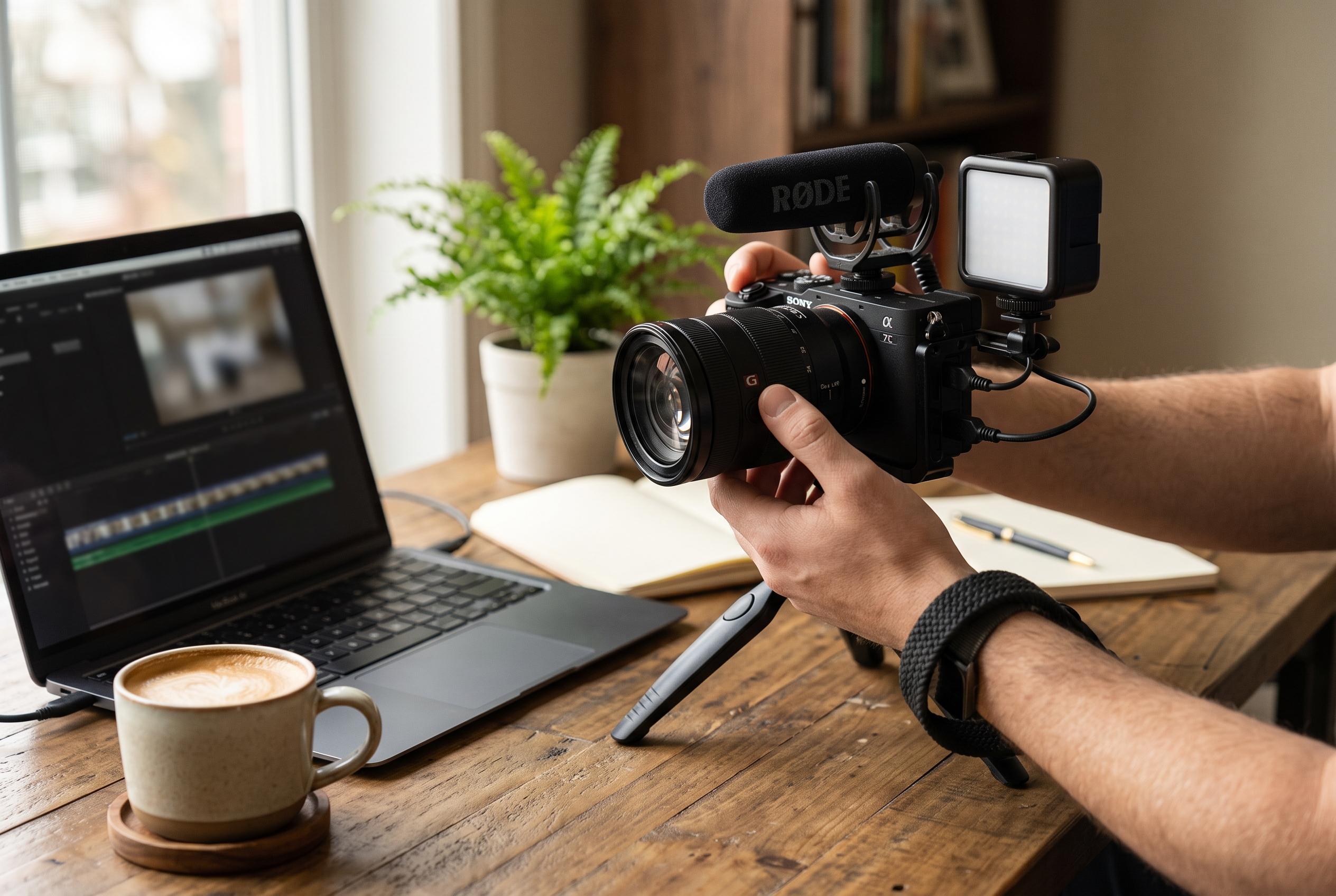

Fujifilm unveils a new range of compact mirrorless cameras, balancing portability and advanced features to cater to diverse shooting styles, from casual daily photography to professional video production.
Fujifilm’s current crop of compact mirrorless cameras is best understood as a set of trade-offs rather than a single ladder of upgrades. The X-T50 stands out as the most broadly useful choice because it combines a high-resolution 40.2-megapixel sensor with an interchangeable-lens body that is still light enough for daily carry, while the X-S20 is aimed more squarely at creators who need stronger video tools and a more substantial grip. For photographers who prefer a fixed-lens camera, the X100VI remains the simplest all-in-one option, but that simplicity comes at the expense of lens flexibility.
The X-T50 is the most convincing starting point for many buyers because Fujifilm designed it as a portable body with classic controls and room to grow. The company says the camera weighs 438g and keeps the rounded styling associated with the X-T series, while the adjacent XF16-50mm lens announcement underlines how the system is meant to serve active users who want a practical zoom from day one. That makes the X-T50 kit especially appealing for people who want an everyday camera without locking themselves into a single focal length.
For hybrid shooters, the X-S20 has a clearer identity. According to Fujifilm’s product information, it offers 6.2K/30p internal recording in 4:2:2 10-bit colour, RAW video output over HDMI, microphone and headphone jacks, and compatibility with the FAN-001 cooling fan for longer recording sessions. Fujifilm also highlights a large grip, a vari-angle touchscreen and a high-capacity battery, while the UK product page says the five-axis in-body stabilisation system delivers up to 7.0 stops of compensation. Those details make it better suited than the smaller bodies for handheld video work and longer shooting days.
The X100VI, by contrast, is built around a fixed 23mm f/2 lens and a self-contained shooting style. That design suits photographers who want a compact daily camera and prefer to think less about lens choices and more about framing. The trade-off is obvious: you gain portability and consistency, but you lose the ability to adapt the camera to different subjects by swapping glass. For many buyers, that is a deliberate virtue; for others, it is a hard limit.
The stronger practical lesson from the wider lineup is that the exact listing matters as much as the model name. Several retail entries refer to the same camera in different colours or bundle configurations, and the useful question is not whether a package looks fuller, but whether the included lens and accessories fit the way you work. A kit zoom can be the right first purchase because it makes the camera usable immediately, yet a body-only listing may be more sensible for someone who already owns compatible lenses. Likewise, the more advanced X-T5 bundle is a better fit when a buyer already knows they want a larger interchangeable-lens system rather than a simpler travel camera.
That is why the best choice depends less on brand loyalty than on shooting style. The X-T50 kit is the most balanced option for most people, the X-S20 is the more capable hybrid tool, and the X100VI remains the neatest fixed-lens alternative for everyday carry. The X-M5 is better judged as a compact body-first option, while the X-T5 bundle makes sense for buyers who are ready to commit to a fuller lens system. In a market where bundles can obscure the real differences, the safest approach is to compare the body, the lens and the contents of the package before deciding.
Disclaimer: This content is intended for informational purposes only. Readers are advised to exercise their own judgement, conduct due diligence, or consult a qualified expert before acting on any information provided.