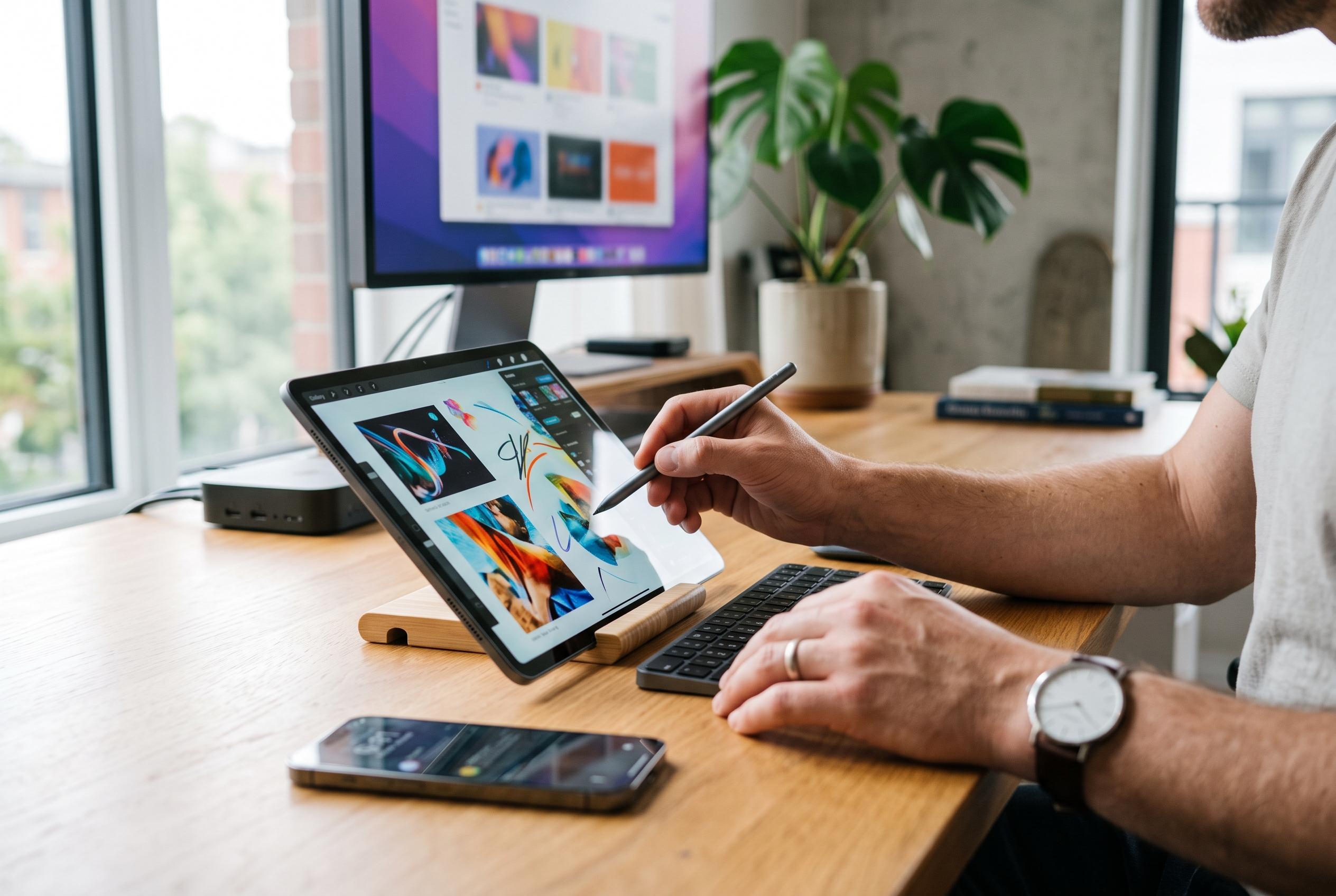

As the tablet market in 2026 evolves, consumers are increasingly valuing display quality, stylus support, and software ecosystem over sheer processing speed, with Apple, Samsung, and Windows leading the charge in offering versatile options for diverse user needs.
Choosing the best tablet in 2026 is less about chasing the fastest chip and more about matching a device to how it will actually be used. For many buyers, that means weighing screen size, stylus support, battery life, software maturity and accessory costs as carefully as raw performance. Recent reviews from Tom’s Guide, TechRadar, WIRED and The Guardian show that the market now splits cleanly between premium iPads, serious Android rivals and a small but important class of Windows tablets. Apple’s iPad Air M4 remains the broadest recommendation for most users, while Samsung and OnePlus have closed enough of the gap to make Android a credible alternative for work, note-taking and entertainment.
The iPad Air M4 is still the safest all-round choice because it delivers more power than most people will need without pushing into the cost of the Pro line. Macworld says the latest model brings a 30% performance boost, 12GB of unified memory and improved wireless hardware, while keeping the same starting prices of $599 for the 11-inch model and $799 for the 13-inch version. Tom’s Guide and The Guardian both describe it as the premium tablet to beat, praising its balance of speed, battery efficiency and versatility. The main limitation remains Apple’s decision to keep it on a 60Hz LCD panel rather than the higher-end OLED technology reserved for the Pro range.
For buyers who want a lower entry price, the standard iPad with the A16 chip remains the most sensible budget iPad. It does not match the Air in raw capability, but it covers the core tablet tasks well: streaming, browsing, video calls, note-taking and schoolwork. That makes it especially practical for families and younger users, or for anyone who wants iPadOS without paying for hardware they are unlikely to use. In this part of the market, the real question is not whether the iPad 11 is powerful enough, but whether the extra cost of the Air matters for your workload.
Samsung’s Galaxy Tab S11 is the clearest Android competitor to the iPad Air. TechRadar describes it as a premium tablet with a high-quality AMOLED display, strong performance and useful multitasking features, including DeX mode for a more desktop-like interface. The included S Pen strengthens its appeal for handwriting and drawing, because buyers do not have to budget separately for a stylus. Android tablet software still does not have the same depth of tablet-first applications as iPadOS, but Samsung has done more than most to make its larger tablets useful for real work. Android Central also notes that the Tab S11 comes in Wi‑Fi and 5G variants globally, although U.S. availability appears to be limited to Wi‑Fi models for now.
The Galaxy Tab S11 Ultra pushes that idea further by giving users a 14.6-inch AMOLED display that is better suited to multitasking, digital art and desk-based work. WIRED’s testing found that it can handle multiple browser windows and desktop-style workflows surprisingly well when paired with the right accessories. That same scale, however, is also its weakness. It is a tablet that behaves more like a portable workstation than a casual screen for the sofa, which means it is best suited to artists, heavy note-takers and users who want a large display first and portability second.
OnePlus takes a different approach with the Pad 3, emphasising hardware value rather than ecosystem depth. TechRadar says the 13.2-inch tablet combines a 144Hz display with Qualcomm’s Snapdragon 8 Elite chip, producing unusually strong speed, battery life and screen quality for the price class. That makes it a convincing option for gaming, entertainment and demanding Android apps. The trade-off is that OnePlus does not offer the same breadth of cross-device features as Apple or Samsung, and optional accessories raise the total cost. Even so, it is one of the most interesting Android tablets for users who care most about performance per pound rather than software polish.
The broader Android field is also becoming more varied. TechRadar’s review of the Huawei MatePad Air points to a 12-inch OLED panel with a 144Hz refresh rate and PaperMatte anti-glare coating, which it says reduces reflections dramatically and gives the screen a more paper-like feel for stylus use. That kind of display-led design shows how tablet makers are trying to differentiate beyond processor speed alone. The Huawei device does not match the iPad on performance for heavier tasks such as video editing, but it underlines a wider trend: for many users, the quality of the screen now matters more than the absolute power of the chip inside.
For people who need a full desktop operating system, the Surface Pro 11 remains the most relevant Windows option. It is not the purest tablet experience, but that is the point. It gives users access to desktop applications, which makes it the right choice when work depends on Windows software rather than mobile equivalents. At the other end of the size spectrum, the iPad mini remains the strongest portability-first tablet because it is genuinely easy to carry and use on the move. Together, these models show why the “best tablet” question has no single answer. The right choice in 2026 depends on whether you prioritise power, portability, pen input, desktop software or simple value.
Disclaimer: This content is intended for informational purposes only. Readers are advised to exercise their own judgement, conduct due diligence, or consult a qualified expert before acting on any information provided.