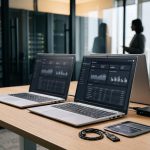
Recent iPadOS upgrades make the tablet more desktop-like, yet building a true workstation depends on choosing the right hardware and accessories, highlighting the ongoing gap between software capabilities and physical setup.
Apple’s recent software changes have made the iPad far more capable than it used to be, but turning one into a proper workstation still requires the right hardware, a fair amount of spending and a clear view of its limits. MacRumors says iPadOS 26 brought a much more Mac-like approach to windowing, with multiple app windows, a menu bar and better external display support, while iPadOS 27 is expected to refine the design rather than rewrite the system again. Even so, the iPad remains governed by app-level restrictions, which means the hardware can only go so far. According to Pocket-lint, a serious setup starts with choosing the right model rather than trying to force an entry-level tablet into professional use.
The minimum sensible choice is an iPad Air or iPad Pro, not because cheaper models are unusable, but because the workflow changes materially once M-series chips enter the picture. Pocket-lint notes that the Air and Pro line use the same class of processors found in Macs, which matters for demanding tasks such as CAD and video editing. MacRumors’ coverage of iPadOS 26 adds that the newer windowing tools make it easier to keep several apps open and move them around the display, but that only becomes genuinely useful when the device can also drive an external screen properly. On lower-end iPads, external displays are limited to mirroring; on M-series models, they can be extended, which is far more useful for multitasking.
A keyboard case is the next practical purchase, though the price of Apple’s own Magic Keyboard remains hard to ignore. Pocket-lint describes it as expensive, but useful because it preserves the iPad’s USB-C port for peripherals while drawing power through the Smart Connector. That arrangement matters if the tablet is attached to a monitor, storage and other accessories at the same time. MacRumors’ guidance on iPadOS 26 also shows why this kind of physical setup now makes more sense: the new trackpad pointer, menu bar and resizable windows are intended to support longer, more desktop-like sessions rather than brief touch-first use.
Display choice is equally important. A larger external monitor gives the iPad room to show more of the workspace at once, which helps with writing, design, spreadsheet work and video timelines. Pocket-lint recommends Thunderbolt where possible, especially on the iPad Pro, because it supports faster connections, charging and daisy-chaining with additional peripherals. MacRumors’ reporting on iPadOS 26 says the updated external display handling is one of the main reasons the platform now feels more credible as a laptop substitute, but the benefit depends on pairing it with the right screen and cables. Third-party monitors may be a more sensible buy than Apple’s own panels if cost matters.
Finally, a hub or dock is what turns the collection of parts into a coherent workstation. Pocket-lint draws a distinction between portable USB hubs and more permanent Thunderbolt docks, with the latter better suited to a fixed desk because they can connect a monitor, keyboard, mouse and external storage through one cable. That single-cable approach is the closest the iPad gets to a traditional desktop workflow. iDownloadBlog’s explanation of the new menu bar in iPadOS 26 underscores the wider shift: the software now exposes more of the controls power users expect to reach quickly, but the experience still depends on building around the tablet with the right accessories rather than expecting it to behave like a Mac on its own. iPadOS 27 may smooth some rough edges, according to MacRumors, yet the basic equation is unlikely to change soon: if you want a workstation-class iPad, you have to assemble one deliberately.
Disclaimer: This content is intended for informational purposes only. Readers are advised to exercise their own judgement, conduct due diligence, or consult a qualified expert before acting on any information provided.