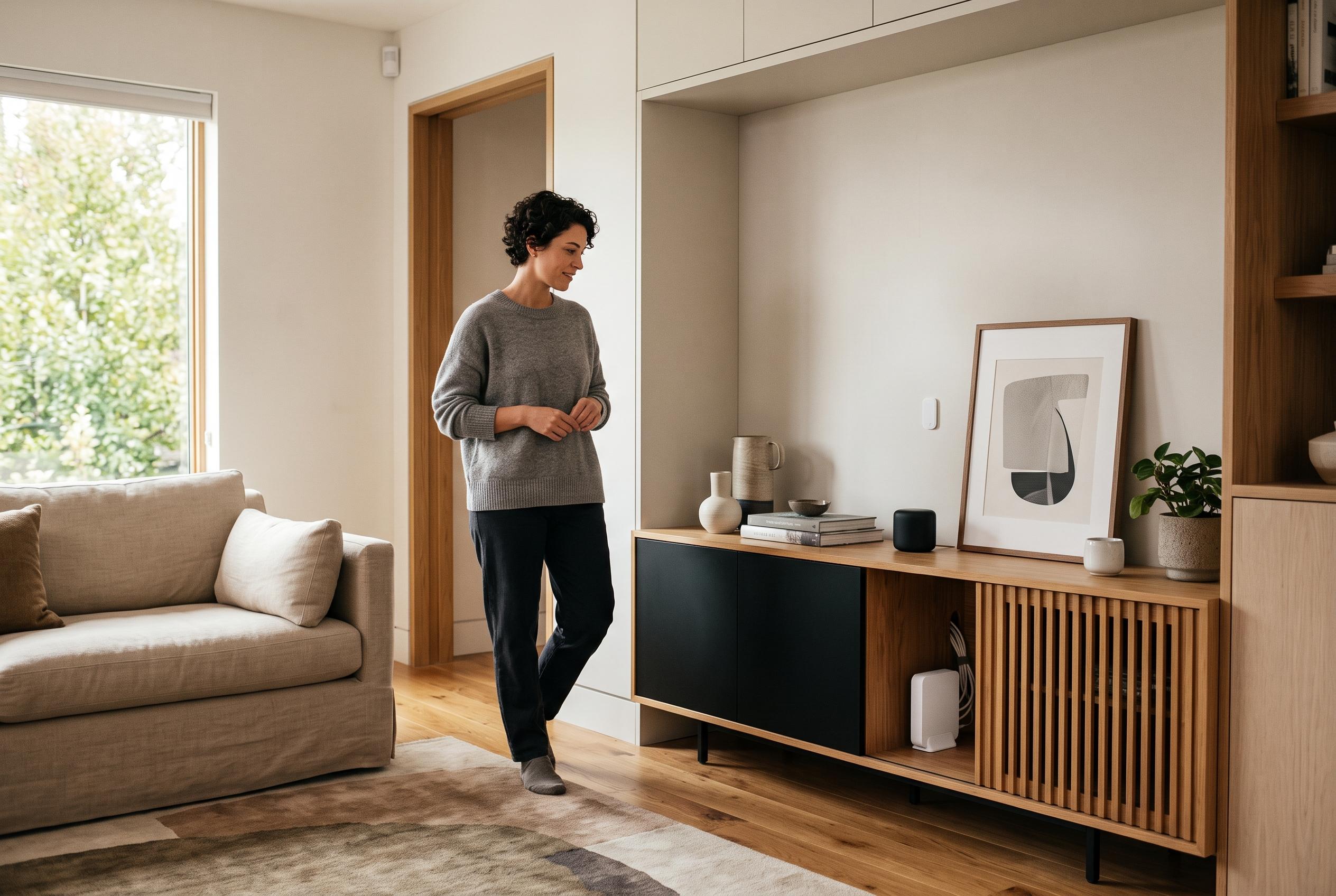

Advances in discreet smart home technology enable seamless integration of sensors and devices into everyday decor, reducing clutter while maintaining functionality through innovative concealment strategies.
Smart home devices do not have to dominate a room with glowing indicators and obvious hardware. In many homes, the best automation is the kind you barely notice. That approach can make a system feel more integrated, reduce visual clutter and, in some cases, improve the way the home actually functions.
One of the simplest ways to hide technology is with a small DIY build around ESPHome, a framework that lets users turn microcontrollers such as the ESP32 into custom smart home devices. According to ESPHome’s documentation, it supports straightforward configuration through YAML and works with components such as sensors, switches and displays, making it suitable for projects that do not require heavy coding. A discreet LED indicator tucked into a plant pot, for example, can provide useful status updates without adding another visible panel to a room.
Furniture and decorative objects can also carry sensors without drawing attention. A temperature and humidity monitor built into an old picture frame is one example of that approach. IKEA’s TIMMERFLOTTE sensor shows how compact climate hardware can be: the device is designed to measure indoor conditions, uses two AAA batteries and supports Matter-based integration with major smart home platforms. The same idea can be extended further with presence sensors hidden behind frames or wall art, especially mmWave units that can detect movement through common indoor materials such as wood and plaster.
Pressure-based sensors are another useful option when a room needs automation without visible hardware. Bed presence sensors sit beneath a mattress and detect whether someone is lying down, while similar mats can be placed under sofa cushions or at a standing desk. These can trigger lighting, television, heating or work routines automatically. In practical terms, they are most useful where a simple yes-or-no presence signal is enough to drive a scene.
Some of the most effective concealment comes from rethinking devices that are usually left in plain sight. Smart speakers, for instance, can be enclosed inside decorative shells that make them look more like radios or ornaments than connected assistants. Designers such as Zion Brock have shown how a shell can be tailored for devices including the Echo Dot, Google Nest Mini and HomePod Mini, while custom 3D-printed enclosures can give modern speakers a more deliberate and less intrusive appearance.
It is also possible to make older equipment behave like modern smart devices by hiding relays in the wall. Shelly’s relay modules are one example of a low-cost upgrade that can turn a conventional extractor fan, towel rail or similar appliance into something that can be scheduled or automated. Because the switch hardware remains concealed, the room keeps its original appearance while gaining functions such as humidity-based fan control or timed heating.
Not every component, however, should disappear completely. Contact sensors, for instance, rely on Hall effect detection and a magnet to register whether a door or window is open or closed. They can often be recessed into frames and paired with thinner magnets, but they still need to remain accessible for battery changes. The point is not to hide everything for its own sake, but to make the most visible parts of a smart home the most useful ones.
Disclaimer: This content is intended for informational purposes only. Readers are advised to exercise their own judgement, conduct due diligence, or consult a qualified expert before acting on any information provided.