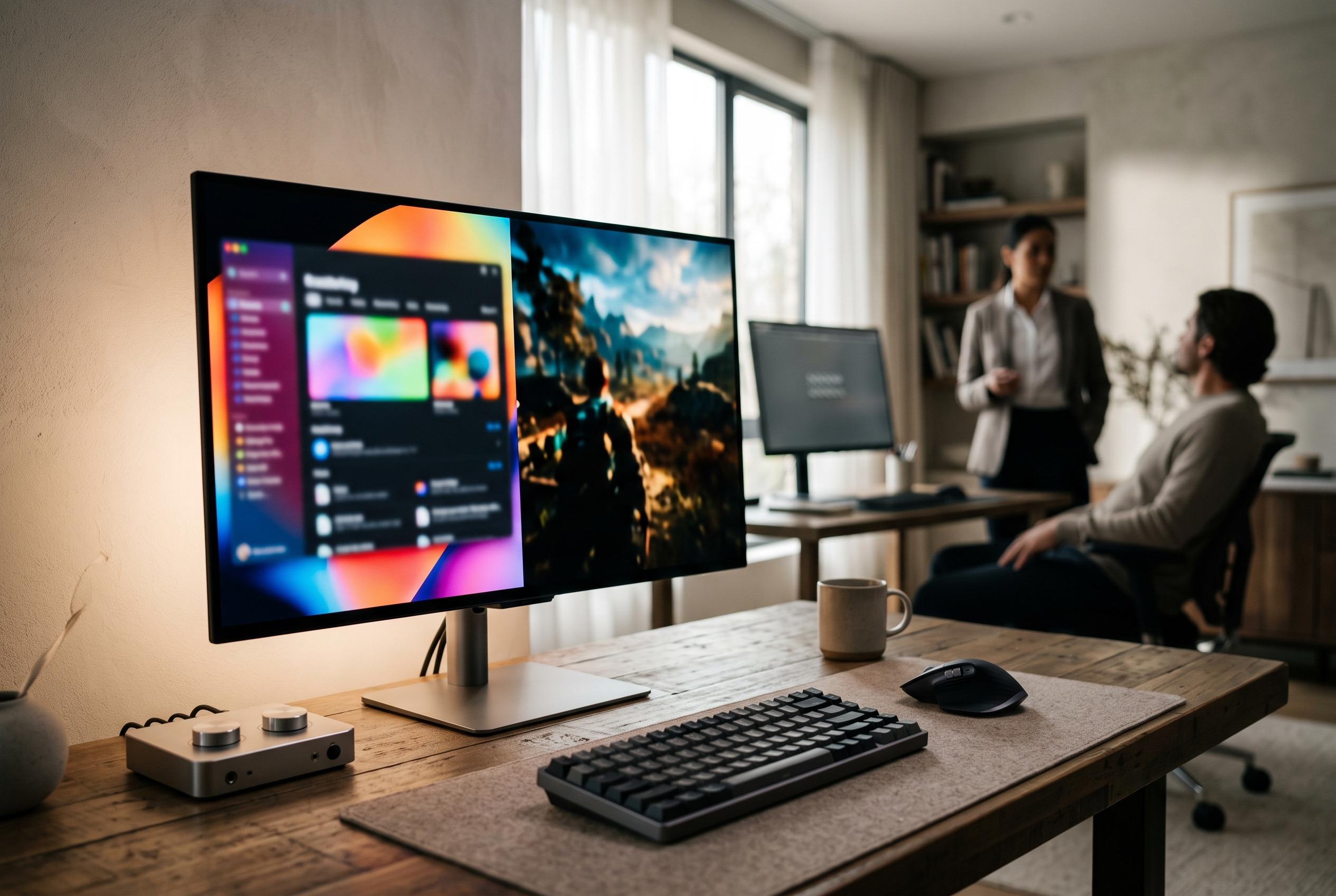

The high-end monitor sector is undergoing a transformation with improved OLED technology, brighter HDR performance, and innovative dual- and triple-mode refresh designs, making premium displays more adaptable to gaming and professional tasks.
In the premium monitor market, the main question is no longer simply whether a panel is 4K. The higher end of the sector has shifted towards QD-OLED and WOLED displays, brighter Mini-LED alternatives and ultra-wide formats that stretch well beyond the standard desktop shape. According to recent coverage from PC Gamer and Tom’s Hardware, manufacturers are now using newer tandem OLED structures, better anti-reflective treatments and more advanced local-dimming approaches to improve brightness, contrast and usability in everyday rooms as well as darker gaming spaces. That matters because the best screens in this class are now expected to do much more than show fine detail: they must also deliver strong HDR, fast motion handling and practical connectivity for both gaming and work.
That is why the current crop of top-tier models is so tightly segmented. For players who want a no-compromise 4K panel, MSI’s 32-inch QD-OLED class remains a reference point, with the latest generation pushing towards brighter HDR performance and more refined panel coatings. TechSpot notes that 4K QD-OLED monitors have become the benchmark for high-end gaming thanks to their pixel-level light control, sharp text and strong real-world HDR output, although glossy finishes can remain a drawback in bright rooms. Meanwhile, PC Gamer reports that MSI’s updated 32-inch QD-OLED monitor now uses Samsung’s tandem OLED technology, with improved sustained brightness and VESA DisplayHDR True Black 500 certification, making it more capable in mixed lighting than earlier versions.
For users willing to look beyond standard 16:9 formats, the market is becoming more adventurous. Tom’s Hardware says MSI has also shown a new flagship 32-inch panel that can switch between 4K at a very high refresh rate, lower resolutions at even faster speeds and a 1440p middle ground, giving players more flexibility than the usual dual-mode designs. The same report says the panel uses Samsung’s fifth-generation QD-OLED stack, adds an RGB-stripe subpixel layout and reaches DisplayHDR True Black 600 certification, which should improve brightness and text clarity. At the other end of the market, PC Gamer also highlighted MSI’s first 4K OLED monitor built on a TCL inkjet-printed panel, a sign that the OLED supply chain may broaden beyond Samsung and LG and eventually create more affordable professional-class options.
Against that backdrop, the best premium 4K monitor is less about one universal winner than about matching the display to the user’s workload. A 32-inch QD-OLED with a 240Hz refresh rate remains the safest all-round choice for most enthusiasts, as it combines high density, strong contrast and broad gaming appeal. But the newest panels are clearly moving the category on: brighter HDR, better panel coatings, more ambitious dual- and triple-mode refresh designs and improved burn-in mitigation are now part of the conversation. For buyers spending well into four figures, those details matter more than the headline resolution alone.
Disclaimer: This content is intended for informational purposes only. Readers are advised to exercise their own judgement, conduct due diligence, or consult a qualified expert before acting on any information provided.