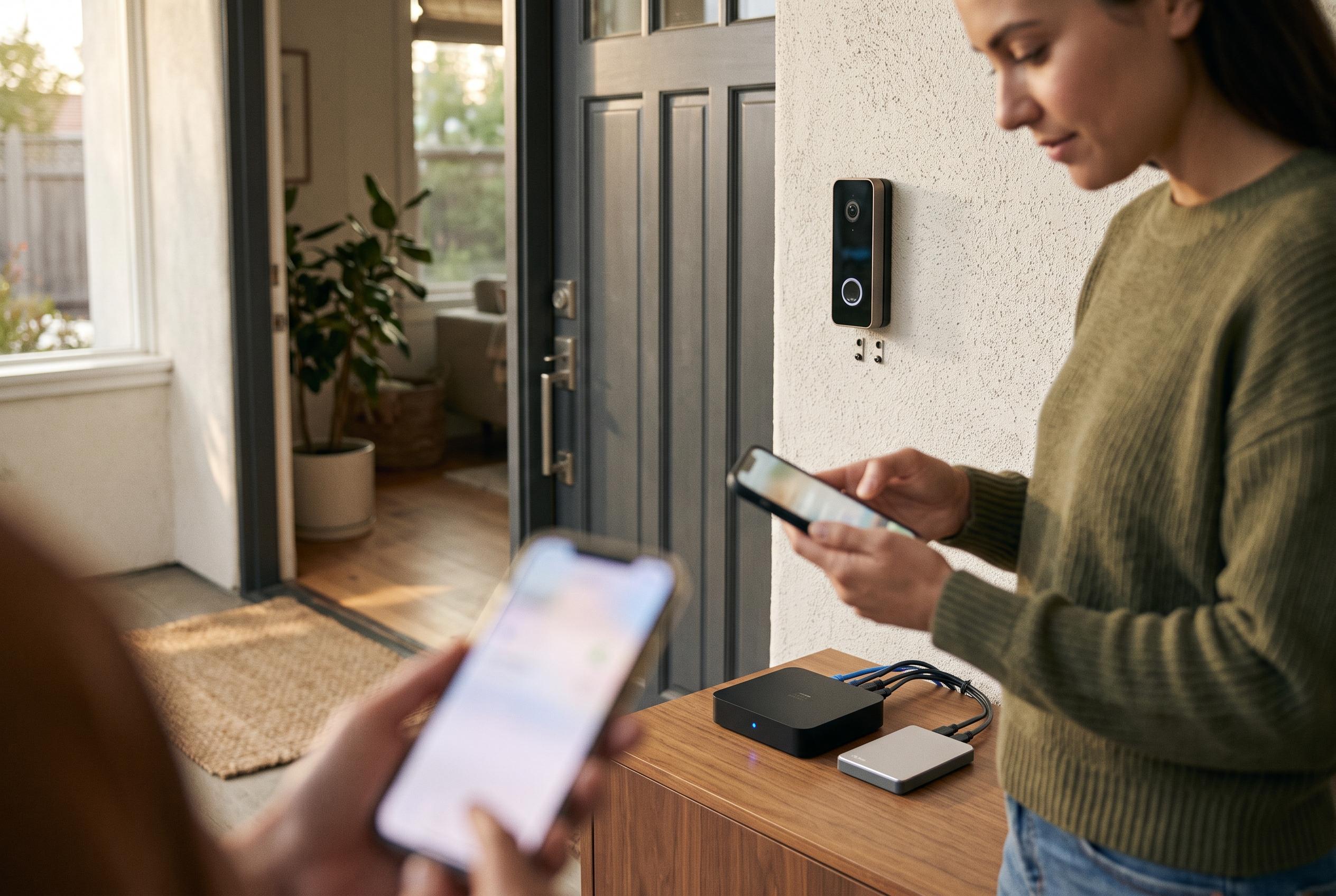

Video doorbells offer useful features without ongoing subscription costs, with local storage solutions providing a cost-effective, privacy-conscious alternative to cloud services. Buyers should consider features, storage methods, and automation capabilities when choosing a model.
Video doorbells can be useful even without a paid plan, but buyers need to understand what is and is not included before they commit. According to BGR, the central appeal is straightforward: these devices let households see visitors, monitor deliveries and add a layer of deterrence, while avoiding the recurring cost that often comes with cloud-based recording and other premium services.
The main distinction is between live functionality and recorded evidence. Guides from DoorVi and other home-security writers note that many doorbells will still let users answer calls, view a live feed and receive basic motion alerts without paying for a subscription. The recurring charge usually appears when the owner wants cloud storage, richer person detection or longer event history. In practice, that means the right product depends on whether the priority is simple doorstep monitoring or a more complete security record.
Local storage is the most common route to a subscription-free setup. Consumer Reports says several highly rated models from brands including Eufy, Night Owl, TP-Link and Wyze save footage locally rather than in the cloud, which removes ongoing fees and can improve privacy control. Similar reviews note that local recording typically relies on a microSD card, a home hub or another storage device owned by the buyer. That approach can be cost-effective, but it may also limit remote access or reduce how much video can be kept at once.
There are also trade-offs beyond storage. Some systems reserve their most useful automation for paid tiers, while others are deliberately simpler and offer only the essentials. Homebuilding.co.uk notes that this makes privacy, storage capacity and the availability of advanced motion detection important buying criteria, particularly for households that want to avoid becoming dependent on a vendor’s cloud service. The upshot is that subscription-free does not always mean feature-free, but it does usually mean more careful checking of what the device can do on its own.
Disclaimer: This content is intended for informational purposes only. Readers are advised to exercise their own judgement, conduct due diligence, or consult a qualified expert before acting on any information provided.