
As power outages become more frequent, a range of innovative alternatives, from solar panels to reverse wireless charging, are empowering users to keep smartphones alive without mains power, though each has its limitations and safety considerations.
When the grid goes down, a smartphone does not have to go dark with it. Practical alternatives now range from portable power banks and laptop USB ports to car chargers, solar panels and emergency radios with hand cranks. The key is to match the charging method to the situation, then keep an eye on voltage compatibility, battery capacity and basic safety, so the handset is powered without putting the battery at risk. Guides from power-outage specialists and phone-support pages broadly agree that these options are best treated as backup measures rather than everyday replacements for a standard wall charger.
A vehicle can serve as a mobile charging point if it has a USB socket or a suitable adaptor for the cigarette-lighter outlet. In that case, the car becomes a temporary power source, though it is sensible to run the engine only as needed rather than leaving it idling unnecessarily. A charged laptop can also provide emergency power through its USB port, effectively acting as a much larger battery pack. Both methods are convenient, but neither is intended to deliver a full, fast recharge in the way a mains adaptor would.
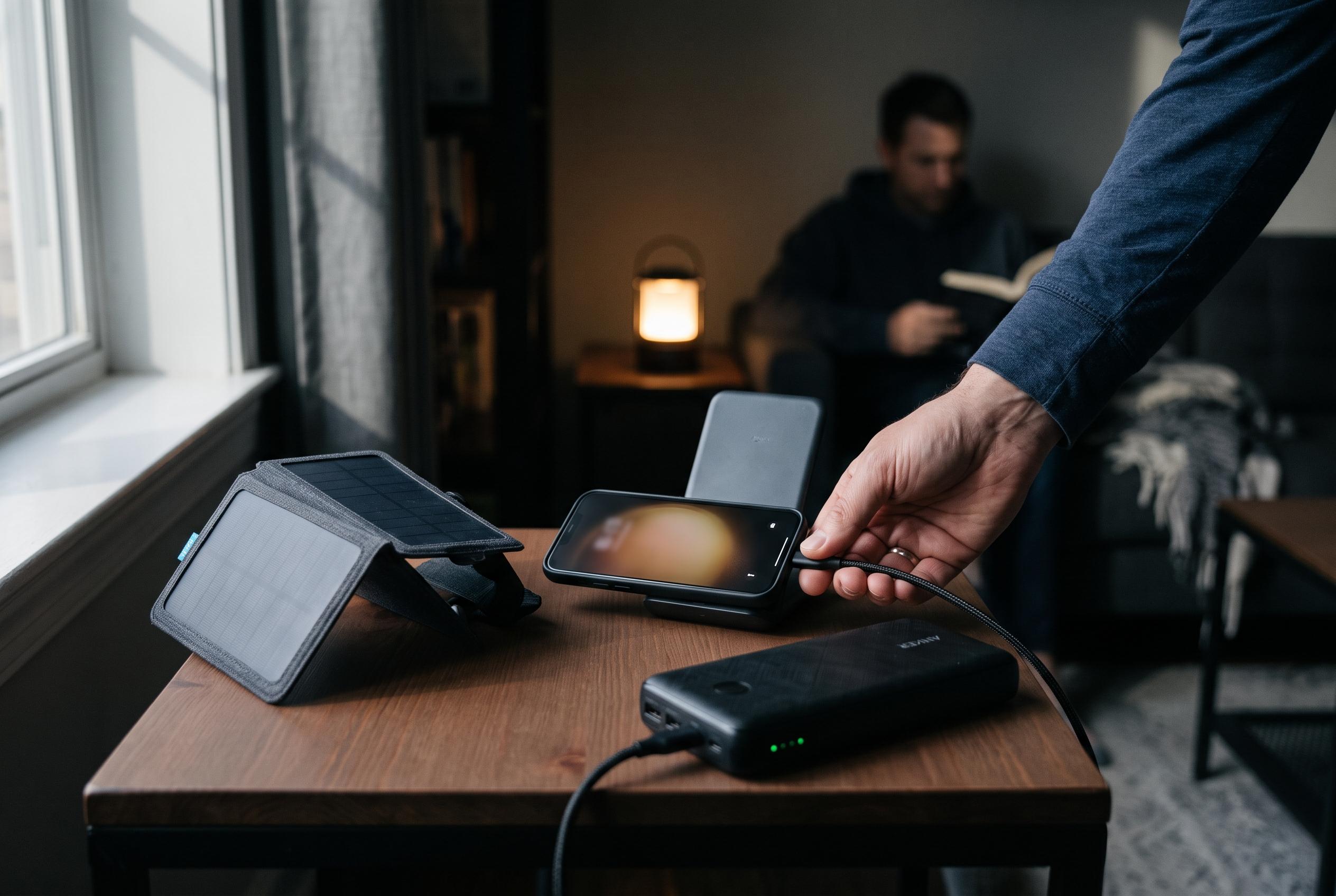
If daylight is available, a portable solar charger offers a more self-sufficient answer. These devices convert sunlight into electricity and can be useful during prolonged outages or when other power sources are unavailable. They are, however, dependent on weather and charging conditions, so they work best as part of a broader emergency kit rather than as a sole solution.
One of the more specialised options is an emergency radio with a hand-crank mechanism and USB output. It is not designed to replace normal charging, but it can generate enough power to keep a phone alive for essential calls or messages. Such devices often add a torch and radio reception for emergency broadcasts, which makes them particularly practical during extended blackouts.
A newer and increasingly common feature is reverse wireless charging, sometimes marketed under names such as Wireless PowerShare, Battery Share or Reverse Wireless Charging. According to Xiaomi and Huawei support material, the feature must usually be enabled in the phone’s battery or power settings before the device can share energy wirelessly with another compatible handset or accessory. The two devices then need to be aligned back-to-back, and both must support wireless charging for the transfer to work.
The technology is useful, but it is not efficient enough to displace ordinary charging for long. Guidance from Guiding Tech and TechBone says reverse wireless charging is typically slower than wired methods and can drain the host phone’s own battery quickly, which is why manufacturers position it mainly as an emergency feature for brief top-ups of earphones, watches or another handset. That makes it a useful fallback, but not a substitute for a proper charger when one is available.
Disclaimer: This content is intended for informational purposes only. Readers are advised to exercise their own judgement, conduct due diligence, or consult a qualified expert before acting on any information provided.