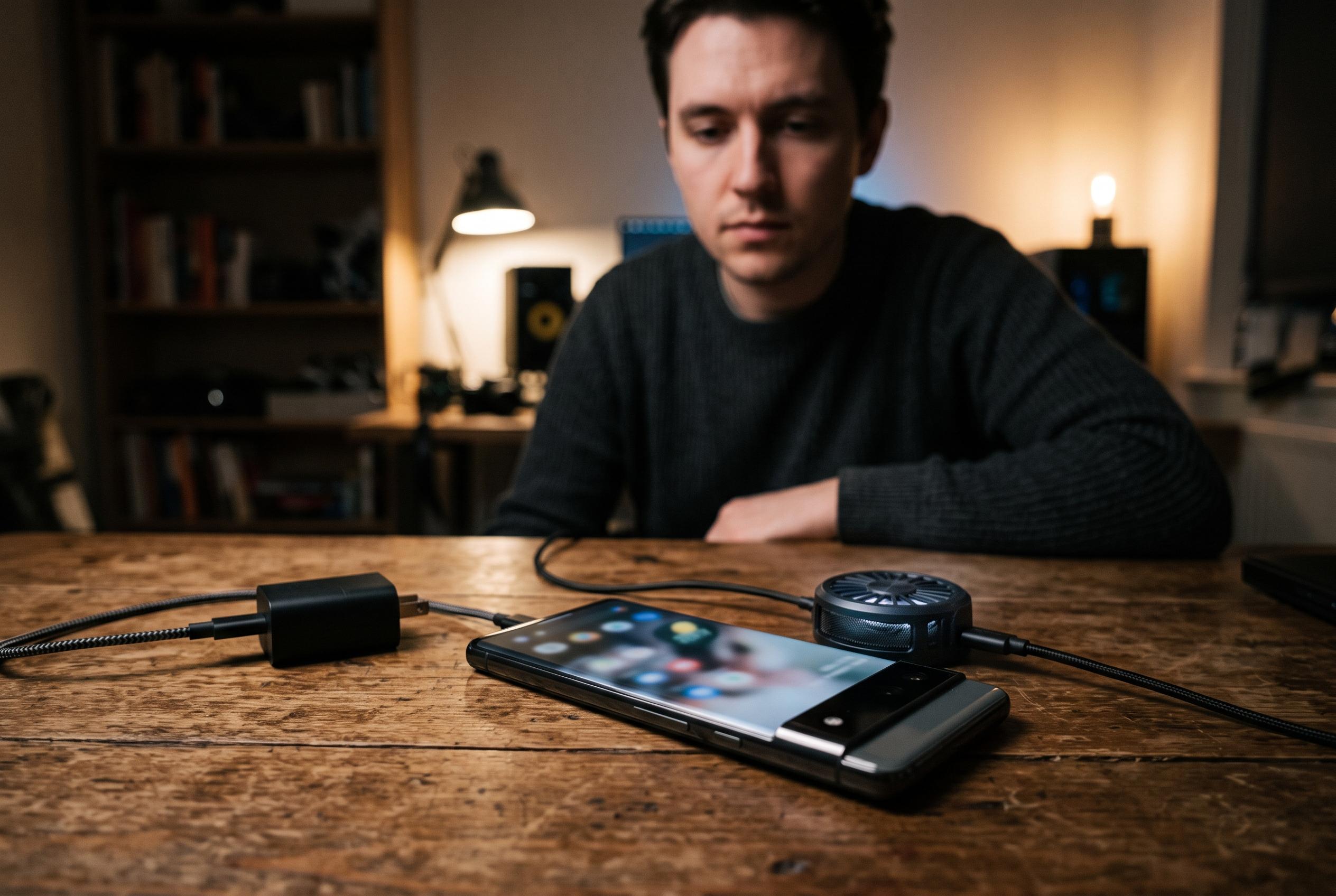

Emerging tests suggest that the Pixel 11’s gaming performance issues may be linked more to CPU scheduling and software optimisation than to its new Tensor G6 chip, highlighting the challenges of balancing power, thermals, and graphics in recent smartphones.
Tests of the Google Pixel 11 are increasingly suggesting that its gaming weaknesses may not be caused by the Tensor G6 alone, but by how Google is scheduling work across the chip. According to Notebookcheck, trials by the Chinese reviewer Rice Review found inconsistent CPU core allocation in several games, pointing to software tuning as a possible factor in the handset’s uneven frame rates.
The most detailed example came from Genshin Impact, where the phone initially suffered from a rendering fault that was later fixed in version 7.1 of the game. After that update, the Pixel 11 averaged 43.3 frames per second, with the bottom one per cent of readings falling to 11.7fps. That still left it behind the Xiaomi 15S Pro and iQOO 15, which were both said to average close to 60fps. Notebookcheck reported that PerfDog logs showed the Tensor G6’s four C1-Pro cores running at an average of 2.1GHz, higher than the single C1-Ultra core at 1.41GHz, which is not unusual in a title where the GPU is the main constraint.
That picture fits wider reporting on the Tensor G6. Android Central said the chip uses a distinctive seven-core CPU layout built around Arm’s C1-Ultra and C1-Pro designs, alongside a MediaTek M90 modem, and claimed the new platform improves browsing speed and energy efficiency compared with Tensor G5. Tom’s Guide and Digital Trends, however, both noted that early benchmarks and leaks point to only modest gains in sustained graphics performance, with the PowerVR GPU still likely to limit gaming-heavy use cases. Tom’s Guide also reported that Google has confirmed the chip is built on a 3nm process rather than the rumoured 2nm node, underscoring that the main upgrades are not in raw graphics capability.
Taken together, the reports suggest Google may have improved the Pixel 11’s general responsiveness while leaving gaming as a more difficult problem to solve. T3’s review described the phone as a refined mid-range flagship with a brighter display, 12GB of memory and improved wireless charging, but said it still lacks some of the thermal and graphics headroom found in the Pro model. In that context, the Pixel 11’s mixed gaming results may be less a verdict on Tensor G6’s core design than on Google’s ability to balance CPU scheduling, thermals and graphics load in real-world play.
Disclaimer: This content is intended for informational purposes only. Readers are advised to exercise their own judgement, conduct due diligence, or consult a qualified expert before acting on any information provided.