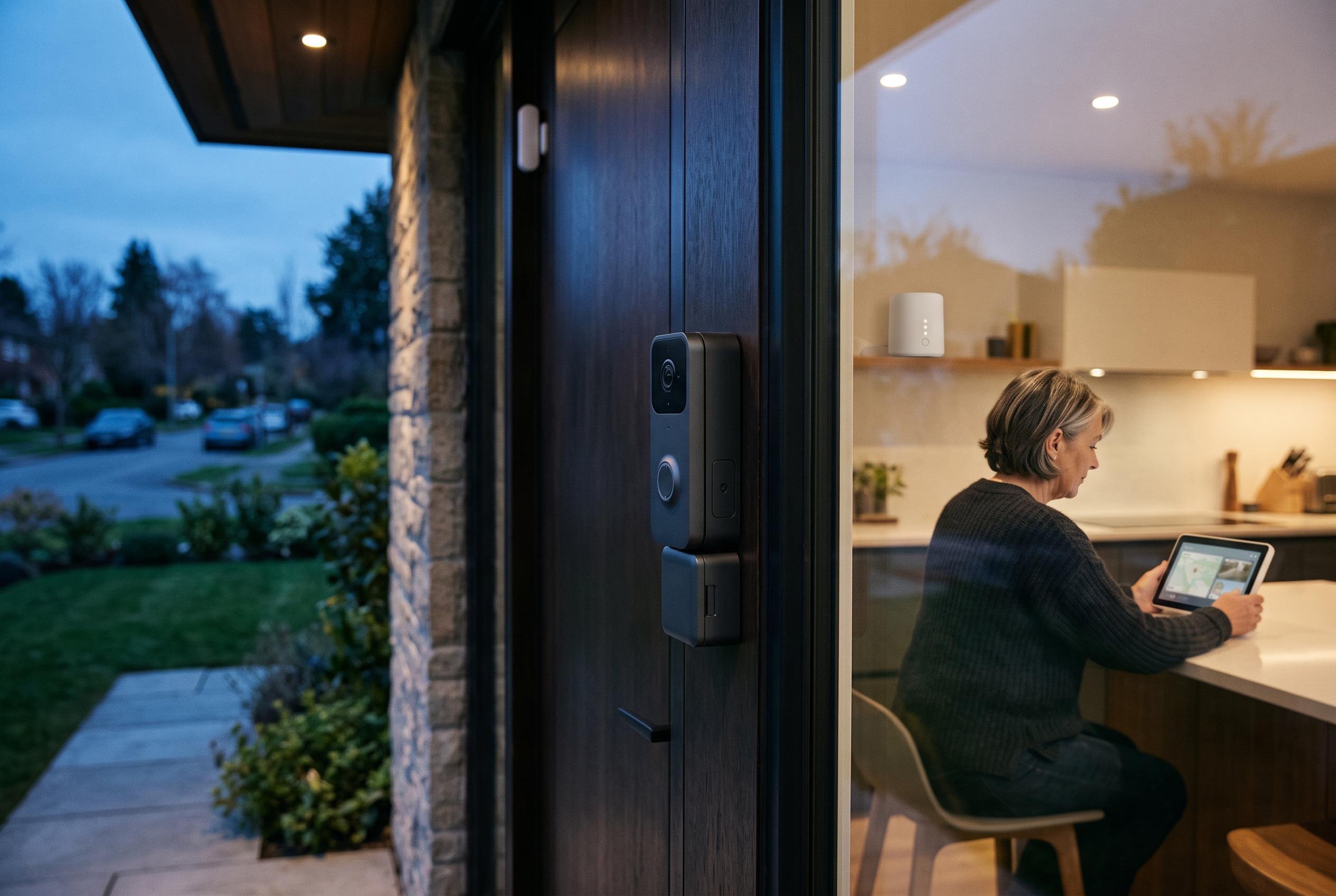

As doorbell cameras become essential for home security, 2026 sees a shift towards models prioritising local storage, battery longevity, and tailored smart-home integration over just high-resolution video and subscription-dependent features.
Video doorbell cameras have become a practical layer in home security rather than a niche accessory. They let households see who is outside, check on deliveries and monitor activity at the front door in real time from a phone. The latest buying guides from Consumer Reports, Tom’s Guide, TechRadar, Security.org and SecurityCamLab all point to the same core buying criteria: reliable motion alerts, clear night vision, decent video resolution, two-way audio and storage that does not make ownership unnecessarily expensive. According to those reviews, the best choice depends less on a single headline feature and more on how the doorbell fits into a home’s wiring, smart-home setup and subscription budget.
Among the wired models, Google’s Nest Doorbell stands out for combining 2K HDR recording with colour night vision and Gemini-based alerts, which are designed to identify people or activity at the door. The appeal of a wired unit is simple: it removes the inconvenience of charging or replacing batteries. Google Home provides access to live and recorded footage, although, as with several premium doorbells, many advanced functions still sit behind a subscription. Consumer Reports and Tom’s Guide both note that Nest remains a strong contender for users already invested in Google’s ecosystem, particularly where smart notifications matter as much as image quality.
Arlo’s second-generation 2K Video Doorbell is positioned more as a value option. It records head-to-toe video at 2K resolution, uses a 180-degree diagonal field of view and includes night vision, motion alerts, a built-in siren and video calling. Arlo also supports smart activity zones, which allow users to focus detection on more relevant areas and reduce nuisance alerts. Its compatibility is broad, with support for Alexa, Google Home, Apple HomeKit, Samsung SmartThings and IFTTT, making it one of the more flexible choices for mixed-device homes. The lower upfront price makes it especially notable, although advanced features and cloud storage still require a paid plan.
TP-Link’s Tapo 2K+ Smart Video Doorbell D225 takes a slightly different approach by emphasising battery life and usability. The company claims up to eight months of battery operation, which will appeal to users who want fewer charging cycles. Its 2K HDR camera and 180-degree field of view provide full doorstep coverage, while the Ring Call feature lets users answer through a phone call rather than opening the app. That is a small but useful convenience for quick checks. The device also offers real-time notifications with the option to narrow alerts to specific event types, which helps avoid excessive notifications in busy households.
Eufy’s Security Video Doorbell E340 is the most distinct model in the group because it uses a dual-camera design. The main camera captures 2K head-to-toe footage, while the second camera points downward to show the area directly in front of the door, which is useful for parcels left on the ground. Its built-in 8GB local storage is important because it reduces dependence on cloud subscriptions, a recurring issue highlighted across the buying guides. Users who want more storage can add the Eufy Homebase hub, but the out-of-box appeal is clear: local recording, no immediate subscription pressure and a layout designed for package monitoring as well as visitor detection.
Ring’s Battery Doorbell 4K Pro sits at the premium end of the list, offering 4K video, a wide-angle view, Night Vision and 10x zoom. It also includes Live View, two-way audio and recorded clips, with a 140-degree field of view intended to improve coverage both horizontally and vertically. Like Ring’s other higher-end products, the hardware is only part of the cost; the full experience depends on a paid subscription for extra features. For households that prioritise image detail and already use Ring devices, the upgrade may make sense. For others, the better-value choices may be the ones that balance recording quality, local storage and fewer recurring fees. In that respect, the market in 2026 is less about finding the single best doorbell and more about choosing the model that matches how much convenience, storage and integration a home actually needs.
Disclaimer: This content is intended for informational purposes only. Readers are advised to exercise their own judgement, conduct due diligence, or consult a qualified expert before acting on any information provided.