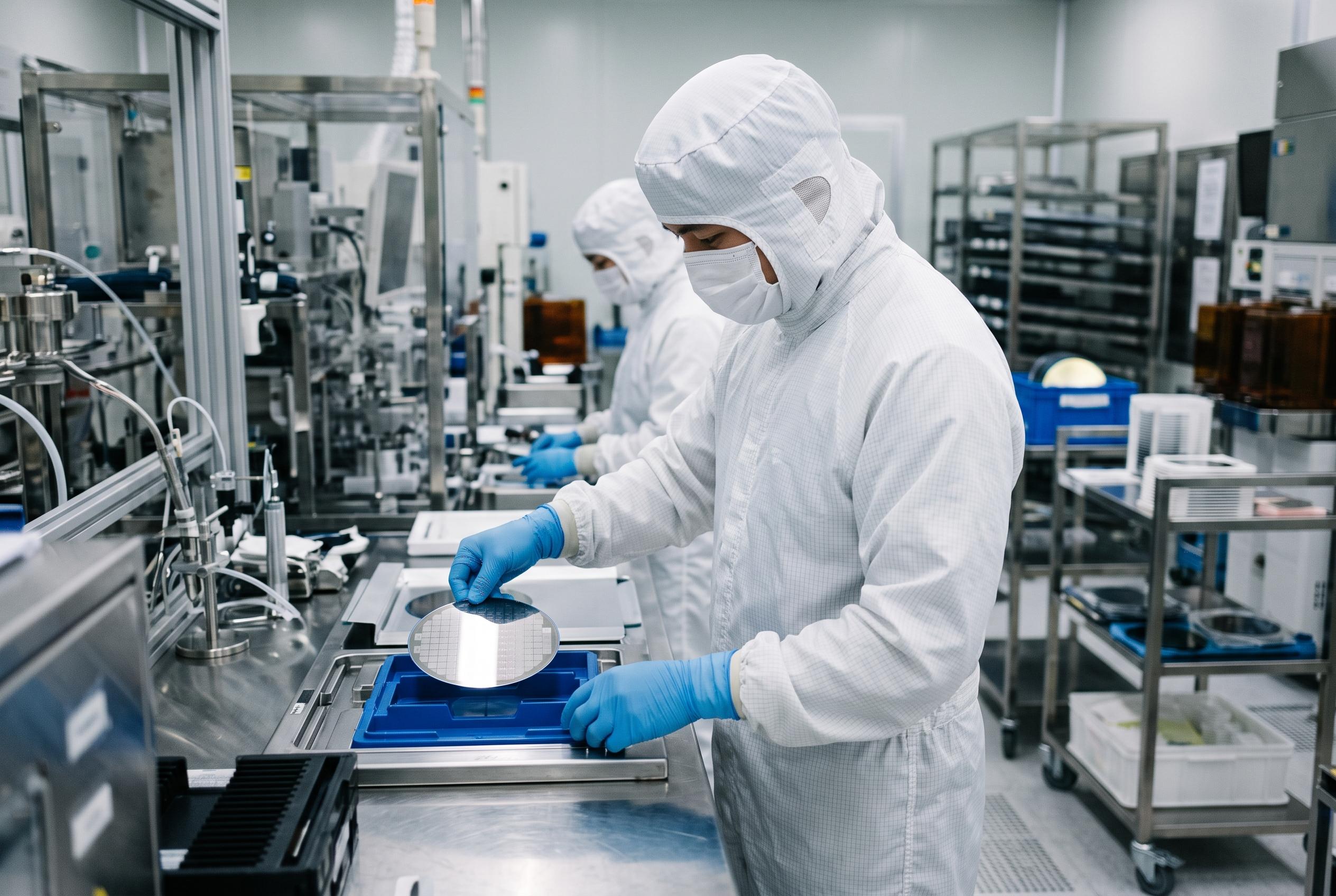

The surge in artificial intelligence demand is pushing beyond cutting-edge chips, causing widespread shortages across mature semiconductor manufacturing and threatening global supply stability.
AI demand is no longer confined to leading-edge logic chips; it is now squeezing mature
process capacity as well. World Advanced Semiconductor, better known as World Advanced, says the industry’s shift of capital, talent, power and equipment towards artificial intelligence has left less room for other applications, tightening an already strained market. Chairman Fang Lue said the company’s 8-inch production is effectively maxed out, and he expects shortages to persist for a long time.
That pressure was on display as the company and NXP opened their joint 12-inch plant in Singapore for VSMC. According to the report from People News, the new fab’s capacity was already fully booked by customers before it formally entered volume production. The same report said Fang used equally blunt language about existing 8-inch lines, describing them as completely overwhelmed by orders.
The broader problem, he argued, is that AI is drawing in resources across the whole manufacturing chain. Investment is flowing into data centres and advanced computing, but it is also pulling in supporting parts such as power-management chips, smart power systems and gallium nitride devices. World Advanced is among the manufacturers positioning itself for that shift, while the Singapore plant is also set to add silicon interposer capacity for advanced AI packaging.
Industry reporting points to the same bottlenecks elsewhere in the sector. Tom’s Hardware said TSMC’s demand for fabrication equipment has risen sharply, with procurement needs nearly doubling over six months as AI-related orders accelerated. The same report said TSMC has lifted its 2026 capital spending plan to as much as $64 billion, while tool shortages are complicating supply planning across the industry.
The shortage is not limited to wafer starts. Research cited by Semiconreport said AI servers use more memory, more power-management components and more multilayer ceramic capacitors than conventional systems, while advanced packaging is tightening supply of substrates and other materials. Tom’s Hardware also reported that the United States faces a serious semiconductor labour gap, with experts warning of as many as 157,000 unfilled jobs by 2030, a reminder that capacity constraints are not only about machines. Separately, IndMoney reported that CoWoS packaging remains extremely tight and sold out through 2026, underscoring how AI demand is pressuring the whole stack.
Fang’s view is that the market will not return to balance quickly, even if AI investment growth slows. In his telling, the old cycle of seasonal swings no longer describes this market: AI demand is too broad, too capital-intensive and too persistent. The result is a semiconductor supply chain where non-AI customers must compete for whatever capacity remains, and where the end of the shortage is still impossible to place on a calendar.
Disclaimer: This content is intended for informational purposes only. Readers are advised to exercise their own judgement, conduct due diligence, or consult a qualified expert before acting on any information provided.