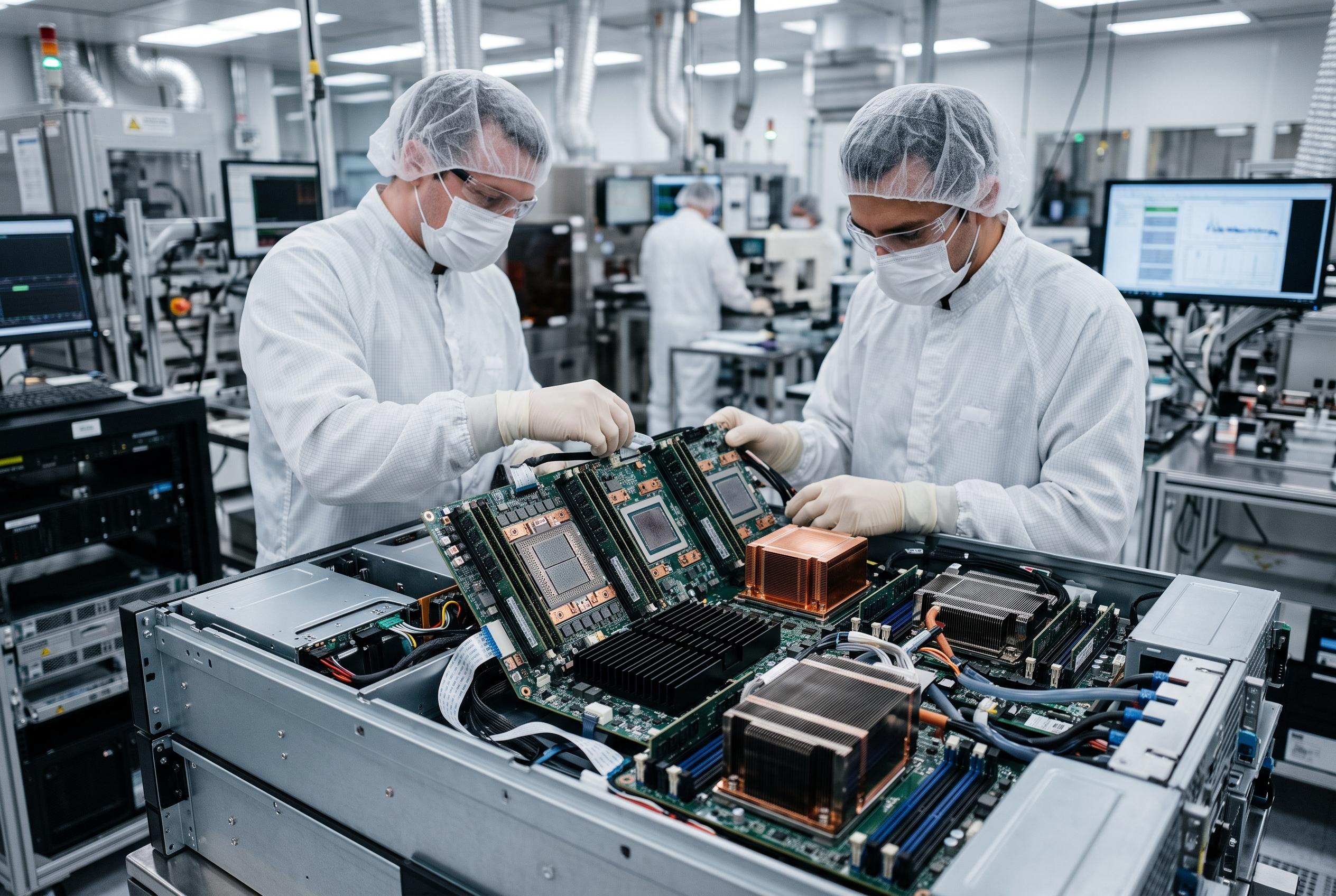

China’s largest DRAM manufacturer, ChangXin Memory Technologies, unveils a major investment to bolster its position in high-bandwidth memory technology, aiming to challenge market leaders amid rising domestic AI demands.
China’s largest DRAM maker, ChangXin Memory Technologies, has unveiled a fresh investment plan worth 34.9 billion yuan, or about £3.7 billion, in a sign that it is accelerating its push into advanced memory for artificial intelligence systems. The company said the money will be split between a technology research and development project and a separate post-processing test base, both of which point to a broader effort to strengthen its position in high-bandwidth memory, or HBM.
According to the filing made on the evening of September 28, 24.1 billion yuan will go into the research programme, while 10.8 billion yuan is earmarked for the construction of a back-end testing facility. Of the R&D budget, 22.398 billion yuan, or 92.94%, is allocated to equipment purchases, suggesting that CXMT is putting heavy emphasis on industrial tooling rather than only laboratory development. The project is scheduled to take 30 months and is intended to speed up the company’s transition between product generations while improving memory density, power efficiency and performance.
The investment matters because HBM is not just a faster form of DRAM. It relies on vertical stacking, advanced packaging and tightly controlled testing as much as on the underlying chip process itself. CXMT has already entered the HBM3E development and production stage, and industry reporting indicates that it has begun limited risk production of the memory. If that is sustained, the company could narrow the gap with established suppliers, even if it remains behind the market leaders that are now moving towards HBM4.
The new R&D spending may therefore be less about ordinary DRAM expansion than about building the process base needed for higher-end HBM. By directing such a large share of the budget to equipment, CXMT appears to be preparing for a faster move from development to volume manufacture. In practical terms, that means tighter control over yield, more advanced fabrication capability and better support for the memory technologies used in AI accelerators.
The second part of the plan, a 10.8 billion yuan investment in a testing base, is equally significant. CXMT said it needs more in-house back-end capacity because expanding output and broadening its product range could strain outside testing providers. The new facilities are expected to handle DRAM testing and module assembly, reducing dependence on third parties at a time when HBM production demands complex validation steps and specialised packaging.
The timing also fits with recent reporting on CXMT’s HBM3E progress. The Information reported in late August, citing people familiar with the matter, that the company had started small-scale production and was testing samples with Alibaba’s T-Head and Cambricon, two Chinese AI chip designers. Tom’s Hardware and other industry outlets have also reported that commercial deployment could follow if those tests are successful, potentially as early as 2027. That would make CXMT’s investment programme part of a wider Chinese effort to build a domestic supply chain for advanced AI memory at a time of tighter US export controls.
Disclaimer: This content is intended for informational purposes only. Readers are advised to exercise their own judgement, conduct due diligence, or consult a qualified expert before acting on any information provided.