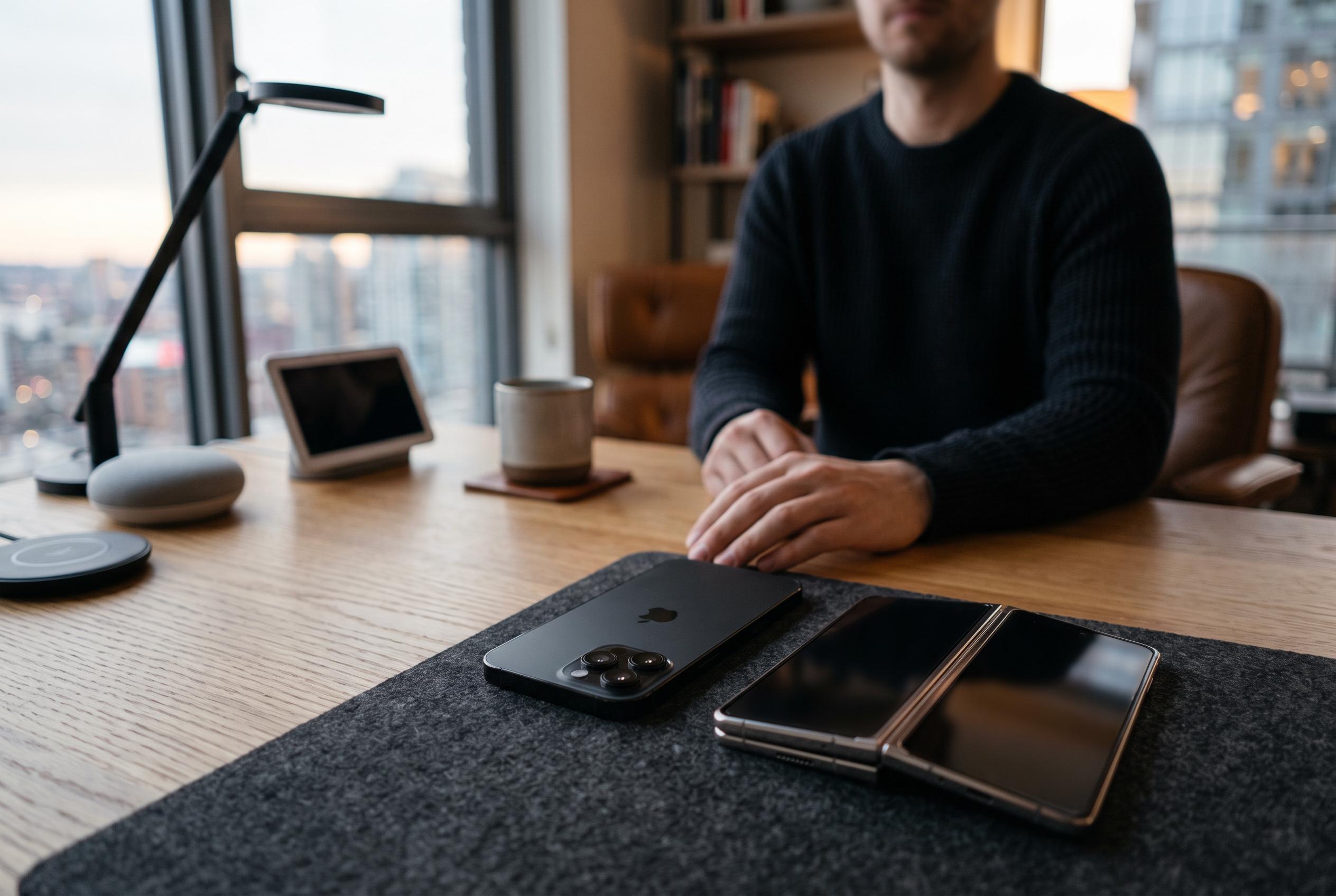

Apple’s latest iPhone range now splits into two distinct tiers, with premium Pro models boasting cutting-edge camera technology and a foldable Duo set to disrupt the market, leaving budget options with higher prices and incremental upgrades.
Apple’s latest iPhone range has split into two clear tiers: premium flagships at the top, and a set of older, lower-priced models below them. According to CNET’s buying guide, the new iPhone 18 Pro and iPhone 18 Pro Max have gone on sale at $1,199 and $1,299 respectively, while Apple’s less expensive choices now consist of the iPhone 17E, iPhone 17 and iPhone Air. That makes this year’s decision less about choosing between a “Pro” and a standard model, and more about deciding how much design, camera hardware and battery capacity justify the extra cost. MacRumors reports that the Pro models were unveiled on 9 September, with pre-orders opening on 12 September and availability following on 18 September.
Pricing has shifted across the line-up. CNET says the iPhone 17E now starts at $699, the iPhone 17 at $899 and the iPhone Air at $1,099, each $100 higher than before despite no major redesign. The publication links those increases to a wider component squeeze, including a shortage of RAM. Apple is also still selling the iPhone 16, but at $829 for just 128GB of storage, CNET describes it as poor value next to the other options. MacRumors adds that the iPhone 18 Pro and Pro Max are available in the US, UK and other major markets, with 256GB storage as the entry point and a 2TB option now offered for both models.
Design remains one of the clearest dividing lines. The iPhone 17E keeps a familiar 6.1-inch format with a notch, a look that closely resembles the iPhone 14, while still supporting MagSafe accessories. The iPhone 17 moves to a 6.3-inch screen with the Dynamic Island, a 120Hz refresh rate and always-on display support. The iPhone Air is the thinnest of the group at 0.22 inches and 165g, with a 6.5-inch panel and a single speaker, a trade-off Apple makes in favour of portability. At the top end, the iPhone 18 Pro and Pro Max use a unibody aluminium design and come in Burgundy, Glacier, Silver and Black, with 6.3-inch and 6.9-inch displays respectively. The newer foldable iPhone Duo joins the line-up later, on 23 October, with a 5.4-inch outer screen and 7.6-inch internal display. MacRumors and Creative Bloq both say the Duo is Apple’s first book-style foldable, priced at $1,999.
Camera capability also separates the models sharply. CNET says every phone in the range includes a 48-megapixel wide camera, but the iPhone 17E and iPhone Air stop there, which limits versatility for zoom and ultrawide photography. The iPhone 17 and iPhone Duo add a 48-megapixel ultrawide camera, improving group shots, landscapes and macro work. The iPhone 18 Pro and Pro Max go further still with a third 48-megapixel telephoto camera, offering 4x optical zoom and 8x optical-quality zoom, plus a wider f/1.48 aperture and a variable aperture system for better light control. MacRumors says Apple is positioning the Pro phones as a substantial imaging upgrade, even if the external redesign is comparatively restrained.
Performance is led by Apple’s A20 Pro chip in the iPhone 18 Pro, Pro Max and Duo. MacRumors says the chip is built on TSMC’s 2-nanometre process and includes a 6-core CPU, 7-core GPU and 32-core Neural Engine, while benchmark results suggest it is around 24 to 26 per cent faster than the A19 Pro. The iPhone Air uses the A19 Pro, and the iPhone 17 and 17E run the standard A19. CNET notes that all of the models support most of iOS 27’s main features, including Apple Intelligence functions and console-grade games, although the 17 and 17E miss out on Siri Expressive Voices. The Duo will also introduce interface changes tailored to its foldable format, including a vertical dock when open, according to CNET.
Battery life and charging are another important distinction. CNET says the iPhone 18 Pro and Pro Max are the strongest choices for heavy users, with the fastest wired charging at 60W and the largest batteries in the family. The publication’s testing found the Pro reached 82 per cent in 30 minutes and the Pro Max 77 per cent. By comparison, the iPhone 17E and iPhone Air support 20W wired charging and are slower to refill, even though both still offer all-day use. The iPhone 17 sits in the middle, with 40W wired charging and faster wireless charging than the cheaper phones. For buyers who prioritise endurance over cost, CNET’s conclusion is clear: the Pro models are the strongest technical packages, but the thinner and cheaper models still make sense if their compromises are acceptable.
For most buyers, the choice now hinges on priorities rather than simple price ladders. CNET recommends the iPhone 17E for the lowest entry point, the iPhone 17 for better balance, and the iPhone Air for those who want a lighter handset above all else. The iPhone 18 Pro and Pro Max are the obvious picks for users who want the most advanced camera system, the fastest charging and the most headroom for demanding use. The iPhone Duo, meanwhile, is for buyers willing to pay a major premium to be first into Apple’s foldable era.
Disclaimer: This content is intended for informational purposes only. Readers are advised to exercise their own judgement, conduct due diligence, or consult a qualified expert before acting on any information provided.