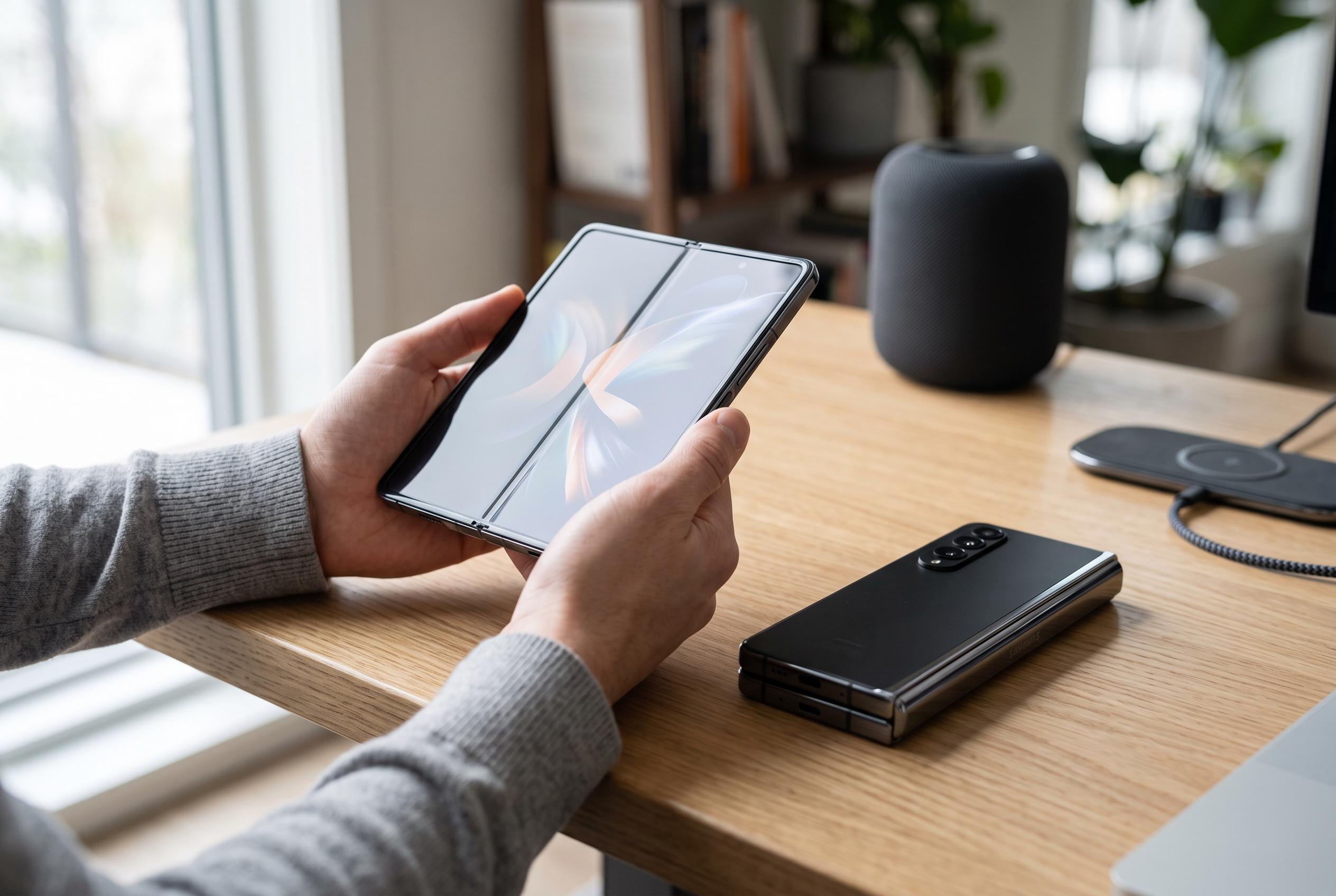

While Xiaomi’s 18 Fold offers ambitious hardware features and higher versatility on paper, the Apple iPhone Duo stands out with refined software integration and user experience, marking a subtle but significant shift in the foldable phone market.
The comparison between Apple’s iPhone Duo and Xiaomi’s 18 Fold comes down to a familiar split in foldable phones: one leans on software polish and ecosystem integration, the other on more ambitious hardware. In a review for ZDNET, Prahar Khanna argued that Xiaomi’s device is the more versatile choice on paper, while Apple’s advantage is the smoother user experience and tighter software design. That tension has also been reflected in other recent comparisons, which describe the Duo as the more refined device for day-to-day use but not necessarily the one with the broader specification sheet.
On hardware, Xiaomi appears to have the edge in several practical areas. According to the ZDNET review, the 18 Fold is lighter than the iPhone Duo, yet it still carries a 6,000mAh battery and a triple rear camera array with a 200-megapixel main sensor, a 50-megapixel telephoto lens with 3.5-times optical zoom and a 50-megapixel ultra-wide camera. Imaging Resource and NanoReview similarly note that Xiaomi’s camera package is built for flexibility, whereas Apple’s foldable uses a simpler dual 48-megapixel setup without a dedicated telephoto lens. Tom’s Guide also says the Duo gives up some advanced imaging features found on Apple’s Pro models, including ProRAW and ProRes recording.
Apple, however, still has strengths that matter in daily use. The ZDNET comparison says the Duo supports MagSafe wireless charging at 25W and magnetic accessories, something Xiaomi does not offer. Tom’s Guide has also highlighted the role of Apple’s broader hardware-software integration, including a titanium frame, IP68 water and dust resistance and iOS 27 features that adapt content more naturally as the device is folded and unfolded. Those details matter because foldable phones are often judged not just on raw specifications, but on how well the software handles switching between screens and maintaining continuity across tasks.
The same pattern appears in performance and interface design. The iPhone Duo uses Apple’s new A20 Pro chip, while Xiaomi’s 18 Fold runs on the Xring 03, but ZDNET said it was too early to declare a clear winner before stress testing both devices. On the software side, the Duo is presented as the more polished device, with iOS 27 moving content smoothly between the outer and inner displays and adjusting video playback behaviour in a more deliberate way. Xiaomi’s phone, by contrast, is described as more ambitious in multitasking and more open to running several apps at once, though it may need a little more setup, especially because it does not ship with Google’s core services pre-installed.
Disclaimer: This content is intended for informational purposes only. Readers are advised to exercise their own judgement, conduct due diligence, or consult a qualified expert before acting on any information provided.