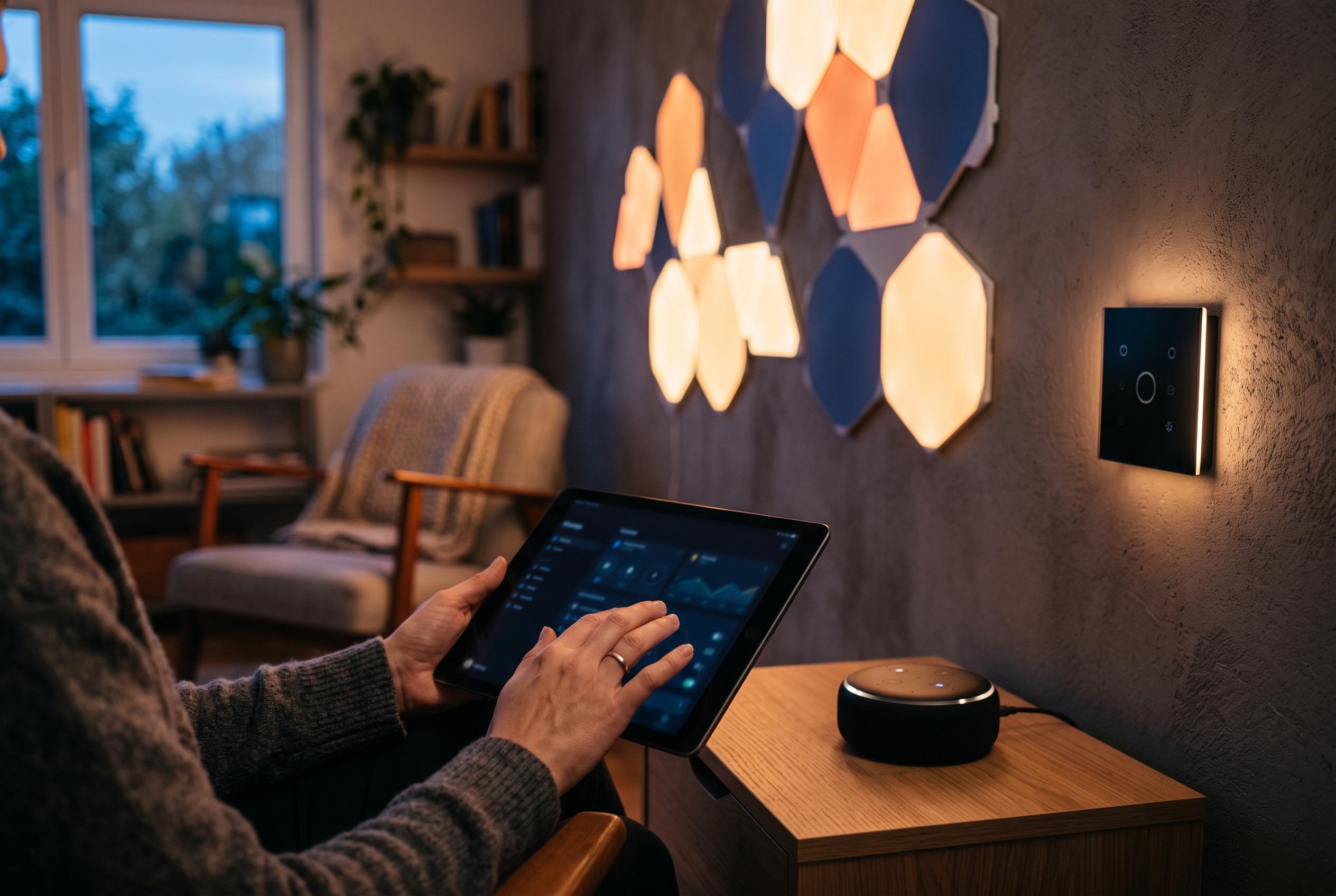

Nanoleaf has introduced a Model Context Protocol server that allows users to control its smart lighting through chatbots like ChatGPT and Claude, signalling a shift towards more conversational and flexible lighting experiences in smart homes.
Nanoleaf has introduced a Model Context Protocol server that allows its lighting products to be controlled through chatbots such as ChatGPT and Claude, bringing a more conversational interface to a category still dominated by app menus, preset scenes and fixed automation rules. According to Nanoleaf’s own description, the system links compatible lights through the Nanoleaf Desktop App and lets users issue plain-language instructions such as asking for a focused working environment or a cozier setting when the weather changes.
The company’s pitch is that the new approach makes smart lighting feel less like a closed appliance and more like a flexible software layer. In practical terms, that means a user can describe a mood, task or environmental cue and let the AI interpret the request rather than building the sequence manually in a proprietary app. Nanoleaf says the MCP standard gives developers a common way to connect AI assistants to external tools and environments, which could make future integrations easier to build and extend.
The move also reflects a broader shift in the smart-home market towards so-called ambient intelligence, in which connected devices respond to context rather than only to direct commands. Industry commentary has framed Nanoleaf’s launch as part of a wider attempt to loosen the grip of walled-garden ecosystems, where users are often tied to one manufacturer’s software and automation logic. By contrast, an open protocol can make it easier to connect lighting with other data sources and services.
That openness is important because the most ambitious uses go beyond simple on-off control. The Verge reported that developers and advanced users can combine Nanoleaf lighting with live weather feeds, webhooks and third-party services so that scenes change in response to conditions such as rain or calendar events. Nanoleaf also says setup guides are available and that pre-built integrations are due to arrive next month, suggesting the company is trying to move the idea from demonstration to everyday use.
There are, however, limits to how quickly this model will be adopted. Using large language models to control basic household devices introduces potential delays, and that may matter when a user wants an immediate response from a light switch. Even so, Nanoleaf’s latest release shows how smart-home hardware is increasingly being presented as infrastructure for software-driven experiences rather than as a standalone product category.
Disclaimer: This content is intended for informational purposes only. Readers are advised to exercise their own judgement, conduct due diligence, or consult a qualified expert before acting on any information provided.