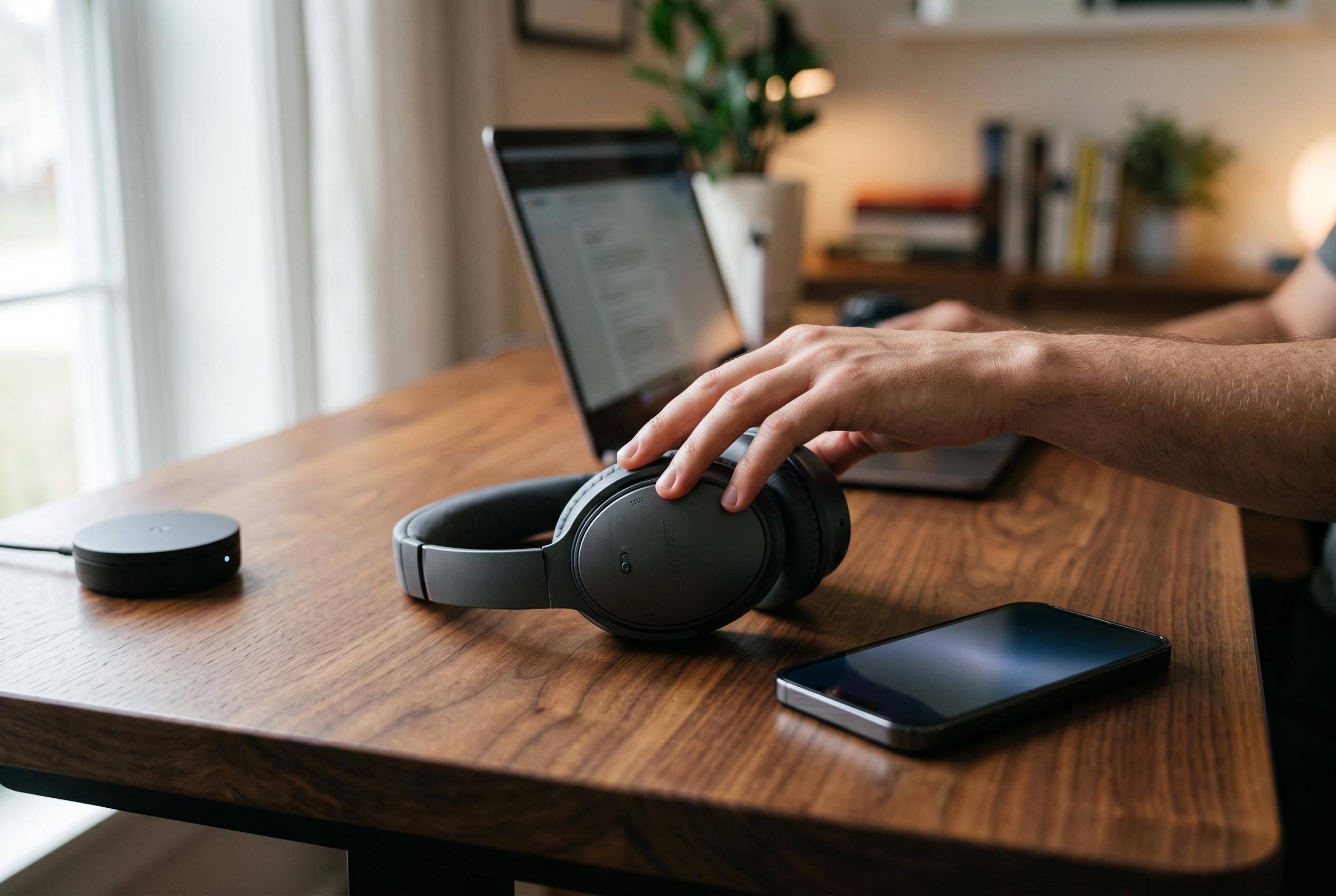

Bose has begun rolling out a firmware update for its QuietComfort Ultra Headphones (2nd Gen) that introduces support for Bluetooth LE Audio and Auracast, enhancing wireless flexibility across Android devices and expanding use cases for the flagship model.
Bose has begun rolling out a firmware update for its QuietComfort Ultra Headphones (2nd Gen) that adds support for Bluetooth LE Audio and Auracast, extending the appeal of a flagship model already known for strong noise cancellation and comfort. According to Bose’s support material, the new features are currently in beta and are aimed at select Android devices running Android 13 or later with Bluetooth 5.2 or newer, while compatibility still varies by phone maker, model and software version. The company says users can switch the feature on or off in the Bose app, after which the headphones restart and reconnect in the chosen Bluetooth mode.
The key technical change is the move to LE Audio, which uses the LC3 codec instead of the older Bluetooth Classic audio stack. Bose says that makes wireless audio more efficient and opens the door to functions that standard Bluetooth was not designed to handle. That should not be confused with lossless playback: the QuietComfort Ultra already supports lossless digital audio over USB-C, which remains the better option when wired fidelity matters most. What LE Audio brings is lower overhead, broader flexibility and support for newer broadcast-style use cases.
Auracast is the more visible of those use cases. It allows one source to send audio to many compatible receivers at once, without the usual one-to-one pairing process. In practical terms, that could make airport televisions, gym screens, museum exhibits, conference halls and public announcements far easier to hear through personal headphones. The same standard can also be used at home, for example to send television audio to more than one pair of headphones at the same time. SoundGuys noted that Bose’s update makes the QuietComfort Ultra 2nd Gen the company’s first headphones to support Auracast.
There is still a catch. What Hi-Fi? reported that the LE Audio element of the update does not work with Apple devices, so the immediate benefit is limited to Android and some Windows users. Bose’s own guidance lists recent Google Pixel, Samsung Galaxy, OnePlus and Xiaomi devices among those most likely to be compatible, but support remains dependent on manufacturer implementation. The company also says the update can temporarily disable Spotify Tap and the voice-assistant shortcut, because those functions rely on the same low-energy Bluetooth connection now being used for LE Audio. What Hi-Fi? added that the firmware package includes other changes as well, including 5.1 spatial audio with head tracking for supported Android devices.
Bose has also used the update to improve USB-C behaviour, which may be as important to many owners as Auracast itself. According to What Hi-Fi? and SoundGuys, the new firmware improves gaming audio balance over USB and broadens compatibility with web-conferencing software, while also enhancing the built-in microphone experience. That matters because the QuietComfort Ultra 2nd Gen is not just a travel headphone; it is increasingly a general-purpose headset for music, calls, gaming and streaming. In that context, the update strengthens an already versatile product rather than introducing a flashy but isolated feature.
The move also places Bose more squarely in the wider LE Audio race. Sony, Samsung, JBL and Sennheiser have already signalled support for parts of the same ecosystem, and the fact that Bose is now joining them on a model as widely used as the QuietComfort Ultra matters for adoption. Auracast has long been pitched as one of Bluetooth’s most promising ideas, but its usefulness has depended on hardware support becoming common enough to matter in real settings. Bose’s latest update does not solve that alone, but it does make the standard harder to ignore.
Disclaimer: This content is intended for informational purposes only. Readers are advised to exercise their own judgement, conduct due diligence, or consult a qualified expert before acting on any information provided.