

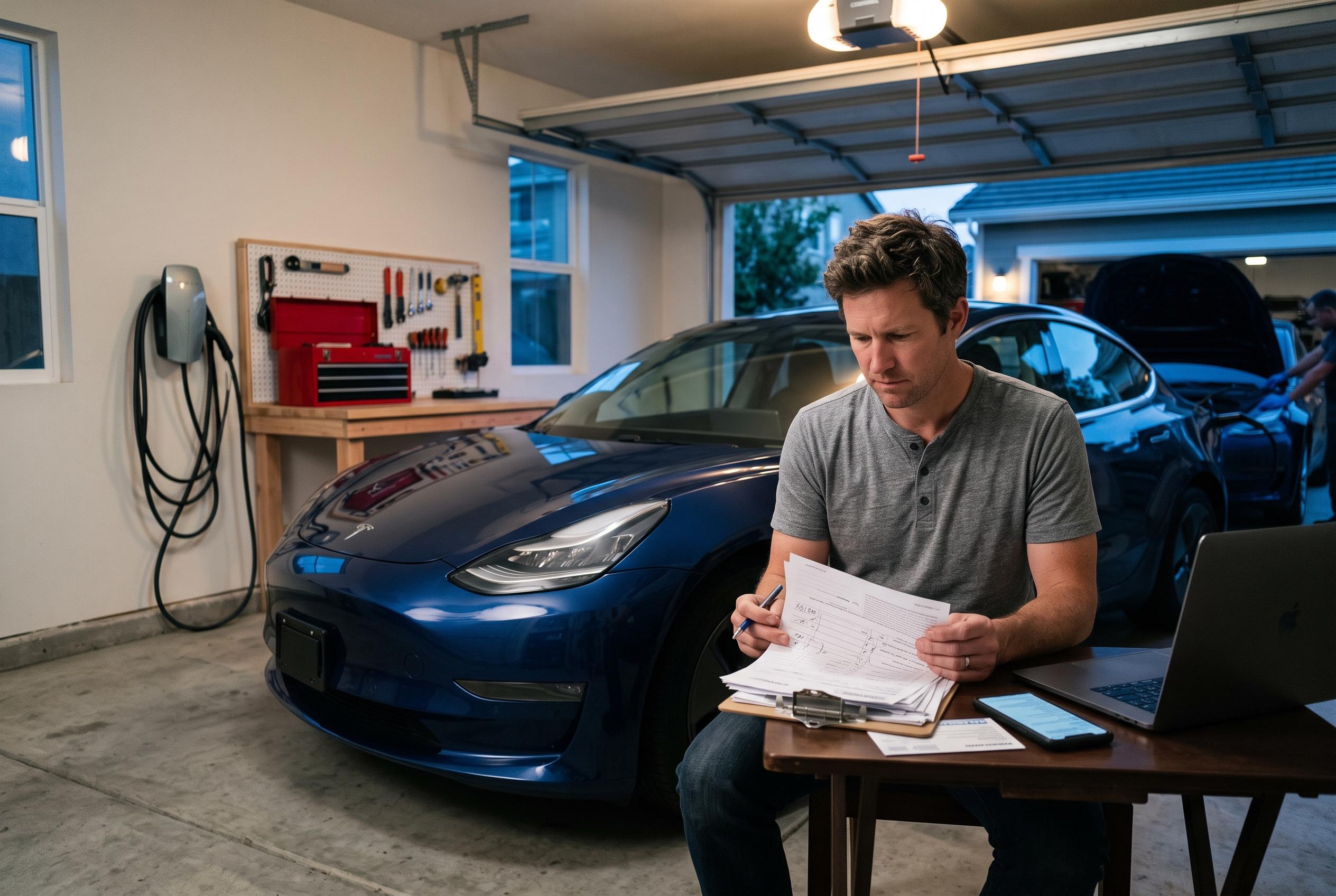

Prolonged repair times for electric vehicles in California, due to warranty defects and supply chain issues, may entitle owners to legal remedies under the state’s lemon law, provided they document the process thoroughly.
Long repair delays on electric vehicles can do more than frustrate owners in California. Under the state’s lemon law framework, time spent waiting for diagnosis, parts, manufacturer approval or repeated software fixes may help demonstrate that a warranty defect has not been resolved within a reasonable opportunity. That is particularly relevant where the fault affects the vehicle’s use, value or safety, whether the problem involves the battery, charging system, power electronics or software, according to California lemon law specialists.
The first point for owners to understand is that an EV’s repair history is often as important as the fault itself. Law firms advising consumers in California consistently stress the value of retaining repair orders, invoices, service notes, texts, emails and dealer correspondence. Records showing when the vehicle was dropped off, what symptoms were reported, how long the car remained in the workshop and whether warranty coverage was approved or refused can all become significant when a claim is reviewed.
Battery-related delays are among the most consequential. EVs may require specialist diagnostics, capacity testing or manufacturer authorisation before a dealer can confirm whether a high-voltage battery, cooling system or related electrical component is defective. If a vehicle sits for weeks awaiting those checks, the delay itself may help show that the problem is persistent and unresolved. Consumer law guides in California note that battery, charging and software defects are fully within the scope of the state’s lemon law protections, and that repeated repair attempts can strengthen a claim if the problem continues after service.
Backordered parts present a similar issue. Where a dealer says a battery pack, module, charge port, cooling component or other critical part is unavailable, owners should ask for that explanation in writing. According to California lemon law practitioners, days spent waiting for parts or manufacturer approval may count towards time out of service, especially if the vehicle cannot be used normally in the meantime. That is why service documentation should capture not only the defect, but also every delay caused by diagnosis, escalation or supply shortages.
Software faults can be just as disruptive as hardware failures. EVs rely heavily on software for battery management, regenerative braking, charging communication, driver assistance and propulsion control. If over-the-air updates, recalibrations or module resets do not fix the issue, repeated visits may amount to multiple repair attempts rather than a genuine resolution. Attorneys who handle California lemon law claims say screenshots of warning lights, app alerts, dashboard messages and service advisories can be especially useful in proving that the defect recurred after repair.
Charging failures and power-train problems can create even clearer evidence of a serious defect. Problems with the charge port, onboard charger, inverter, drive unit or other power electronics may leave the vehicle unable to accept a charge, refuse to start or lose propulsion unexpectedly. Industry and legal commentary on California claims notes that long stays in the workshop, repeated diagnostic testing and multiple visits for the same fault are all relevant when assessing whether the manufacturer had a reasonable chance to repair the car. Safety-related complaints, such as overheating warnings, steering or braking alerts, or repeated power loss, may carry additional weight.
The same is true when a case is repeatedly escalated to the manufacturer for engineering review or technical approval. Owners are often told that EV repairs are complex, but complexity does not remove warranty rights. What matters is whether the defect was repaired within a reasonable number of attempts and whether the vehicle spent too much time out of service. That is why lawyers routinely advise consumers to preserve rental-car records, loaner agreements, mileage at each visit and every written update from the dealer.
For owners evaluating whether a claim may be viable, the practical standard is straightforward: collect everything. Repair orders, invoices, photos, videos, app screenshots, emails and registration records can help establish the pattern of delay and the effect on the vehicle’s use. If the defect persists, California consumers may be able to seek a refund, replacement or another remedy under the Song-Beverly framework, but the strength of the case will depend on the quality of the documentation and the chronology of the repairs.
Disclaimer: This content is intended for informational purposes only. Readers are advised to exercise their own judgement, conduct due diligence, or consult a qualified expert before acting on any information provided.



