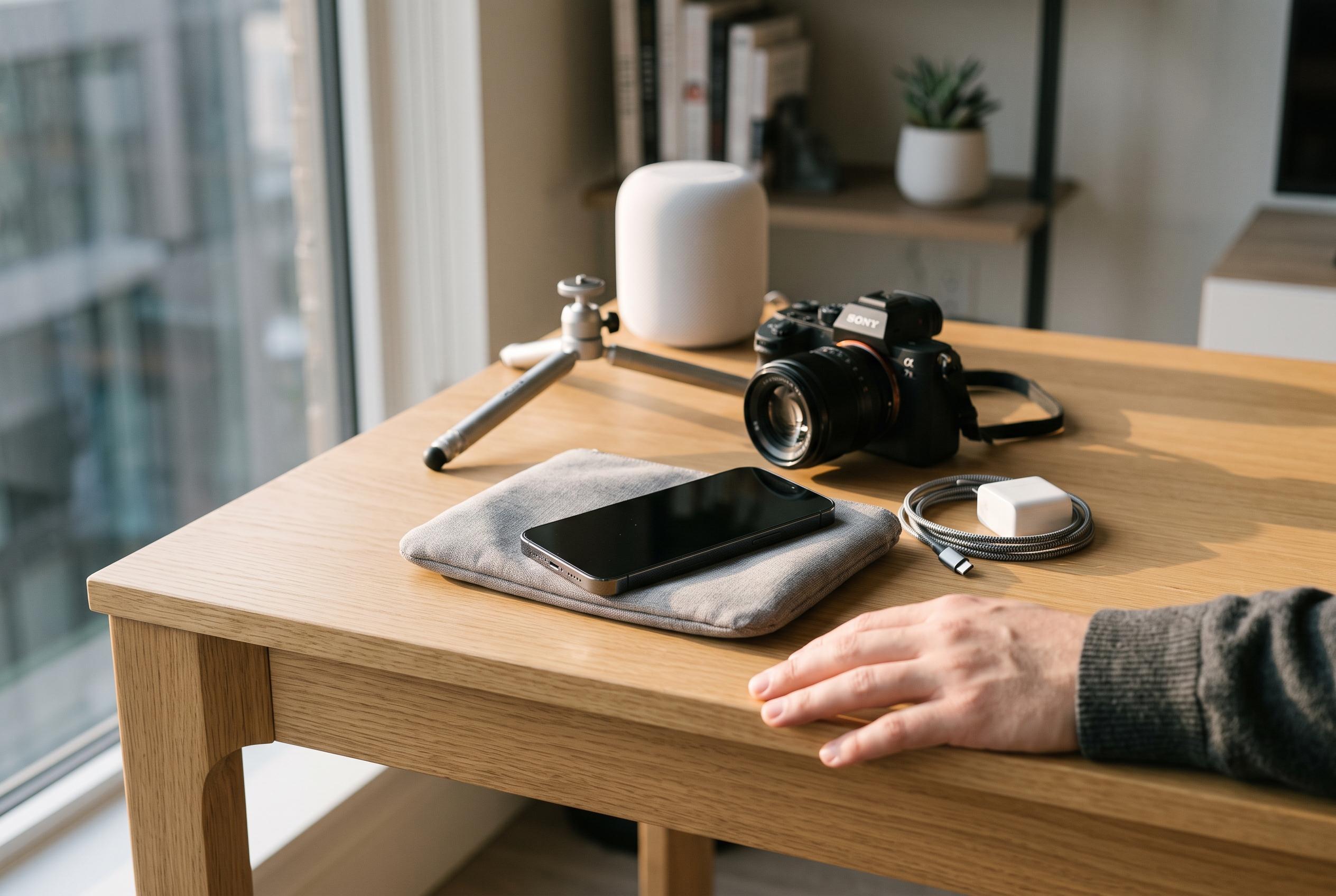

The new iPhone 18 Pro maintains its familiar design while introducing significant camera enhancements, a more powerful A20 Pro chip, longer battery life, and advanced manual photography controls, positioning it as one of Apple’s most mature flagship devices yet.
Apple’s iPhone 18 Pro is less a wholesale redesign than a concentrated refinement of the flagship formula, but the changes are substantial where they matter most. Apple has kept the familiar 6.3-inch Pro size, paired it with four colour options , Silver, Black, Glacier and Burgundy , and pushed the model towards camera work, battery life and sustained performance rather than novelty for its own sake. That approach matches Apple’s launch strategy for 2026, which also includes the larger Pro Max and a separate, higher-end iPhone Duo that could influence how some buyers think about upgrading. According to Apple’s launch materials, the Pro line now leads with a 48MP Fusion Main camera with variable aperture, the A20 Pro chip and longer battery life than before.
The exterior will feel immediately familiar to anyone coming from last year’s Pro model, although Apple has made a few useful adjustments. The Face ID infrared camera has moved behind the display, shrinking the Dynamic Island slightly, and Apple says the revised layout supports more Live Activities at once. In practice, that change is subtle, but the screen itself remains a strength: Ceramic Shield 2 continues to offer strong scratch resistance, while the panel still delivers ProMotion, 3,000 nits of peak outdoor brightness and the kind of contrast and colour handling expected of a top-tier iPhone. Tom’s Guide and Apple both note that the new layout is also tied to a software issue affecting some early devices, with iOS 27.0.1 addressing a Face ID bug rather than any hardware fault.
The biggest hardware advance is the camera system, and it is more meaningful than a simple specification bump suggests. Apple’s variable-aperture main lens can open wider for low-light shooting and close down for greater depth of field, giving the phone a degree of optical control that is unusual in a handset. That translates into more light in dim conditions, less reliance on Night mode, and a better chance of freezing movement when photographing children, pets or street scenes. Apple has also widened the default aperture compared with the previous generation, while preserving the ability to hold multiple subjects in focus when needed. MacRumors says the feature sits at the centre of the new Pro camera strategy, and Tom’s Guide highlights the same lens as a major reason the phone feels more versatile than its predecessor.
Apple has backed the new optics with a more serious set of manual tools. Pro Controls brings shutter speed, focus, white balance and aperture adjustments into the stock Camera app, reducing the need for third-party software. The company has also added Photographic Styles 3, which now includes textures such as soft skin, glow and film, along with more control over tone and intensity. These tools are easy to miss if one only looks at the headline hardware, but they mark a broader shift in Apple’s camera philosophy: the phone is now meant to be adjusted like a compact creative tool rather than simply left to automatic mode. Apple has also added post-capture blur options for video, improved timelapse recording with 4K Dolby Vision HDR and stabilisation, and a Reference Image feature designed to cryptographically tie a photo to the device that captured it.
Performance gains are equally important, especially for users who regularly push the phone beyond everyday messaging and browsing. The A20 Pro chip is Apple’s first iPhone processor made on a 2nm process, and it combines higher benchmark scores with better sustained output thanks to a larger vapour chamber and improved thermal design. Independent testing cited in reviews shows sizeable jumps in single-core and multi-core results, with especially clear benefits in gaming, on-device image processing and complex shortcuts. A separate experiment reported by Tom’s Hardware, in which a chilled can of sparkling water was used to reduce heat, underlined how much the phone’s performance now depends on thermal headroom; Apple’s cooling system appears to be doing the same job in a far more practical way.
Battery life and charging round out the update. Apple says the iPhone 18 Pro supports faster wired charging, with up to 60W input and a 50% charge in around 15 minutes with the right adapter, while MagSafe and Qi2 charging now reach 25W. The company also claims longer video playback than last year’s model, and reviewers have reported a noticeable reduction in the need to top up during the day. That combination makes the device feel less like a marginal step forward and more like a mature flagship that has been tuned in the areas that affect daily use most. For most people, the gains will be most obvious in photography, heat management and battery endurance; for power users, they are enough to make the iPhone 18 Pro one of the most compelling iPhones Apple has shipped in years.
Disclaimer: This content is intended for informational purposes only. Readers are advised to exercise their own judgement, conduct due diligence, or consult a qualified expert before acting on any information provided.