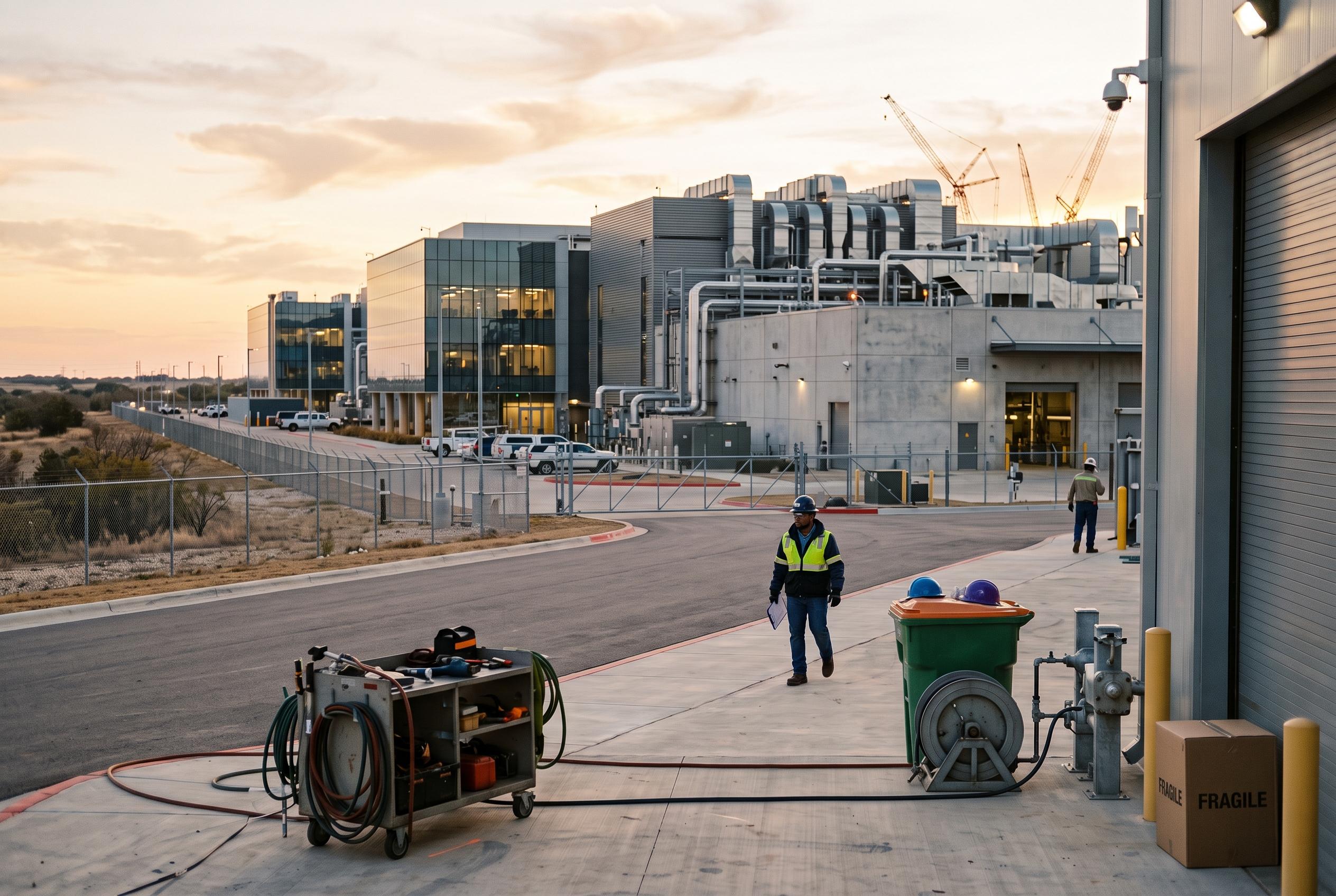

Taiwanese chipmaker TSMC considers a major new manufacturing campus in Texas amid concerns Europe is falling behind in next-generation semiconductor investment, as its expansion efforts remain limited compared to the US.
TSMC is considering a new manufacturing campus in Texas that could include several fabs, each carrying a price tag of at least $20 billion, as the Taiwanese foundry weighs where to place its next wave of overseas capacity. Bloomberg reported that the project is still at an early stage and depends on whether Congress extends a 35% tax credit for domestic chip manufacturing. The company declined to comment on market speculation, but the scale of the discussion underlines how sharply TSMC’s expansion is tilting towards the United States rather than Europe.
That shift is already visible in the company’s existing commitments. TSMC has pledged $265 billion for Arizona, where it is building ten fabs, two packaging plants and a research centre. North America accounted for more than 75% of its wafer revenue this year, according to the figures cited in the reporting. By contrast, TSMC’s European footprint remains limited to a single project near Dresden, developed with Bosch, Infineon and NXP under the European Semiconductor Manufacturing Company joint venture.
The Dresden site is important, but it is not designed to compete with TSMC’s most advanced production. Reuters-style reporting on the project said Brussels approved €5 billion in state aid in August 2024 for a facility whose total cost exceeds €10 billion. The fab is expected to process about 40,000 wafers a month, with equipment installation due in the second half of this year, initial output in 2027 and full capacity in 2029. It will produce chips on 28nm and 22nm CMOS, alongside 16nm and 12nm FinFET lines, which are several generations behind the cutting-edge nodes used for AI accelerators and premium consumer devices.
That gap helps explain why Europe is struggling to compete for the most strategically important investment. ASML, the region’s most valuable technology company and the sole supplier of extreme ultraviolet lithography systems, has warned that the absence of major new European chip fabs is leaving demand for advanced equipment weak. Tom’s Hardware reported that ASML’s public affairs lead has urged the European Union to stimulate domestic chip demand as well as production, arguing that many projects in the bloc remain focused on mature processes rather than the most advanced manufacturing. Even where fabrication exists, much of the packaging work still happens elsewhere, limiting the region’s position in the wider semiconductor chain.
Europe has recorded some progress. Infineon opened a €5 billion power-chip fab in Dresden in July, backed by €1 billion in EU support, which was described as the first concrete success of the bloc’s Chips Act. Yet the broader ambition remains under strain. The European Union wants to capture 20% of global semiconductor output by 2030, but official and industry estimates still place the region well below that level, with the European Court of Auditors judging the target highly improbable. Industry groups are now pressing for a second Chips Act, while the European Commission is preparing one. For TSMC, the question is not whether Europe can host more chip manufacturing. It is whether the continent can compete for the kind of next-generation investment that now appears to be drifting towards Texas.
Disclaimer: This content is intended for informational purposes only. Readers are advised to exercise their own judgement, conduct due diligence, or consult a qualified expert before acting on any information provided.