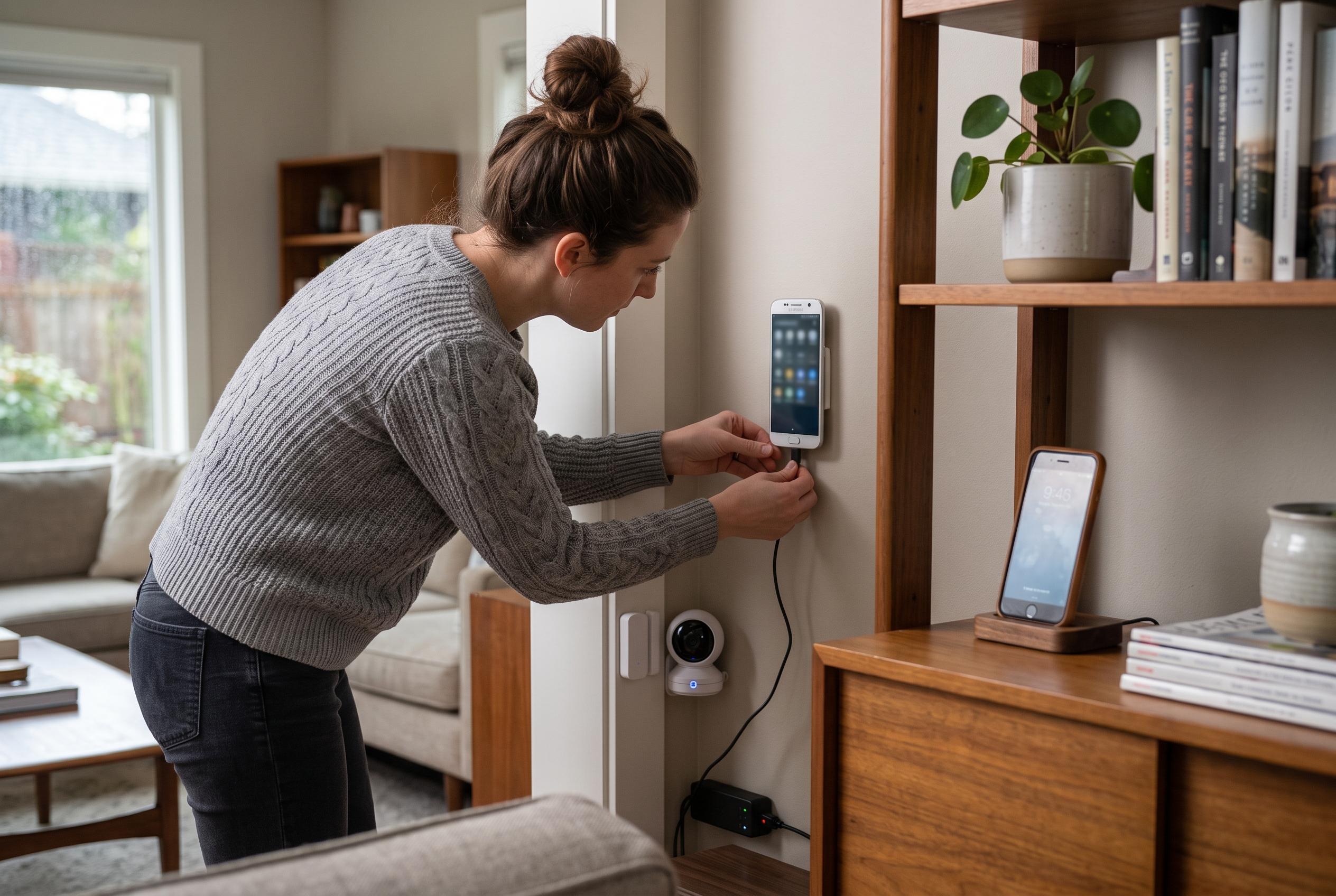

Despite adjustments to its Galaxy Upcycling programme, Samsung still offers practical ways to repurpose ageing Galaxy devices as smart home controllers, security cameras, and environmental sensors, highlighting the potential of legacy smartphones in the evolving smart ecosystem.
Samsung’s long-promised effort to give old Galaxy phones a second life has never quite matched the ambition of the original pitch. The company’s Galaxy Upcycling programme was presented in 2017 as a way to turn ageing handsets into Linux computers, retro games machines and smart home tools, but the idea was later narrowed to a much smaller set of functions. Samsung’s 2021 Galaxy Upcycling at Home beta focused on sound and light sensing inside SmartThings, and the service now appears to have become difficult to access on some devices, including the Galaxy S21 FE used in the case described here. According to Samsung’s own announcement, the programme was intended to reduce electronic waste while turning older phones into practical household devices.
Even with those limits, an old Galaxy can still be surprisingly useful as a dedicated smart home control panel. By installing SmartThings on the spare handset and signing in with the home Samsung account, a user can reach compatible devices already linked to that account, group frequently used lights and routines, and open individual controls for adjustments such as brightness or television settings. The advantage is not only convenience, but separation: a household can leave a spare phone in one room for shared use, rather than handing over a primary handset each time someone wants to change a setting. The trade-off is straightforward. The device must stay charged, and it is wise to keep SmartThings available on the main phone as a backup. Android Central notes that Samsung’s SmartThings Labs can still turn some recent Galaxy phones into light and sound sensors, but the feature depends on supported hardware and current software.
The same handset can also double as a basic home monitoring camera. In the example described, AlfredCamera is used to pair the old phone with a current Android or iPhone as the viewing device, creating a simple video and audio link without buying separate pet-monitor hardware. The app provides live viewing, motion alerts and two-way talk, and it can also listen for sound within a chosen range. That makes it useful for checking on a pet or monitoring a room, although it is still a consumer workaround rather than a purpose-built security system.
There is also a more technical use for the phone’s built-in light sensor. Home Assistant’s Android companion app can expose the handset’s illuminance readings to a running Home Assistant server, allowing those measurements to drive automations. In practice, that means a light can switch on when a room becomes dim enough, or off again when daylight returns. This is more responsive than a fixed schedule, because it reacts to actual conditions rather than the clock. Home Assistant says the sensor updates at regular intervals, with a typical 15-minute cycle and faster modes that can approach one-minute intervals, depending on configuration and whether the phone is charging. That delay matters, but it is still often good enough for lighting logic. Home Assistant also notes that SmartThings integration remains available, though Samsung has announced that free external access to the SmartThings API will end from October 2026, with a paid Personal Plan required thereafter.
Taken together, these workarounds show that the value in an old smartphone is not limited to its original purpose. A retired Galaxy contains a display, camera, microphone, radios, sensors, memory and storage that would cost real money if bought separately. Used properly, it can replace several single-purpose gadgets at once. Samsung’s own hub strategy is moving in the same direction, with SmartThings expanding into appliances and other devices, while newer hubs such as the Aeotec Smart Home Hub 2 are designed to improve local processing and responsiveness. But for anyone already holding an unused handset, the practical lesson is simpler: the phone may already be enough.
Disclaimer: This content is intended for informational purposes only. Readers are advised to exercise their own judgement, conduct due diligence, or consult a qualified expert before acting on any information provided.