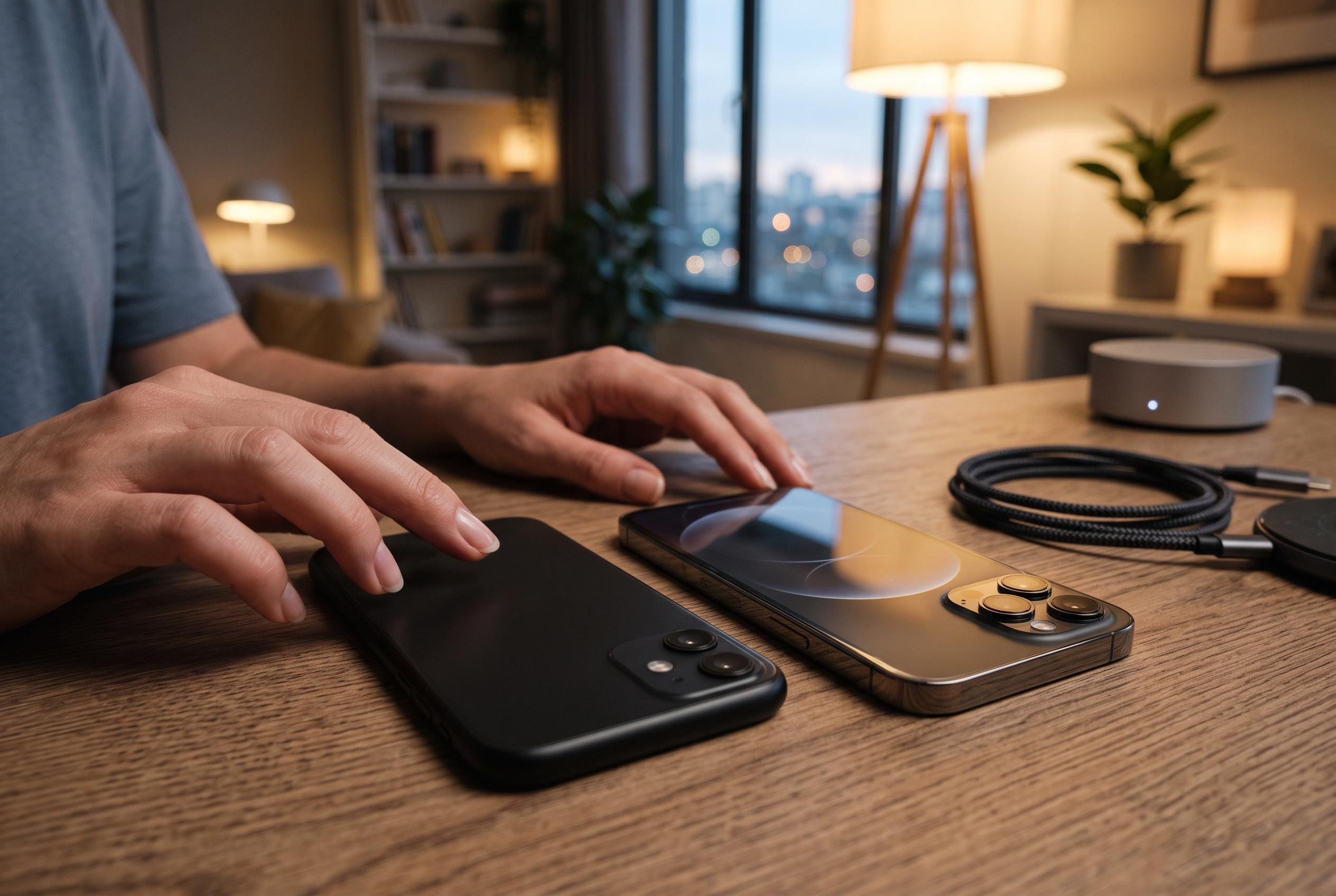

Apple distinguishes its recently launched iPhone 17e as a more affordable yet capable alternative to the iPhone 17, highlighting differences in display, camera, and connectivity features to cater to varied consumer needs.
Apple now has a clearer distinction between its two more affordable iPhones than it did in earlier generations. The iPhone 17e is the cheaper route into the current line-up, while the standard iPhone 17 asks for a noticeable premium in exchange for a fuller feature set. Reviews from GSMArena, MacRumors, PhoneArena, NanoReview, TechRadar and Tom’s Guide all point to the same basic trade-off: the 17e preserves much of the core iPhone experience, but the 17 is the more complete device.
On design, the two phones are closer than their price gap might suggest. Both use a premium construction with Ceramic Shield 2 on the front, an aluminium frame and a glass rear, and both are rated for IP68 protection. The iPhone 17e is slightly smaller and lighter, which makes it feel more compact in the hand, but GSMArena notes that the iPhone 17 is likely to appeal to more buyers overall because it is still slim, familiar and only marginally larger. The difference is less about materials than about how much of the modern Apple experience each model packages into that frame.
The display is where the hierarchy becomes obvious. The iPhone 17e keeps a 6.1-inch OLED panel with a 60Hz refresh rate and the older notch design. The iPhone 17 moves to a larger 6.3-inch LTPO OLED panel with ProMotion at 120Hz, a brighter presentation and Dolby Vision support. MacRumors and TechRadar both treat this as one of the most important gaps between the models, and that view is supported by the hands-on review data: the smoother scrolling, larger canvas and higher brightness make the regular iPhone 17 feel substantially more modern.
Battery life is more balanced. GSMArena’s testing gave the iPhone 17e a slight edge in overall endurance, helped by its larger battery and smaller screen, even though the regular iPhone 17 held up better in some streaming and gaming tasks. Charging is less even: both phones support USB-PD fast charging, but the iPhone 17 recharges a little faster, and it also has the stronger wireless charging setup. The 17e is limited to the older Qi standard at 15W, while the iPhone 17 supports faster 25W MagSafe charging with Qi2.
Performance, in practice, is close enough that most users would struggle to tell the difference day to day. Both phones use Apple’s A19 platform and 8GB of RAM, but the iPhone 17e has one fewer GPU core. Benchmark comparisons from GSMArena, PhoneArena and NanoReview all show the same pattern: general processing is broadly similar, while the iPhone 17 has a clearer lead in graphics and gaming. The iPhone 17 also has the better connectivity package, with tri-band Wi‑Fi 7, Bluetooth 6.0 and Ultra Wideband support, whereas the 17e settles for more modest wireless hardware.
Cameras are where the iPhone 17e makes its biggest compromises. It relies on a single rear camera and omits the ultrawide lens entirely, while the iPhone 17 adds a more versatile dual-camera system and Apple’s newer front camera hardware. GSMArena found that daylight shots from the main camera are often close, but the standard iPhone 17 pulls ahead in 2x crops, low-light detail and flexibility. Video follows the same pattern: both models can shoot up to 4K at 60fps, but only the iPhone 17 can record from the ultrawide camera. For buyers who photograph a wide variety of scenes, that extra lens matters more than the price difference might first suggest.
Taken together, the iPhone 17e looks like a carefully trimmed model rather than a stripped one. It keeps the premium build, the A19 chip, strong battery life and the core iPhone software experience, while accepting older display technology, slower wireless charging and a much simpler camera system. That makes it a credible choice for buyers who want to spend less without moving away from Apple’s ecosystem. But the iPhone 17 remains the more rounded phone, and for many people the 120Hz display, better cameras and stronger connectivity will justify the higher asking price.
Disclaimer: This content is intended for informational purposes only. Readers are advised to exercise their own judgement, conduct due diligence, or consult a qualified expert before acting on any information provided.