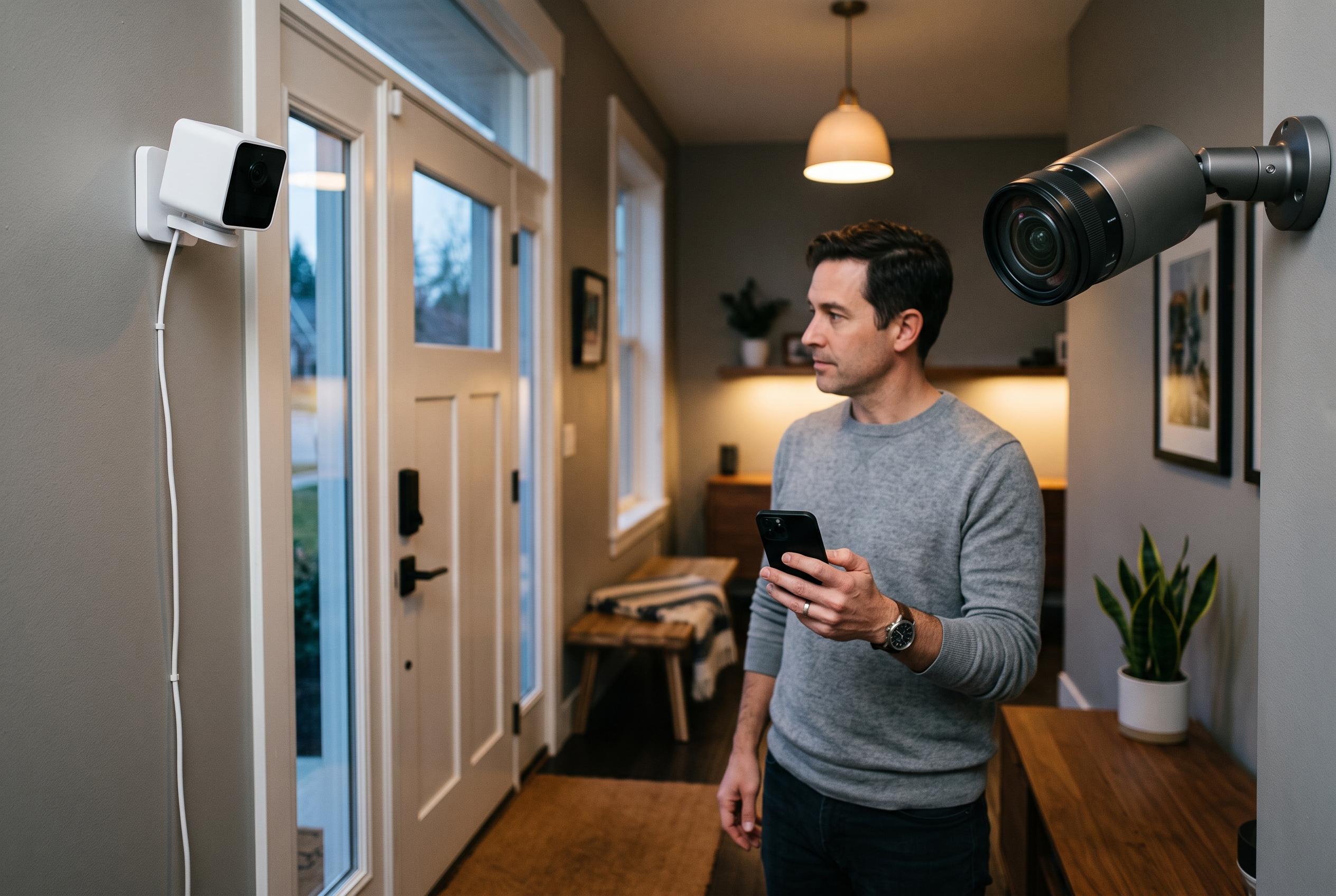

The smart home security camera market is evolving rapidly, with the Wyze Cam v4 2.5K leading affordability, while high-end options like the Reolink OMVI 3i push towards near-commercial features, shaping consumer choices on resolution, installation, and ongoing costs.
Smart home security cameras now sit at the centre of many domestic security setups, but the market is crowded and the trade-offs are not always obvious. According to the AI-assisted guide from DigitechBytes, the strongest all-round option in its roundup is the Wyze Cam v4 2.5K, chosen for its balance of image quality and affordability, while the Arlo Pro 2K HDR is positioned as a more premium alternative for users who want richer features and deeper smart-home integration.
The guide’s ranking reflects a familiar set of priorities: resolution, installation method, app usability, and the cost of keeping the system running over time. Higher-resolution models can improve the chances of identifying faces or number plates, but they also place greater demands on bandwidth and storage. Wired cameras usually deliver a steadier feed, yet they are harder to install. Wireless models are easier to place and reposition, though they often depend on battery life and a stable home network. The article also stresses that AI-based motion detection, person alerts and two-way audio can make a camera more useful in day-to-day use, but those features tend to raise both the upfront price and the likelihood of subscription costs.
That broader advice is borne out by recent product releases and independent reviews. TechRadar’s review of the Reolink OMVI 3i highlights a more ambitious outdoor camera with dual 10MP panoramic lenses, a 4K pan-and-tilt unit, onboard AI that separates people, vehicles and animals, plus package-theft detection and a loud siren. It is a reminder that the market is moving well beyond basic motion alerts. For buyers with larger properties or higher security demands, the OMVI 3i shows how far consumer devices have moved towards near-commercial monitoring, although its size and installation demands will not suit every home.
Elsewhere, PCWorld’s 2024 guide places the Arlo Pro 5S 2K at the top of its list, citing 2K HDR video, a wide field of view and flexible power options, including battery, solar and mains accessories. TechRadar also points to the Ring Stick Up Cam Pro as a strong choice for Alexa users, thanks to radar motion detection, colour night vision and dual-band Wi-Fi. These recommendations reinforce the same pattern seen in the DigitechBytes roundup: the best camera depends less on headline specifications than on how well it fits a particular home, platform and tolerance for ongoing maintenance.
At the value end of the market, the latest Blink cameras underline why simplicity still matters. TechRadar says the Blink Outdoor 2K+ brings 2K recording, improved night vision and smarter subject detection to the company’s long-running wireless format, while retaining the battery life and easy installation that made the brand popular. Forbes has also highlighted the Blink Outdoor 4 as a practical choice for basic outdoor coverage, with person detection and long battery life. Taken together, the current crop of cameras suggests that buyers now need to decide not only how much detail they want, but also how much complexity, subscription dependency and maintenance they are prepared to accept.
Disclaimer: This content is intended for informational purposes only. Readers are advised to exercise their own judgement, conduct due diligence, or consult a qualified expert before acting on any information provided.