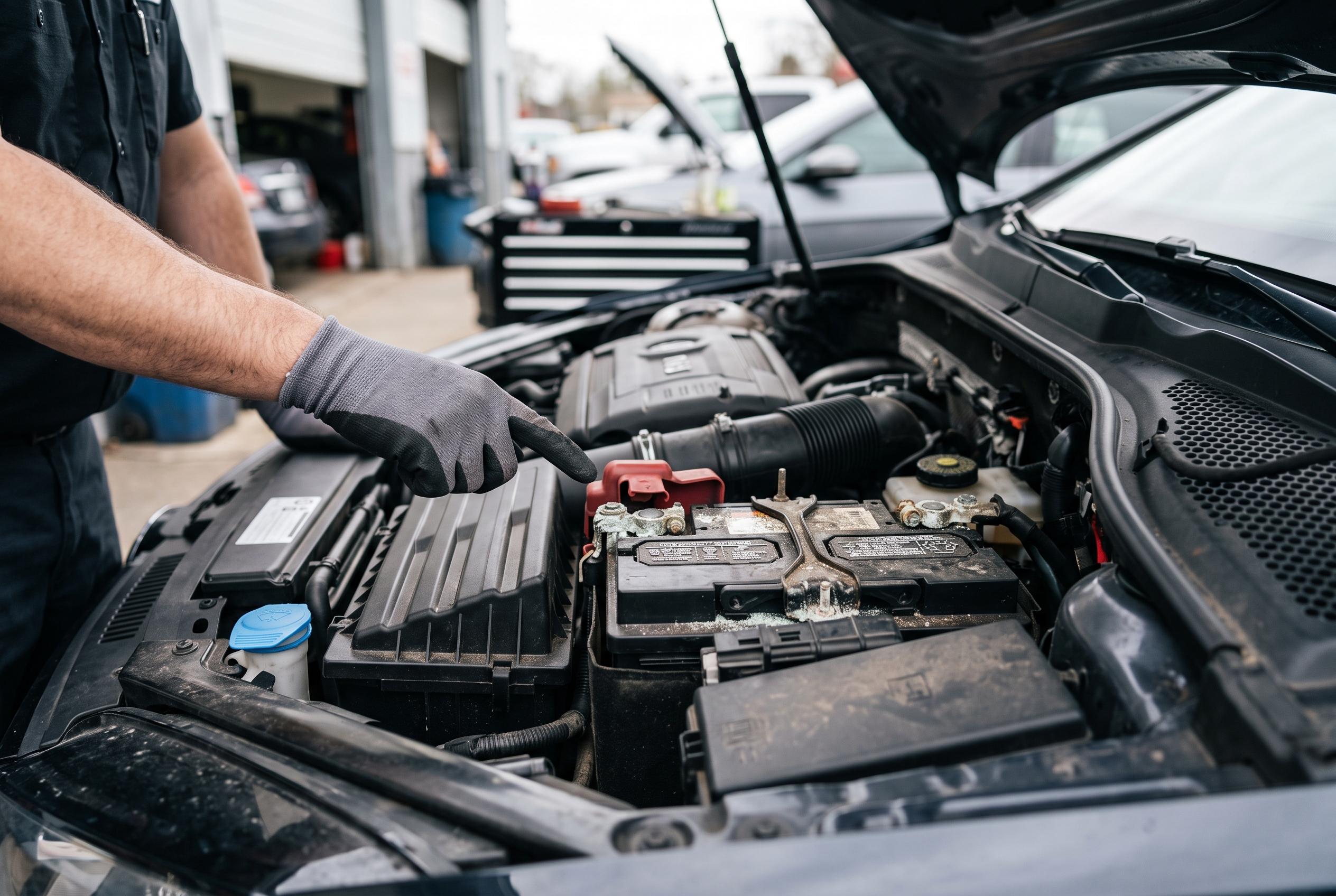

Understanding the early warning signs of a failing car battery is crucial, as subtle symptoms can often mask underlying issues with the charging system or alternator. Proper diagnosis and timely replacement ensure vehicle reliability and safety.
A car battery rarely fails without leaving clues. In many cases, the first signs are subtle: the engine turns over more slowly, the lights look weaker than usual, or the vehicle needs a jump start more than once. AAA Club Alliance says these are among the most common warnings that a battery may be nearing the end of its service life, although the same symptoms can also point to a charging-system fault or an alternator problem.
The battery itself is only part of the story. It provides the power needed to start the engine, while the alternator and related charging components help keep the electrical system supplied once the vehicle is running. That is why a weak start, clicking noise, or dim headlights should not automatically be treated as proof that the battery is the only fault. Toyota’s car-care guidance also highlights sluggish engine turnover as a key sign worth taking seriously, and KBB notes that dashboard warning lights can be an important clue that something in the electrical system needs attention.
Age matters, but it is not a complete diagnosis. AAA commonly describes three to five years as a typical battery lifespan, yet actual life varies with climate, driving habits, vibration, maintenance and the amount of electronic load in the vehicle. Heat is especially hard on batteries, and frequent short trips can also shorten their life because the battery may not have enough time to recover fully between starts.
Physical inspection can reveal problems that are easy to miss from the driver’s seat. GarageDex points to a swollen case, corrosion, flickering lights and malfunctioning electronics as warning signs, while Batteries Plus notes that corrosion around the terminals and slow starts are also common indicators. If the case is cracked, leaking or visibly distorted, the battery should not be ignored. It may be unsafe to handle and should be assessed by a professional.
Testing is the most reliable way to separate a weak battery from a broader electrical fault. A resting voltage reading from a multimeter can be useful, but it does not tell the full story because a battery can appear acceptable at rest and still fail under load. Explainfact.com and GarageDex both recommend load testing, which places the battery under demand and gives a clearer picture of its ability to deliver starting power. In practice, many workshops can test both the battery and the charging system, which is often the quickest route to an accurate diagnosis.
That distinction matters because replacing the battery alone will not solve every starting problem. If the alternator cannot recharge the system properly, even a new battery may fail again. Repeated jump starts are another warning sign that should prompt a proper investigation rather than a quick swap. In some cases, the real cause is a drain while the car is parked; in others, the issue is simply that the charging system is not doing its job.
Replacement should be based on test results, visible condition and the vehicle’s specifications, not on guesswork. The right battery must fit properly, match the terminal layout and meet the vehicle’s starting and electrical requirements. A modern car may also need battery registration or a reset of the battery-management system after installation. For drivers of hybrid and electric vehicles, the issue is different again, because the conventional 12-volt battery and the high-voltage propulsion system serve separate functions and have different service requirements.
Disclaimer: This content is intended for informational purposes only. Readers are advised to exercise their own judgement, conduct due diligence, or consult a qualified expert before acting on any information provided.