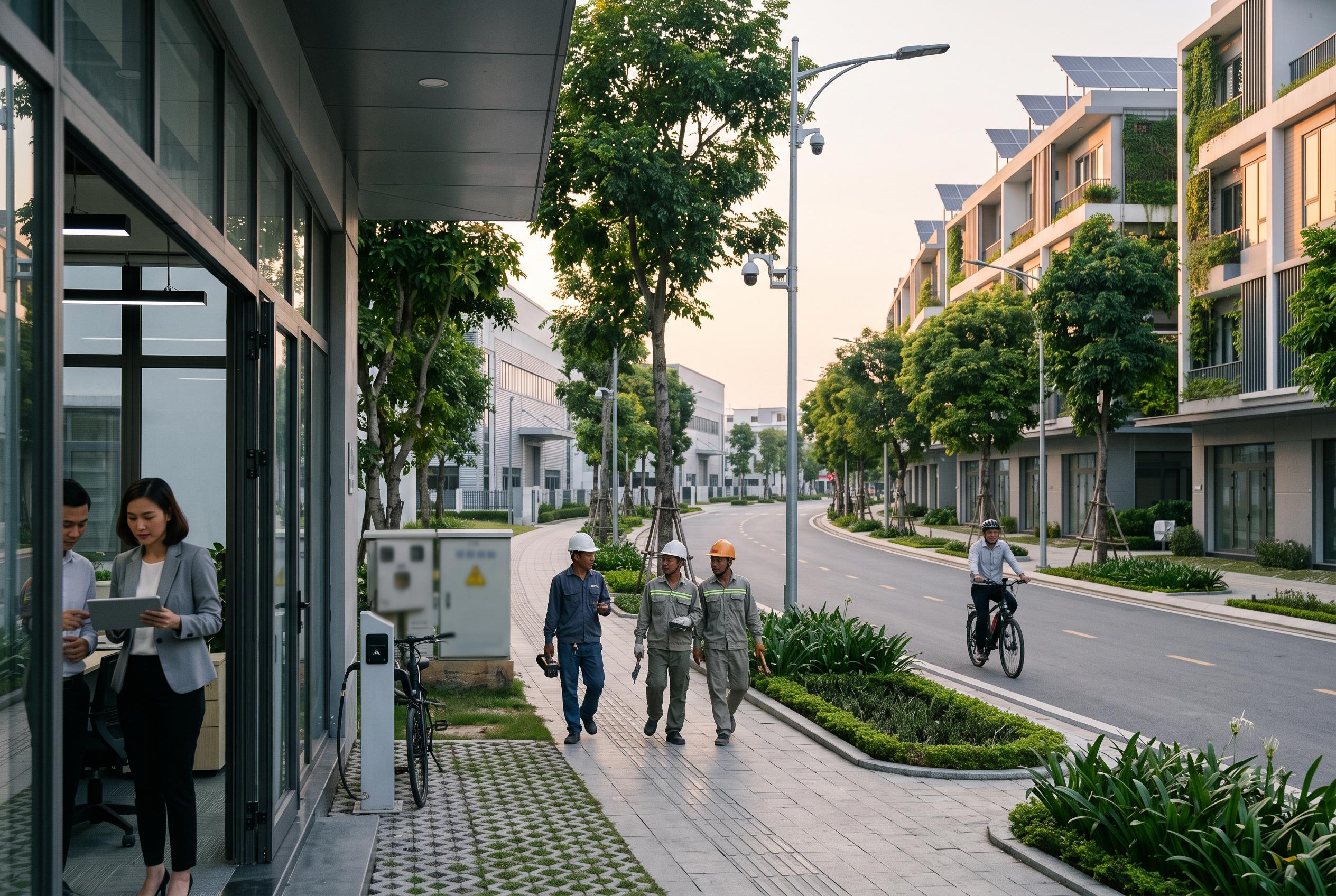

Bac Ninh is shifting its industrial focus towards advanced manufacturing, digital infrastructure, and smart urban management, aiming to build a resilient, innovation-driven economy as it prepares to become a centrally controlled city.
Bac Ninh is using Resolution 57-NQ/TW as a framework to reposition itself as a province built on advanced manufacturing, digital infrastructure and smarter urban management. As it prepares to become a centrally run city, local leaders say the goal is no longer simply to host factories, but to shape an urban economy that is greener, more technologically sophisticated and more closely tied to high-value production. According to VietnamPlus, the province is seeking to strengthen its standing in electronics, semiconductors and artificial intelligence while moving towards a growth model that relies more heavily on science, innovation and digital transformation.
The industrial strategy now being pursued is notably more selective than the earlier phase of rapid foreign investment attraction. Bac Ninh has identified semiconductors, robotics, environmental industries, renewable energy, new materials, information technology, pharmaceuticals, healthcare equipment and aerospace as priority sectors. The province is also examining specialised industrial zones, including high-tech areas for private firms involved in science, technology and digital transformation, as well as facilities for high-tech agricultural processing and machinery production. This approach reflects a broader effort to build an ecosystem, not just a collection of projects, with greater emphasis on research, development and local capability.
That shift is being underpinned by a pipeline of physical and institutional planning. Provincial officials told VietnamPlus that Bac Ninh has completed key planning work needed to support high-tech investment, R&D and workforce training. Among the most significant projects is a concentrated information technology park of about 259 hectares, intended to function as a national and international centre for IT research, development and production. The park is expected to support around 20,000 jobs and include research facilities, incubators, production space, expert housing, exhibition space and service infrastructure. The province has also incorporated a high-tech industrial zone in Dao Vien of about 105 hectares, a 213-hectare digital technology zone and a proposed 100-hectare regional science and technology research area.
Independent coverage from Cong Thuong, the Vietnam Institute for Industry and Trade and Voice of Vietnam indicates that Bac Ninh’s semiconductor ambitions already rest on a substantial investment base. The province has attracted 33 semiconductor-related projects with total registered capital of more than $2.742 billion, including six projects in chip production and 27 in supporting industries. The largest names include Amkor Technology, Hana Micron Vina and Micro Commercial Components. Those figures help explain why Bac Ninh is increasingly seen as one of Vietnam’s key industrial platforms for semiconductor assembly, packaging and supporting manufacturing, even as the province tries to move further up the value chain into design, testing and core technology.
The next challenge is human capital. Bac Ninh is working with businesses on pilot training in international-standard semiconductor skills and accelerating investment in research and training facilities tied to university urban districts. At the same time, the province is pushing ahead with its smart city agenda. Under a plan issued in February 2026, Bac Ninh has placed science, technology, innovation and digital transformation at the centre of urban development, with priority given to healthcare, environment, water, waste, transport and other essential services. Officials are also preparing a “digital twin” project for urban management, which would give planners a more integrated digital environment for land use, construction, housing and technical infrastructure.
That urban strategy is being paired with a more disciplined approach to investment. Bac Ninh says it now wants projects with higher knowledge content, cleaner technology and stronger added value, rather than growth at any cost. The province’s industrial base already includes major global manufacturers such as Samsung, Foxconn, Canon, Goertek, Luxshare ICT, Amkor and Hana Micron, which have helped embed Bac Ninh in global supply chains. With cumulative investment in Bac Ninh now standing at about $98.9 billion, including nearly $52 billion in foreign direct investment and more than 3,670 active projects, the province is trying to convert scale into depth. Its leaders believe Resolution 57 can be turned into concrete industrial zones, data systems, training programmes and urban projects that support a more advanced and more resilient growth model.
Disclaimer: This content is intended for informational purposes only. Readers are advised to exercise their own judgement, conduct due diligence, or consult a qualified expert before acting on any information provided.