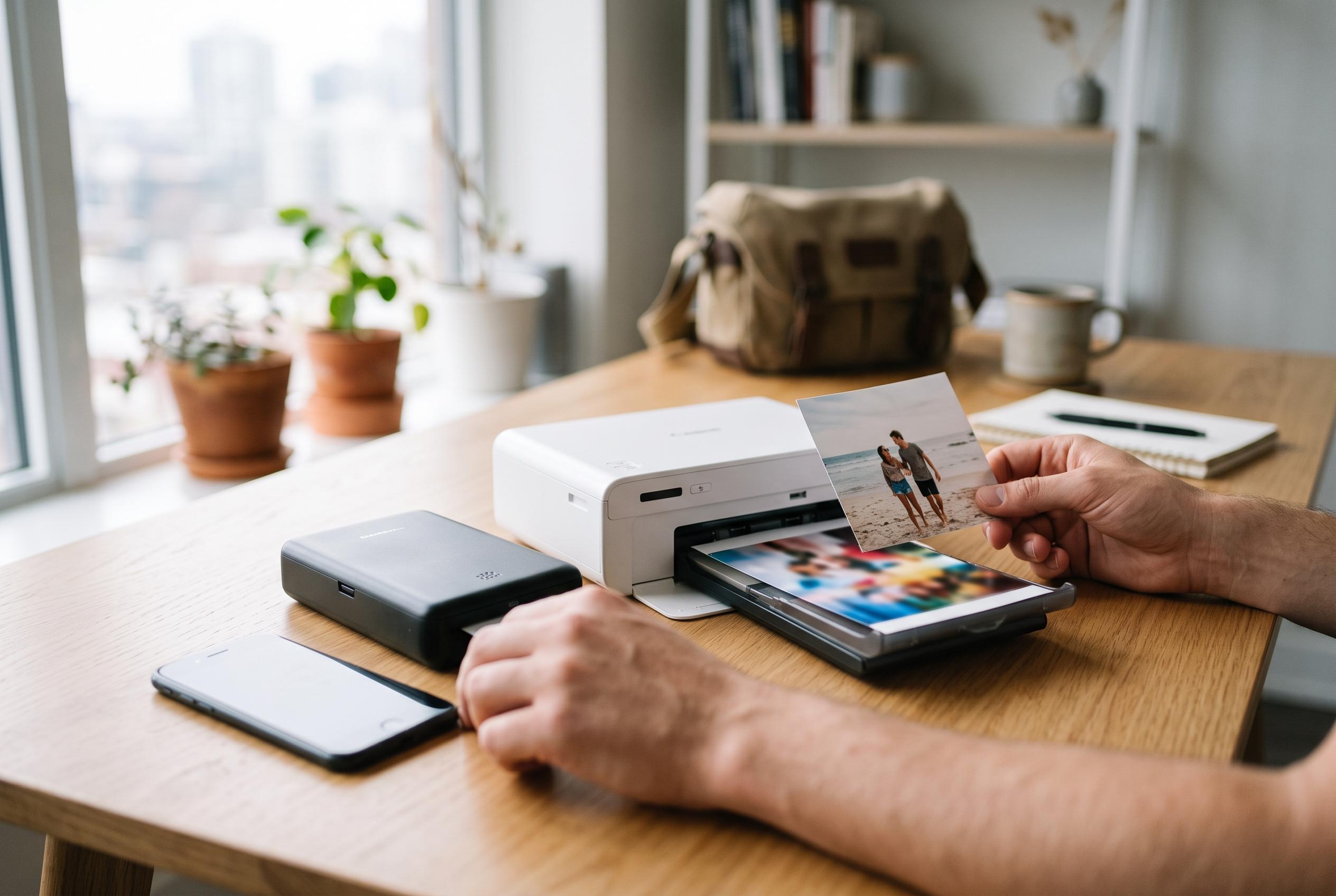

The latest portable photo printers are offering diverse options, from compact pocket devices for stickers to high-quality 4×6-inch printers, with innovations in technology and cost efficiency redefining photo printing on the go.
Portable photo printers have moved from novelty gadgets to practical tools for people who want physical copies of phone pictures without a full-size home printer. The strongest models now split into two broad camps: compact 2×3-inch devices for stickers, journalling and casual sharing, and 4×6-inch printers for more traditional photographs, albums and framed prints. The most useful options also differ in technology, with ZINK machines avoiding ink cartridges entirely and dye-sublimation models typically offering a cleaner, more photographic finish.
For buyers who prioritise pocketability, the KODAK Step Mini Printer remains one of the simplest choices. Amazon’s product description says it uses ZINK media, connects by Bluetooth and NFC, and works with both iOS and Android through an app that adds stickers, filters and collages. The HP Sprocket 2nd Edition follows the same small-format logic, but adds multi-device Bluetooth 5.0 support and an app aimed at shared printing, which makes it a better fit for parties and social events where several people want to print the same picture.
If the goal is a more conventional print, the Canon SELPHY CP1500 and KODAK Dock Plus are the more relevant options. The Dock Plus uses 4PASS dye-sublimation printing, which the manufacturer says adds a protective layer against fingerprints, water and fading, while its docking setup offers a more direct route from phone to print. The Canon model, meanwhile, is aimed at users who want broader connectivity and a standard 4×6-inch photo without giving up a compact footprint.
Among the 4×6-inch category, the Liene M100 stands out for households that print in batches. According to the product information, it includes 100 sheets and three cartridges, and its built-in Wi-Fi hotspot can support up to five devices at once. That makes it a stronger family option than many pocket printers, particularly for shared use after holidays, birthdays or other events where several people want copies quickly.
For users who value adhesive mini prints, the Canon Ivy 2 and Liene Pearl K100 take slightly different approaches. The Canon model uses ZINK technology and is pitched at travellers and scrapbookers who want peel-and-stick photos from a phone. The Liene Pearl K100 also uses inkless Zink printing, but pairs that with Bluetooth 5.2 and a claimed output of up to 30 prints per charge, which makes it attractive for craft projects and short trips where carrying extra supplies would be inconvenient.
Creative users may prefer the Nelko PP01 or Liene Pearl N200 Pro. The Nelko printer uses inkjet technology at 600 DPI on sticky-backed 2×3-inch paper, and its app includes frames, collages, filters, stickers and text. The Liene Pearl N200 Pro leans even harder into editing, with AI styles, background removal, timestamps and watermarks built into the app, alongside adhesive media and dye-sublimation output at 300 x 300 dpi. Both are better suited to scrapbooking, labels and party favours than to formal photo display.
Running costs matter as much as print quality, especially with portable printers. ZINK models reduce maintenance by removing ink cartridges from the equation, but that convenience shifts the cost into proprietary paper. Dye-sublimation printers generally produce more polished prints, yet they rely on matched media packs and cartridges. In practice, the best value depends less on the sticker price of the printer than on the cost and availability of replacement supplies over time.
The broad pattern is clear: choose 2×3-inch models if portability, stickers and quick phone printing matter most, and move to 4×6-inch printers if you want photos that are easier to file, frame or give away. That distinction matters because the most capable portable printer is rarely the smallest one. The right choice is the one that matches how you actually use your pictures, whether that means a travel-friendly pocket device or a more substantial home printer with better print finish and wider compatibility.
Disclaimer: This content is intended for informational purposes only. Readers are advised to exercise their own judgement, conduct due diligence, or consult a qualified expert before acting on any information provided.