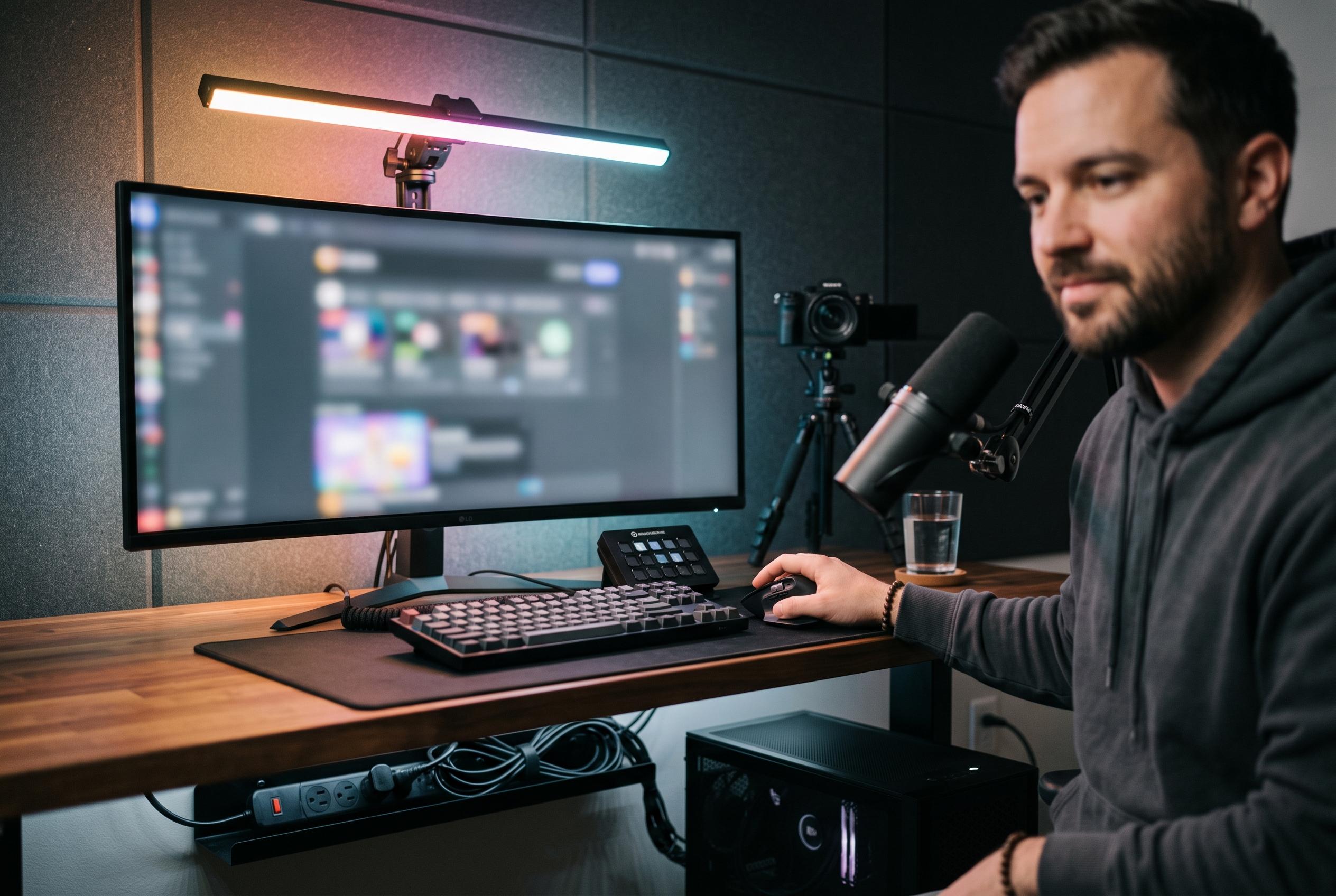

As RGB lighting for streaming evolves, creators prioritise stability, white light control, and long-session reliability over flashy effects, with new compact and professional options redefining how streamers illuminate their setups.
For streamers choosing an RGB light in 2026, the practical question is no longer whether the panel can cycle through colours, but whether it can do so without ruining skin tone, introducing flicker or adding fan noise to a microphone-heavy setup. The short answer is that the strongest options are still compact panels with proper white-light control, pass-through charging and a build that can cope with long sessions. The ULANZI VL49 RGB remains the most versatile pocket-sized choice for quick desk setups, while the PIXEL G1s appeals to users who want app control in a sturdier metal body, and the NEEWER 660 PRO is the clear step up when a light must work as a genuine key source rather than an accent.
That split matters because RGB lighting for streaming is not the same as RGB lighting for effects work. A saturated magenta wash behind a chair can look striking, but it is rarely useful on a face, where accurate white rendering is far more important than colour theatrics. The better products in this category mix RGB with a separate white or bi-colour channel, allowing the background to carry the colour while the subject stays natural. That is why small panels such as the ULANZI VL49 and NEEWER RGB61 are well suited to close-range fill and accent work, while larger units such as the NEEWER 660 PRO and IVISII G2 are better choices when a creator needs to light from farther away or maintain quality over several hours.
Among the compact lights, the ULANZI VL49 is still the easiest all-round recommendation. Reviews of the VL49 emphasise the same qualities: it is tiny, easy to mount, and simple to use in a hurry, which is exactly what matters in a home studio or bedroom stream. Its appeal is not raw power so much as convenience, with enough output for close-in face lighting, a useful RGB range and USB-C charging that keeps it practical during live use. Independent reviews also back up its value proposition, noting that it performs well for creators who want a simple, inexpensive light that can move from camera cage to monitor or stand without fuss.
The more polished alternative is the PIXEL G1s, which offers app control and a more substantial build. That makes it a better fit for streamers who like to switch presets or adjust a scene without touching the light itself. It is also one of the stronger mid-range options for colour fidelity, which helps keep skin tones from drifting when the RGB channel is pushed harder. If the trade-off is a slightly more complicated control layout, the benefit is a more deliberate, studio-like workflow. For many users, that makes it more useful than cheaper panels that technically do the same job but are slower to manage once the camera is live.
At the higher end of the compact category, the NEEWER RGB61, SmallRig RM120 and IVISII G2 all solve different problems. The NEEWER RGB61 is the most flexible close-up fill light, helped by its magnetic back and softening diffuser; the SmallRig RM120 stands out for its all-metal body, high colour ratings and precise controls; and the IVISII G2 is the endurance pick, with the longest-running battery performance and a very wide white-light range. For streamers who work long evenings, that distinction is important. A light that lasts through an entire session, stays cool and remains silent is often more useful than one that is brighter on paper but less reliable in practice.
When the job changes from face lighting to primary illumination, the NEEWER 660 PRO becomes the most serious option in the list. It is the only product here that behaves like a true studio key light, with enough output to work from a greater distance and barn doors that let the user shape spill rather than simply soften it. That is a different class of tool from the pocket panels, and it is the right answer for wide shots, larger rooms or setups where the light needs to sit away from the camera. The trade-off is size and power requirements: it is not a grab-and-go accessory, but it is the clearest solution for a streamer who wants a proper lighting rig rather than a compact accent panel.
For most people, the buying decision comes down to three questions: how far the light sits from the face, how long it must run, and whether the colour is doing practical work or simply adding atmosphere. The compact RGB panels are best for close streaming, background colour and small room setups. The larger key light is better for fuller, more controlled illumination. In other words, the right light is the one that matches the room and the length of the session, not the one with the most effects. The strongest products in this category succeed because they combine usable white light, stable output and sensible controls, not because they chase the highest number of colours.
Disclaimer: This content is intended for informational purposes only. Readers are advised to exercise their own judgement, conduct due diligence, or consult a qualified expert before acting on any information provided.