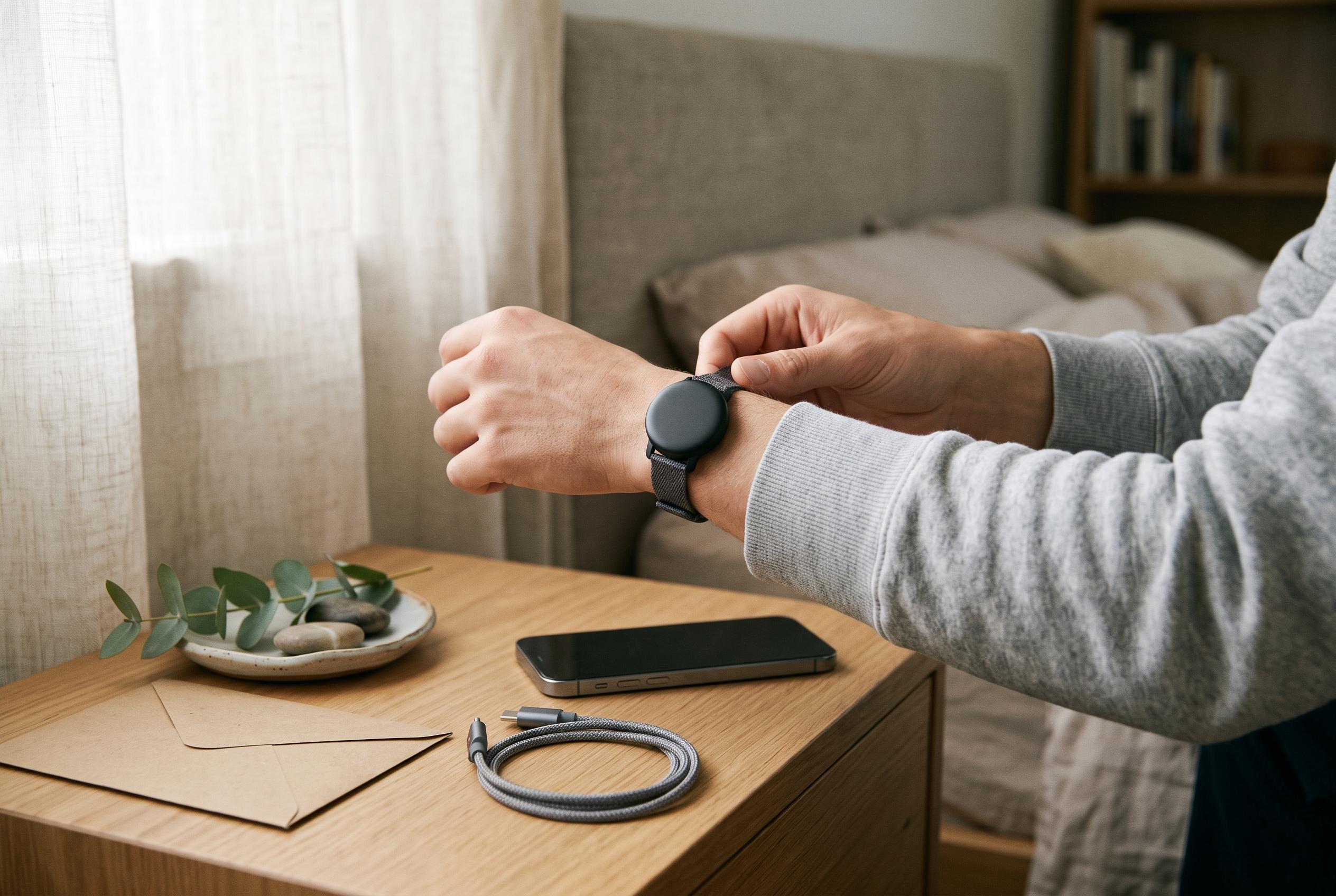

Google introduces the Fitbit Air, a minimalist, screenless fitness tracker with seven-day battery life, ecological materials, and cross-platform compatibility, aimed at health-conscious users seeking continuous monitoring without a display.
Google has brought a new screenless fitness tracker to market in the shape of the Fitbit Air, a device aimed at people who want continuous health monitoring without a display on the wrist. According to Google’s own product information and launch material, the tracker is priced at $99.99 internationally, while Telecom Talk reports that in India it is being sold at Rs 13,999, with bank-linked offers from HDFC and Axis bringing the effective cost down to Rs 12,999.
The device is built around passive tracking rather than an on-device interface. Google says health data is viewed through the Google Health app, which serves as the main control and analytics layer on both Android and iOS. The company positions the Fitbit Air as a low-profile alternative to bulkier wearables, with support for heart rate monitoring, SpO2 readings, sleep tracking and automatic workout detection. It also includes a device temperature sensor, a feature Google says is intended to capture skin temperature variation rather than provide a clinical reading.
Battery life is another central part of the pitch. Google says the tracker can run for up to seven days on a charge, with fast charging support. The company also says the Fitbit Air is water-resistant to 50 metres and is compatible with Android 11 and above, as well as iPhones running iOS 16.4 or later. That makes it a broader cross-platform option than many fitness devices that remain tied more tightly to a single ecosystem.
Materials and sustainability are also part of the launch narrative. Google says the Fitbit Air uses recycled polycarbonate and PBT plastics, alongside a textile band and a stainless steel buckle, with plastic-free packaging. The device also ships with a three-month Google Health Premium trial, which Google says is intended to give users access to deeper health insights before they decide whether to pay for the subscription. Android Central reported that Google is also leaning on the Fitbit Air’s discreet design and modular strap options to compete with higher-end, screenless trackers such as the Whoop 5.0.
For buyers weighing an upgrade, the Fitbit Air looks like a focused health wearable rather than a general-purpose smartwatch. Its appeal lies in simplicity, comfort and long battery life, not app support or a display. For users who mainly want continuous health data and are comfortable checking it on a phone, Google has pitched a compelling lower-cost alternative in a category that is increasingly defined by minimal hardware and app-based insight.
Disclaimer: This content is intended for informational purposes only. Readers are advised to exercise their own judgement, conduct due diligence, or consult a qualified expert before acting on any information provided.