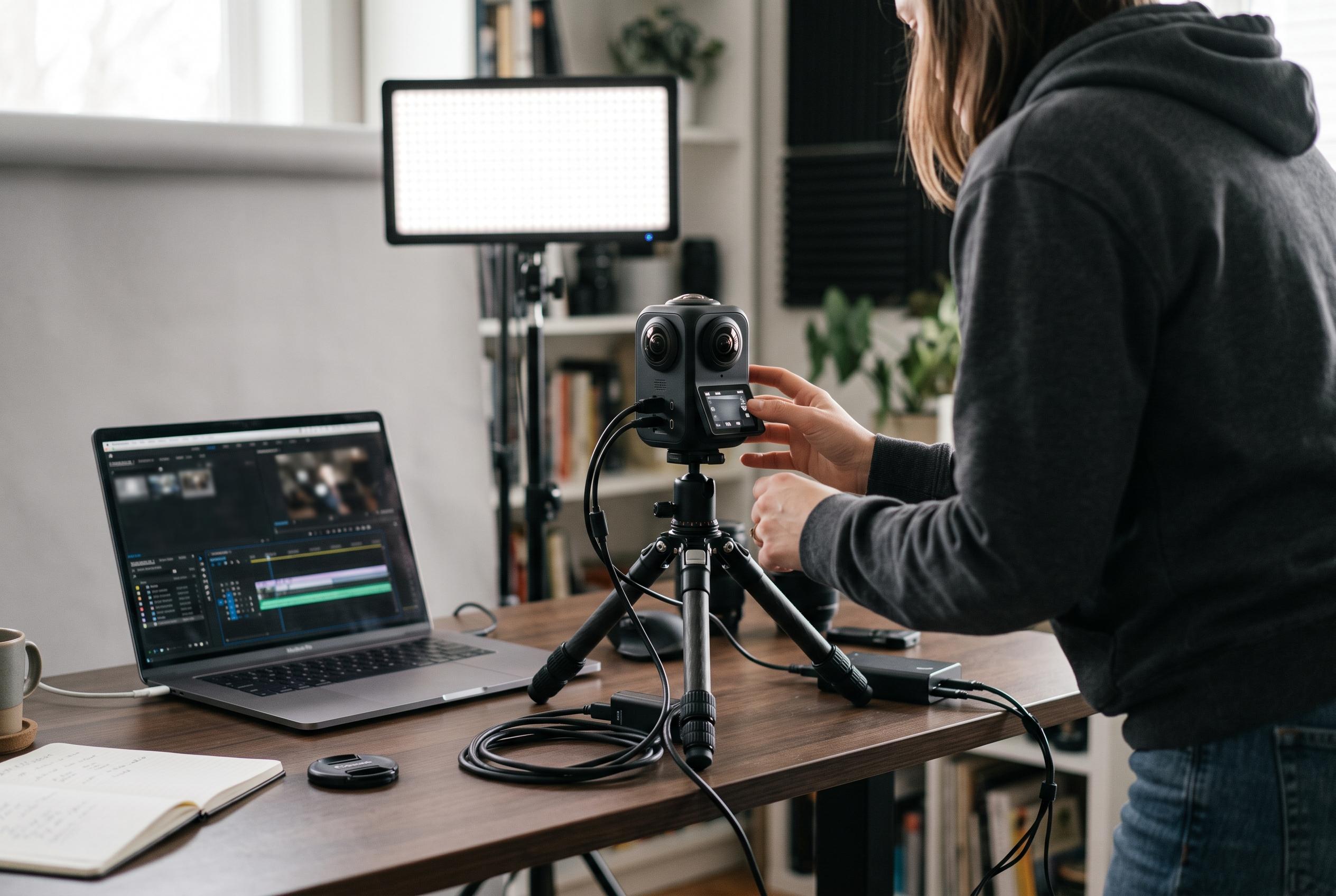

Emerging 360-degree cameras are shifting from niche accessories to must-have tools for creators, with recent models emphasising resolution, sensor size, and software capabilities to meet diverse filming needs.
The latest generation of 360-degree cameras is moving from niche accessory to serious creator tool. According to Daily Camera News, the appeal is straightforward: these cameras capture an entire scene at once, so filmmakers can decide on framing later rather than committing to a single angle during the shoot. That makes them useful for solo videographers, travel creators, sports users and anyone publishing for both horizontal and vertical platforms.
What now separates one model from another is less the concept than the execution. The most important differences are native resolution, sensor size, stabilisation and the quality of the companion software used for reframing and editing. Tom’s Guide and TechRadar both highlight the Insta360 X6 as the current benchmark in the category, pointing to its dual 1/1.1-inch sensors, improved low-light performance and 8K capture, with one review noting 8K recording at up to 50fps. Digital Camera World and T3 reach a similar conclusion, describing the X6 as a more capable all-rounder for creators who want high-end 360 footage without giving up portability.
For users who care more about image quality in difficult light than outright convenience, the Insta360 ONE RS 1-Inch 360 Edition remains a strong option. Digital Camera World says its larger 1-inch sensors improve detail and low-light performance, while Digital Trends adds that the modular design, water resistance and compact form factor make it practical for field work. That combination makes it a sensible choice for architectural walkthroughs, premium travel work and indoor shoots where small sensors can struggle with noise and colour depth.
The GoPro Max continues to matter for a different reason: workflow familiarity. Daily Camera News notes its built-in mounting fingers and spatial audio setup, and that matters for creators already using GoPro accessories and rigs. While its headline specifications trail the newest Insta360 models, it still offers a dependable option for users who value ecosystem compatibility and straightforward action-camera handling over maximum image headroom.
In practice, the buying decision comes down to intended output. Higher-resolution 360 capture gives more room to crop and reframe into conventional video formats, which is especially important for social clips and mixed-aspect publishing. Audio also matters more than many buyers expect, because immersive video loses impact quickly if the sound is thin or poorly synchronised. Just as important is the editing software, since 360 footage depends on fast, reliable keyframing and app support. The central lesson across the current market is that the best camera is not simply the one with the biggest resolution figure, but the one whose hardware and software match the creator’s actual workflow.
Disclaimer: This content is intended for informational purposes only. Readers are advised to exercise their own judgement, conduct due diligence, or consult a qualified expert before acting on any information provided.