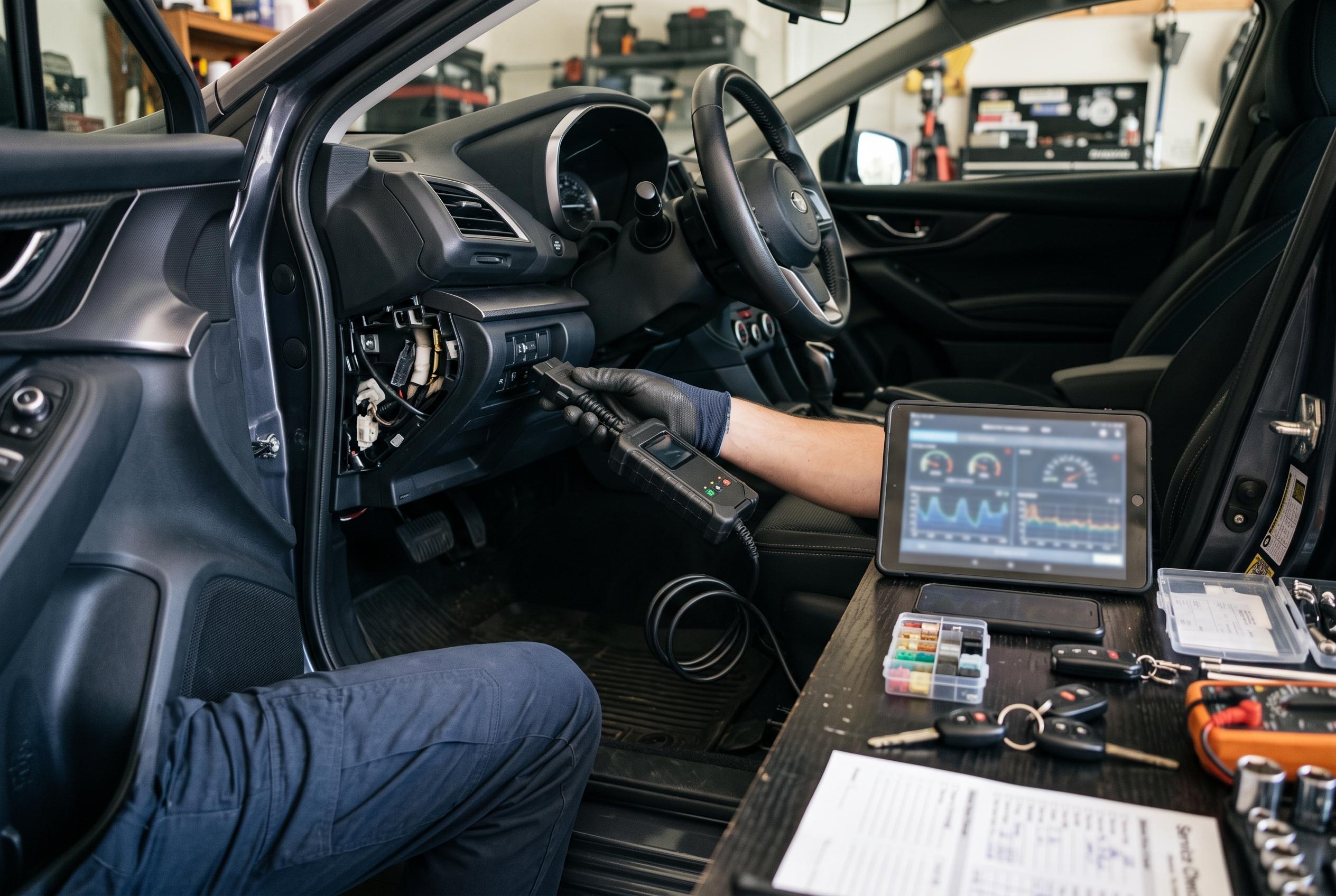

Choosing the right OBD-II scanner requires understanding your specific diagnostic tasks, vehicle compatibility, and future-proof features, with expert advice emphasising careful verification over marketing claims.
Choosing an OBD-II scanner begins with the work you actually need to do, not with the number of features on the box. A basic code reader may be enough for a check-engine light, but a workshop that needs to diagnose ABS, airbag, transmission or intermittent faults will need live data, freeze-frame information and access to the relevant control modules. National Tool Warehouse says product labels such as “all system” or “professional” should be treated as starting points rather than proof of broad compatibility, and the key question is whether the tool supports the exact vehicle and repair task in front of you.
That distinction matters because an OBD-II trouble code is only a diagnostic clue, not a replacement part in itself. The Environmental Protection Agency says the system is designed to warn about a condition that should be investigated, while readiness monitors show whether emissions self-tests have run. Clearing codes can reset those monitors without fixing the underlying problem, which can affect inspection readiness as well as diagnosis. For that reason, technicians are usually better served by saving fault codes, freeze-frame data and live readings before making any changes.
Vehicle coverage should be checked against the exact year, make, model, engine and function required before any price comparison is made. Several specialist buying guides make the same point: generic OBD-II support does not automatically mean access to manufacturer-specific modules, service routines or advanced resets. iCarsoft says buyers should verify whether a scanner supports all-system diagnostics, bidirectional control and modern communication standards such as CAN-FD and DoIP, while OBD2.com notes that newer vehicles may also require gateway support or authorised security access for certain functions.
The cost of ownership can matter as much as the purchase price. A lower-cost tool may be adequate for reading and clearing basic powertrain codes, but update terms, subscription renewals and post-expiry access vary widely. HowToFixCar and GearMedic both place basic Bluetooth adapters at the low end of the market, mid-range handheld scanners in the area where live data and enhanced codes become available, and bidirectional diagnostic tools at the top end for component activation and deeper system work. The practical question is whether the scanner will still be useful next year, and whether it will support the vehicles the user actually sees.
A buyer should also separate marketing language from function. CarFailure warns that “full system” and “bidirectional” are not interchangeable terms, and that subscription-locked platforms should only be considered if the specific feature set is needed. OBD2.com draws a further distinction between coding and programming: coding changes configuration values in an existing module, while programming rewrites software or calibration data. That means a scanner can appear powerful on paper yet still fall short if the required function is not available for a particular vehicle, or if it needs extra hardware, a network connection or security authorisation.
For most owners and many independent technicians, the safest approach is to buy for the repair task, then confirm compatibility against the vehicle before paying. That means checking the modules supported, the update policy, any gateway restrictions, the display and power requirements, and whether the tool can perform the exact reset, service or active test that the job demands. National Tool Warehouse’s own guidance reflects the same principle: the right scanner is the one that matches the vehicle, the fault and the workflow, not the one with the longest feature list.
Disclaimer: This content is intended for informational purposes only. Readers are advised to exercise their own judgement, conduct due diligence, or consult a qualified expert before acting on any information provided.