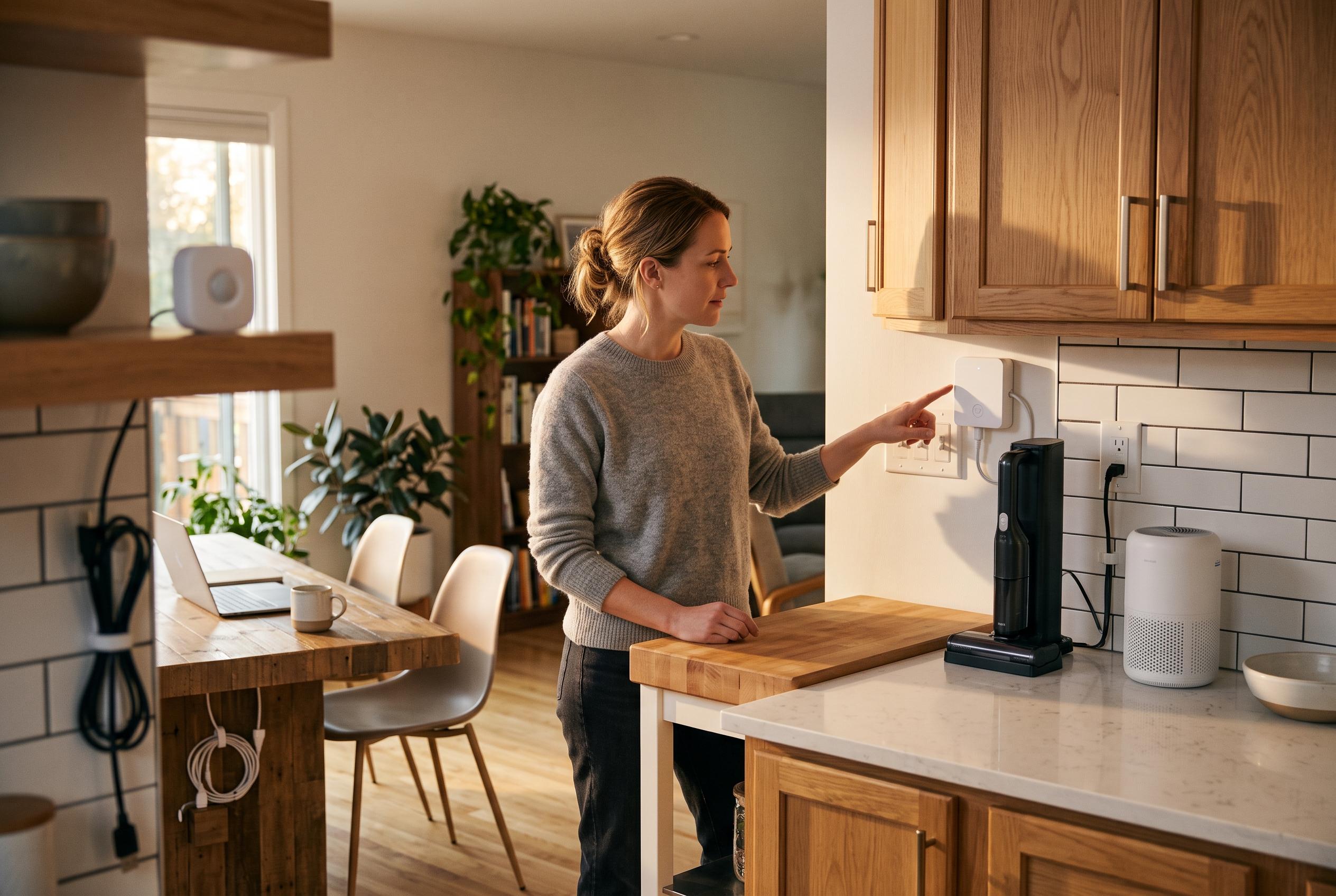

LinkVolt highlights the importance of prioritising room-specific needs and safety considerations over gadget-centric approaches in smart power setups, urging households to match technology with tasks and space requirements for safer, more effective automation.
LinkVolt is urging households to think about smart power in terms of rooms and tasks, not gadgets. The company’s own guidance argues that connected outlets work best when they solve a clear problem, such as automating a lamp, managing a cluster of devices on a desk, or making an awkwardly placed socket easier to use. That approach matters because many homes now combine older wiring layouts with a growing number of connected lamps, entertainment systems, workstations and outdoor accessories.
The first step, according to LinkVolt, is a simple inventory. In each room, households should separate devices that must stay powered, devices that can follow a schedule, and devices that are better left on a manual switch. Network hardware and other essential equipment often need uninterrupted supply, while a table lamp or seasonal display may suit timed control. The company also notes that some appliances do not resume correctly after power is restored, so their behaviour should be checked before any automation is set up.
Product choice should then follow the use case. LinkVolt says its smart power range includes Wi‑Fi smart plugs and a three-outlet smart power strip, with app control, schedules, timers, voice compatibility and 2.4 GHz Wi‑Fi support. The strip’s outlets can be managed independently, which makes it more suitable for a desk or shared workspace where different devices need different control. In practice, that distinction mirrors broader smart-home advice from sites such as Tom’s Guide, which recommends matching devices to room function rather than buying technology first and finding a use later.
The same logic applies to larger and more awkward spaces. LinkVolt’s outdoor power products are aimed at patios, garages and yard work, where weather-rated equipment is essential and indoor accessories should not be repurposed. The company also points to surge-protection gear, including a rotating wall tap with multiple outlets and USB ports, as a way to create a safer charging point where a single socket would otherwise be overloaded by bulky adapters. The common thread is convenience, but only when the product is designed for the location and the load.
Safety remains the limit of any smart-power plan. LinkVolt stresses that automation does not increase a circuit’s capacity or make an unsuitable appliance safe to run. Users still need to respect electrical ratings, keep cords accessible and ventilated, and avoid daisy-chaining strips. If a receptacle is warm, damaged or unreliable, the company advises that it should be checked by a qualified electrician. In other words, the most useful smart power setup is not the most complex one, but the one that fits the room, the device and the electrical system already in place.
Disclaimer: This content is intended for informational purposes only. Readers are advised to exercise their own judgement, conduct due diligence, or consult a qualified expert before acting on any information provided.