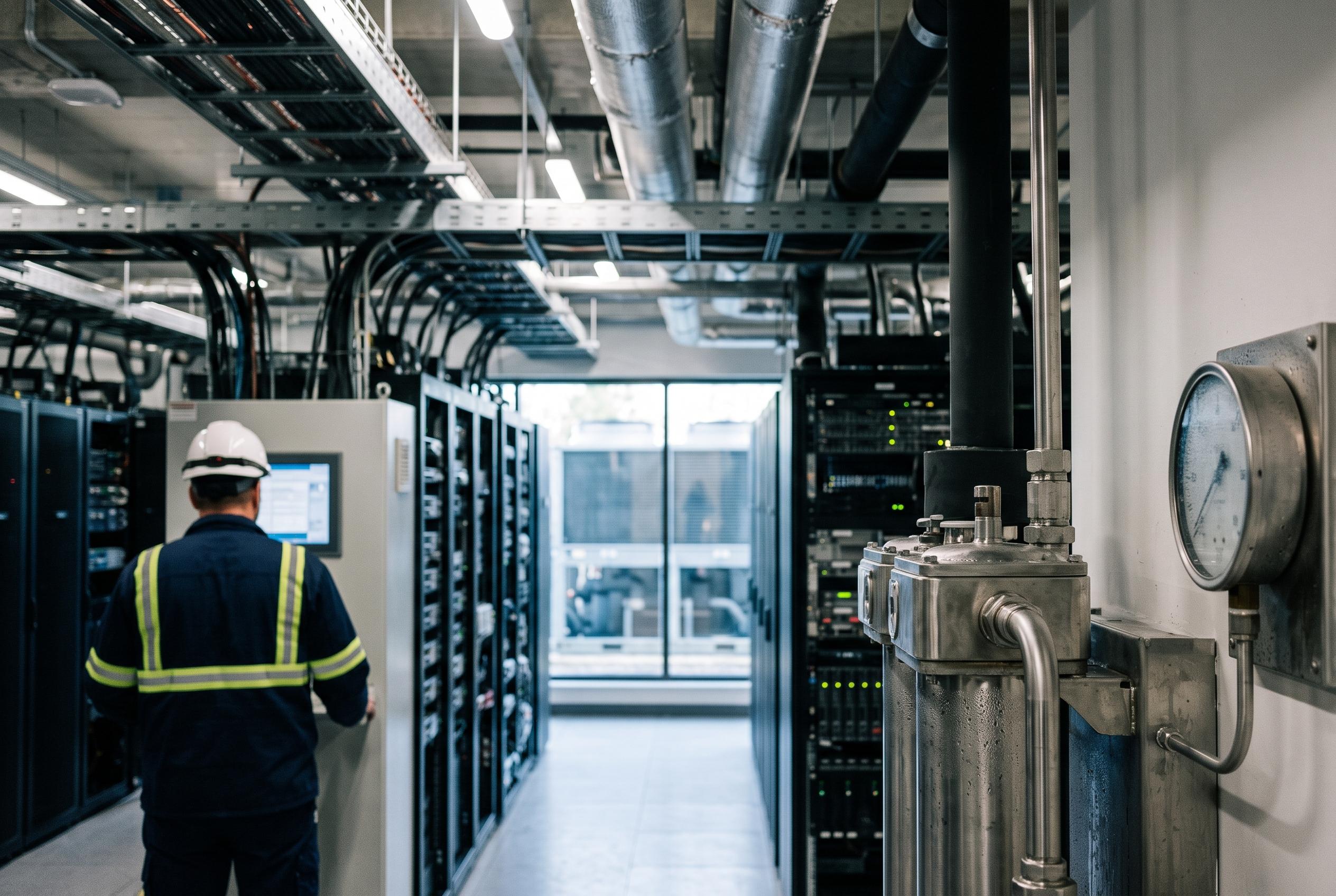

As AI infrastructure growth accelerates, governments worldwide are imposing new water, power, and environmental regulations to address the increasingly visible ecological and infrastructural costs, signalling a shift from unchecked expansion to cautious oversight.
Artificial intelligence is still being sold as a race towards ever more capable systems, but September 2026 exposed a more immediate problem: the physical limits of supporting them. Across the United States and abroad, governments and regulators were dealing less with existential speculation than with electricity demand, water use, grid access, memory shortages and the question of who should bear the cost when data centres arrive in force.
In Texas, Reuters reported that state regulators were ordered to pause new data centre connections to the electricity grid while they completed an audit of projects seeking access. The state was facing 474 gigawatts of requested load, a figure far above current peak demand, and officials wanted clearer evidence that applicants had real owners, finance and credible plans before new connections were approved. The move reflected a broader shift from easy expansion to stricter scrutiny, with some utilities already seeing demand forecasts fall once deposits and verification requirements were introduced.
Thailand took a different but equally cautious approach. According to Nation Thailand, the government temporarily stopped 166 data centre projects, including 49 sites already under construction, so that it could write national rules on electricity, water, safety, environmental protection and local economic benefits. The pause was not a rejection of digital investment; rather, it was an attempt to impose order on a sector that can consume large amounts of land and infrastructure before its wider costs are fully understood.
Ireland is now trying to manage those costs more directly. RTE reported that regulators are considering cheaper, interruptible gas connections for large industrial users, most of them data centres, so that supply can be curtailed during shortages while residential customers are protected. At the same time, the Irish Times said data centres in the country used as much water last year as more than 340,600 homes, underlining how quickly these facilities can become major users of public resources even before their broader economic benefits are fully established.
That tension is also shaping regulation elsewhere. A commissioner at the US Federal Energy Regulatory Commission said in comments on a PJM Interconnection filing that states and retail regulators must take a more active role in setting large-load tariffs, collateral rules and curtailment priorities, with homes, hospitals and schools placed ahead of data centres in scarcity conditions. In Australia, the government has opened consultation on mandatory water-usage effectiveness metrics, public reporting of potable and non-potable water consumption and requirements for operators to show that projects will not damage local water security or drought resilience. In Canada, responsible data centre principles are being framed around similar concerns: limiting water use, disclosing local impacts and avoiding cost shifts onto consumers.
The underlying issue is not confined to cooling systems alone. The Pacific Institute has argued that water use linked to data centres also includes the electricity generation needed to power them, as well as chip and equipment manufacturing. That makes the debate about AI infrastructure broader than server rooms and heat exchangers. It is about whether governments can still treat digital expansion as abstract growth, or whether they now have to plan for the water, power and financial constraints that come with it. As the latest round of pauses, consultations and utility rules suggests, that reckoning has already begun.
Disclaimer: This content is intended for informational purposes only. Readers are advised to exercise their own judgement, conduct due diligence, or consult a qualified expert before acting on any information provided.