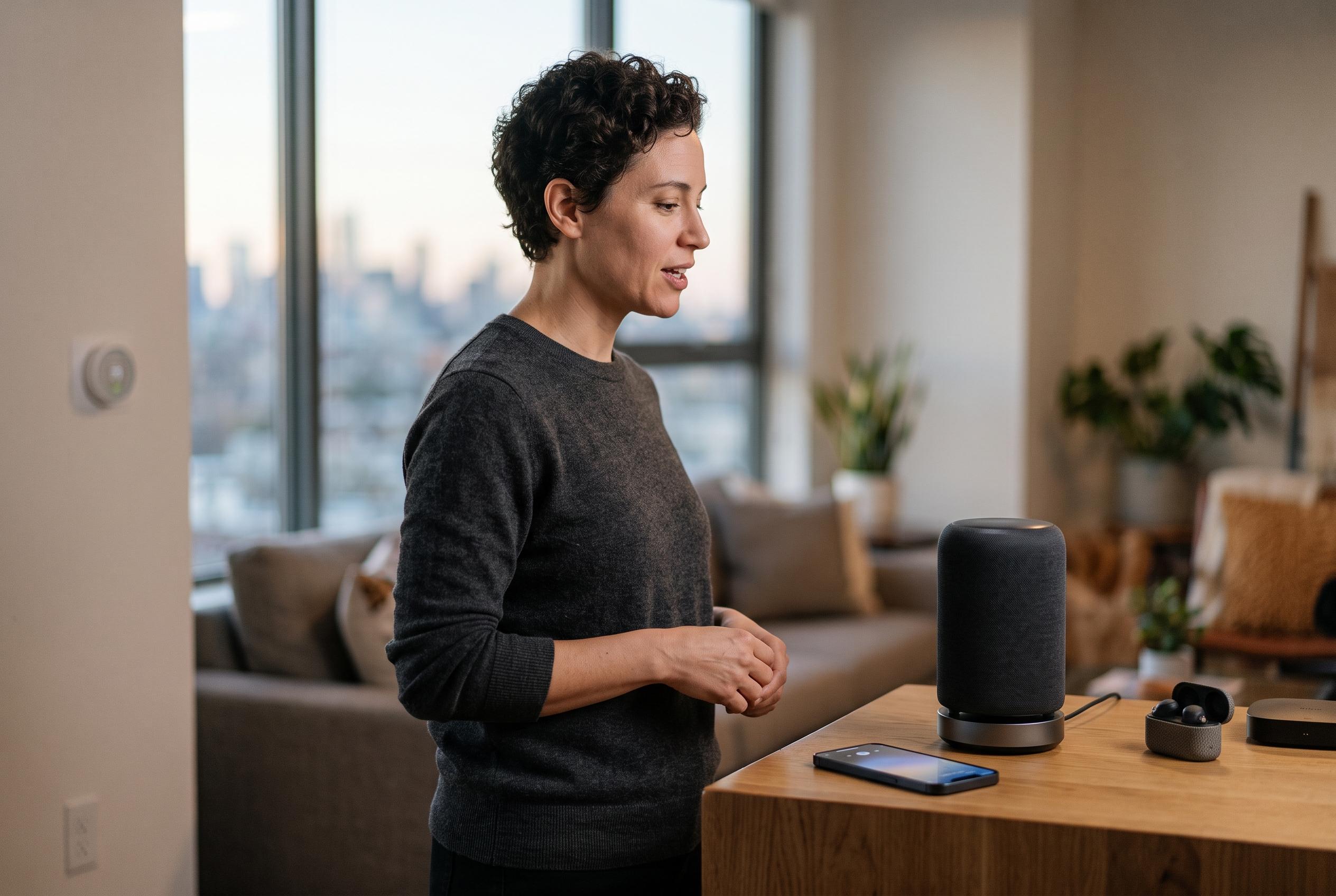

Fifteen years after its debut, Apple’s Siri is undergoing a significant transformation, aiming to overcome past limitations with a more conversational and context-aware AI, but rollout challenges raise questions about its future role.
Siri turns 15 this year, a milestone that invites both nostalgia and scrutiny. Apple introduced the assistant with the iPhone 4S on 4 October 2011, and for a time it seemed to define the future of consumer voice computing. It was one of the first moments when a mainstream smartphone shipped with a built-in conversational assistant that could feel genuinely useful, rather than merely experimental.
That promise, however, quickly ran into the limits of the product Apple chose to ship. Siri was not originally an Apple invention, but a spin-off from research at SRI International, itself linked to a DARPA-backed advanced technology project. Before Apple acquired it in 2010, the assistant had appeared as a standalone iPhone app and was intended to reach other platforms as well. Apple instead folded it into iOS, and over time prioritised broader availability, more languages and deeper system integration over the more ambitious capabilities the original product had demonstrated.
The result was a familiar pattern in technology: soaring expectations followed by disappointment. Gartner’s hype-cycle model helps explain why Siri became such a frequent target of criticism. The assistant moved from novelty to ubiquity, but not always at the pace users expected. Features such as “Hey Siri”, third-party app support and personal voice recognition marked genuine progress, yet they did not fully close the gap between the assistant Apple promised and the one users actually experienced.
Apple also had to compete in a market it helped create. Google Assistant and Amazon Alexa turned voice control into a broader consumer category, and for a period it seemed plausible that spoken interaction would become as central as touch. But the rise of smart speakers did not translate into lasting dominance for voice-first computing. In practice, most users continued to rely on assistants for narrow tasks such as timers, reminders, messages and music, rather than the open-ended conversation once imagined.
The arrival of generative AI changed the terms of the debate. ChatGPT made large language models feel immediate and practical, and suddenly Siri’s long-standing limitations were impossible to ignore. As Nikola Mrkšić, a former Siri researcher, has explained to Tom’s Guide, Apple’s original approach was built around predefined intents, which was suitable for simple commands but not for fluid dialogue or adaptive reasoning. That architectural constraint mattered, especially once rivals began offering assistants that could answer follow-up questions and handle more complex requests.
Apple responded at WWDC 2024 with a much more ambitious version of Siri, later presented as Siri AI. According to Apple’s own announcement, the redesign was meant to make the assistant more personal, more conversational and more aware of what was on screen, while also allowing it to carry context across tasks and apps. Ars Technica reported that the new system was framed as a deeper integration of Apple Intelligence rather than a simple interface update. The company also stressed privacy, saying processing would rely on on-device systems and a private cloud architecture for heavier workloads.
That rollout, however, has been uneven. Apple’s launch materials and coverage from ITPro noted that the upgraded Siri was not being made available in the European Union and China, with regulatory issues cited as part of the reason. ITPro said the UK is not affected in the same way, while Ars Technica reported that Apple’s broader strategy is to balance more capable AI with a tighter privacy model than many rivals offer. Meanwhile, Tom’s Guide reported that some hardware, including the HomePod, appears to lag behind the newest Siri AI experience, underlining how fragmented the rollout still is.
Fifteen years on, Siri’s story is not one of failure so much as unfinished ambition. It helped normalise voice interaction on consumer devices, then spent years being overtaken by faster-moving expectations in AI. Apple now has a more capable assistant, but the real test is whether it can turn that technical reset into something users rely on daily, rather than a feature that impresses briefly and then recedes into the background.
Disclaimer: This content is intended for informational purposes only. Readers are advised to exercise their own judgement, conduct due diligence, or consult a qualified expert before acting on any information provided.