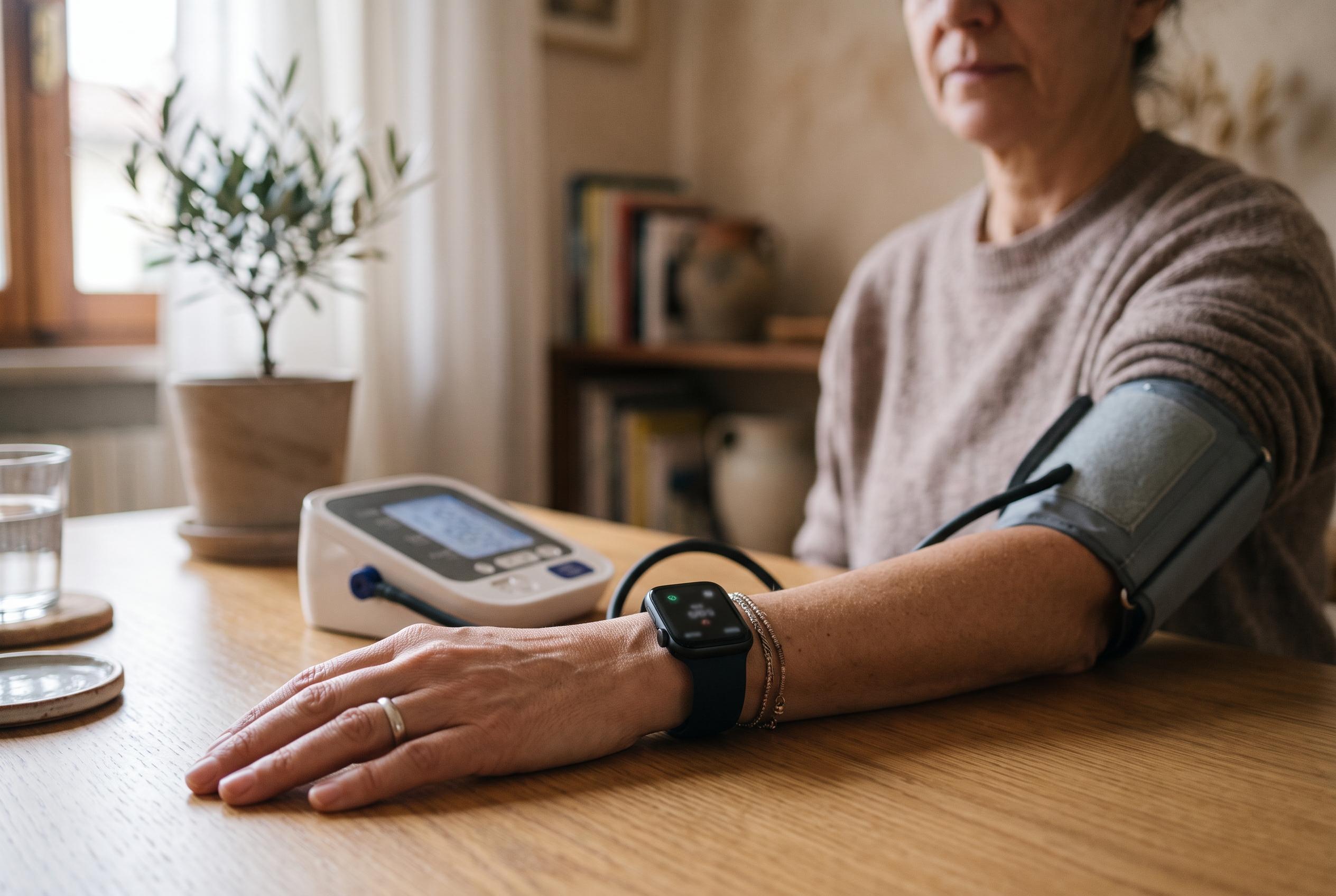

Huawei launches its latest Watch D3 in Italy, boasting a slimmed-down design and advanced oscillometric blood pressure measurement, positioning it as both a consumer health wearable and a medical device.
Huawei’s new Watch D3 has gone on sale in Italy, extending a product line that stands apart from almost every other smartwatch by measuring blood pressure with a built-in inflatable cuff in the strap. According to Macitynet, the device arrived on 29 September 2026 with a list price of €449, and it is being sold through Huawei’s own store, Amazon Italy, major electronics chains and a limited number of pharmacies. Reuters-style reporting from SmartWorld, Tuttotech and ANSA all point to the same launch window and pricing, underlining Huawei’s effort to position the device as both a consumer wearable and a medically oriented health product.
The main change from the Watch D2 is not a new blood-pressure concept but a slimmer and more wearable design. Macitynet reports that the case has been reduced from 13.3mm to 11.3mm, while the AMOLED display has grown to 1.92in and is rated at 3,000 nits of peak brightness. ANSA adds that the watch weighs about 40g and that the strap is narrower at 25.5mm, which should make the device feel less like a medical instrument and more like a standard smartwatch. MediaWorld’s product description makes the same point, saying Huawei has aimed for a more discreet appearance without dropping the technology that defines the D series.
What remains distinctive is the measurement method. Huawei is not relying only on optical heart-rate sensors and software estimation, as many watches do. Instead, as Macitynet and ANSA explain, a micro-pump inflates an airbag inside the strap, and pressure sensors read the oscillations created by blood flow in the wrist. This is the oscillometric method used by traditional cuff-based blood-pressure monitors, scaled down for wrist use. Huawei says the Watch D3 is also CE-MDR certified, which matters because it places the product in the category of regulated medical devices rather than generic wellness wearables.
Huawei has also expanded the device’s continuous monitoring features. According to Macitynet, the Watch D3 supports ambulatory blood-pressure monitoring over 24 hours, with readings scheduled through the day and night to generate averages for daytime, night-time and the full period. The company’s guidance says valid monitoring requires measurements at 15- to 30-minute intervals, at least 70% valid readings, and a minimum of 20 daytime and seven night-time measurements. That extended monitoring mode sharply reduces battery life to around one day, while normal use is said to last up to roughly six days. The watch also adds pre- and post-exercise blood-pressure checks, single-lead ECG, arrhythmia analysis via pulse-wave data, SpO2, skin temperature, HRV, sleep tracking and Huawei’s Health Glance summary.
The early reviews and hands-on impressions suggest that the D3’s success depends heavily on correct use. Macitynet says Huawei ships a wrist circumference guide and two strap sizes, with the M version covering 13cm to 16cm and the L version covering 16.1cm to 21cm; outside that range, accuracy can fall. Users are also told to sit still, keep both feet on the floor, hold the arm level with the heart and avoid moving or speaking during a reading. That matters because blood pressure is affected by posture, stress, caffeine, alcohol, exercise and even ambient temperature, so readings taken under inconsistent conditions are harder to compare over time.
On reliability, the picture is more nuanced. Macitynet notes that the Watch D3 has CE-MDR certification, but also that there is not yet a peer-reviewed independent study specifically on the new model. For the earlier Watch D and Watch D2, however, the article points to validation work under the AAMI/ESH/ISO standard, including a 2022 study on the original Watch D and a 2025 study on the D2 that found small average differences from reference devices at rest. A later 2026 study cited by Macitynet, by contrast, found that the D2 underestimated systolic pressure by 6.8mmHg in a 24-hour ambulatory setting and that only 47% of systolic readings and 61% of diastolic readings stayed within ±10mmHg of the comparator. Taken together, those findings suggest the watch is best understood as a device for spotting trends and monitoring change, not as a substitute for a validated upper-arm monitor when a precise clinical reading is needed.
Disclaimer: This content is intended for informational purposes only. Readers are advised to exercise their own judgement, conduct due diligence, or consult a qualified expert before acting on any information provided.