
After two months testing, the Classic Smart Ring presents a low-profile, comfortable device for broad health trend monitoring, though limited by its screen-free design and basic tracking features.
After two months with the Classic Smart Ring, the clearest conclusion is that it is a capable entry-level wearable with a narrow but understandable brief. It is designed to sit quietly on the finger, collect a range of daily data and leave the analysis to the phone app. That approach mirrors the wider smart-ring market, where comfort, sleep insight and low-profile design have become key selling points; reviews of Oura devices by TechRadar, TechAdvisor and The Guardian all stress that a ring succeeds when it feels unobtrusive and can still produce useful health trends. The Classic Smart Ring fits that general pattern, even if it lacks the refinement of the better-known premium options.
Getting the size right mattered more than expected. A ring is less forgiving than a watch strap, and the wide band means it can feel different from a conventional piece of jewellery even when the internal measurement is correct. The size chart helped, and once the fit was chosen carefully the ring remained comfortable on the middle finger. That is not a trivial detail: smart rings work best when they sit securely enough for the sensors to maintain contact, but not so tightly that they become irritating over a full day or overnight.
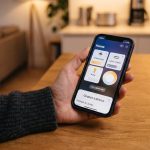
Setup on Android was straightforward, but also revealing. The QRing app becomes the entire control point for the device, which means the ring itself offers very little direct interaction. That is a familiar trade-off in this category. The Oura reviews note that a strong app can be as important as the hardware, because the value lies in how the data is presented and interpreted. On the Classic Smart Ring, though, that dependence feels even more pronounced because there is no screen at all. If the phone app is unavailable or not synchronising properly, the ring has no meaningful fallback.
That screen-free design is both the product’s main virtue and its biggest practical limitation. It keeps the ring discreet and avoids the distraction of a tiny display, but it also means there is no way to read messages, check the time or see live metrics on the device itself. In effect, the ring is a sensor, not a wrist-worn computer scaled down to finger size. By contrast, reviews of higher-end rings often highlight how polished software can compensate for the lack of a display by turning raw readings into clear sleep and recovery guidance. The Classic Smart Ring has the basics, but it does not yet offer that level of interpretation.
Comfort is one of its stronger qualities. It was easy to wear through ordinary daily activity, and it was less cumbersome at night than a larger watch-style tracker. That aligns with what reviewers have found with more established smart rings: the category works when the device becomes easy to forget. The drawback is that rings are more exposed to knocks, friction and contact with hard surfaces than most people initially expect. The Classic Smart Ring has held up well enough in use, but the black finish has not stayed pristine, and that is consistent with other budget-friendly smart-ring reviews that mention cosmetic wear as a realistic concern.
Tracking performance is best treated as directional rather than clinical. Steps, distance, calories, sleep, heart rate, blood oxygen and stress-related readings can all help identify broad patterns, but they should not be mistaken for exact measurements. Sleep tracking is the most convincing feature because a ring is naturally comfortable to wear overnight, and the category has built its reputation on that strength. Even so, the more sophisticated rings in the market are praised largely because their software turns sleep and recovery data into actionable insight; the Classic Smart Ring provides the numbers, but not much interpretive depth. Workout tracking is weaker still, particularly for lifting and other activities that involve a firm grip or rapid movement.
Battery life and water resistance are adequate for normal use, but they do not change the product’s core identity. The ring can be worn around water without immediate problems, and the advertised IP68 and 5ATM ratings offer some reassurance for day-to-day situations. Still, reviews across the smart-ring market show that buyers now expect more than basic durability. They want long battery life, stable syncing and a clear app experience, with some premium models offering several days of use and detailed guidance without feeling cumbersome. The Classic Smart Ring is simpler than that. It is useful for general awareness, not for anyone expecting a full-featured health platform.
Taken on its own terms, the Classic Smart Ring is a competent, discreet wearable that performs best as a source of rough trends. It is comfortable, the setup is manageable, and the feature list is broader than its price and size might suggest. But the compromises are obvious: there is no screen, the app does all the work, workout tracking is uneven and the finish is vulnerable to visible wear. In a market where the best-reviewed smart rings are judged on app quality, sleep accuracy and low-friction daily use, the Classic Smart Ring remains a basic proposition. It is sensible for casual monitoring, but not a substitute for medical equipment or a serious training device.
Disclaimer: This content is intended for informational purposes only. Readers are advised to exercise their own judgement, conduct due diligence, or consult a qualified expert before acting on any information provided.