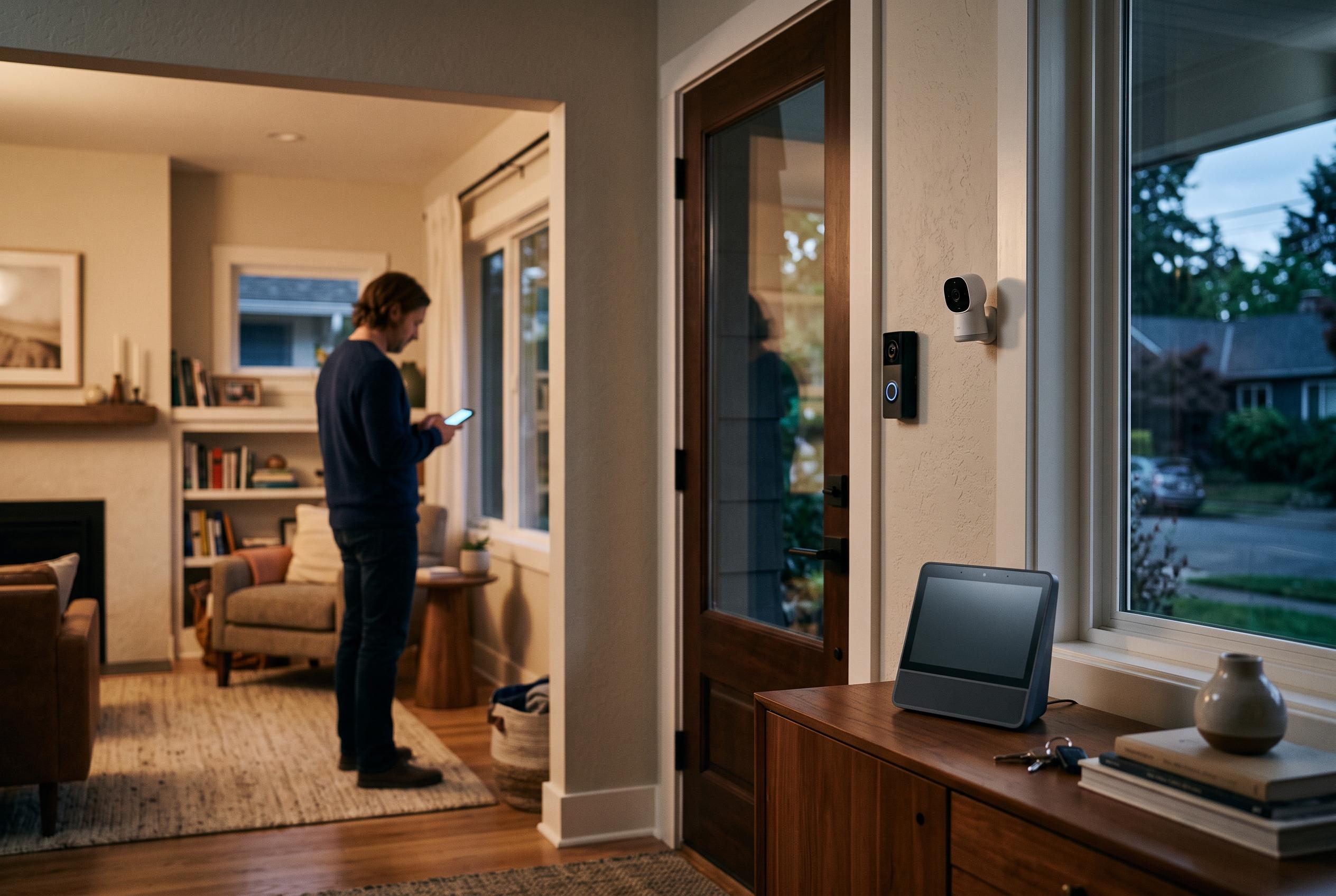

Ring and Arlo update their security ecosystems, competing on image quality, artificial intelligence, and integration to meet evolving consumer demands for scalable, user-friendly home security systems.
Ring and Arlo remain two of the best-known names in DIY home security, but both ecosystems have moved on from the older 1080p-versus-4K debate. Recent launches from each brand show that the competition is now being fought on resolution, artificial intelligence, subscriptions and how easily each system can scale from a single camera to a full home alarm set-up. Home security guides from specialists such as Homebuilding also note that buyers are increasingly looking for systems that combine cameras, sensors and app-based control without demanding a complex installation, which is exactly where these two brands continue to position themselves.
On pure camera hardware, Arlo still has the stronger reputation for image quality. The company’s newer Pro 6 and Ultra 3 models add 2K+ HDR and 4K HDR respectively, along with wide fields of view, colour night vision, integrated spotlights and Sirens. Arlo says the Ultra 3 also works with its SmartHub for 4K streaming and local backup. Ring has closed much of the gap, however. Its newer second-generation Spotlight Cam and Floodlight Cam push 2K recording into more affordable territory, and the wider Ring range now stretches up to 4K models such as the Outdoor Cam Pro. In practical terms, Arlo still tends to offer the cleaner image at the top end, but Ring no longer looks limited to entry-level video quality.
Arlo also keeps the edge in detection intelligence. Its Secure Early Warning System is designed to spot people, animals, parcels, vehicles and fires while reducing nuisance alerts from moving foliage or other routine motion. T3 reported that the company is adding further AI tools, including Threat Assessment and Arlo Summary, which are intended to flag serious events more quickly and turn a day’s footage into a short written overview. Ring’s detection tools are more restrained by comparison, focusing on person, package and vehicle alerts on standard plans, with richer features such as familiar faces reserved for higher tiers. Ring’s 3D Motion Detection is useful in its own right, because it lets users define a detection distance and ignore movement outside a chosen zone, but Arlo still looks more ambitious on software.
Smart home compatibility is another point of difference. Arlo works with Alexa, Google Home, Apple Home, SmartThings and IFTTT on supported devices, which makes it the more flexible choice for households that already use a mixed platform setup. Recent support for newer Arlo cameras in Apple Home is especially important for users who want live feeds, motion alerts and two-way audio inside Apple’s ecosystem. Ring, by contrast, is closely tied to Alexa. That gives it a strong advantage for homes built around Echo speakers and displays, where Live View, door announcements and voice-based responses are tightly integrated, but it is much less attractive for anyone who prefers Google or Apple.
Subscriptions are where Ring becomes easier to recommend. Its lower-cost plans are still noticeably cheaper than Arlo’s, and Ring says its entry tier begins at $4.99 a month for a single camera or doorbell, with longer video history than Arlo’s standard offering. Multi-device plans also remain comparatively affordable, particularly for homes covering several entrances or outdoor zones. Arlo’s plans begin at a higher monthly cost and its better AI features are tied more tightly to paid access, including Secure Plus and Secure Pro tiers in some markets. For buyers equipping an entire property, that gap adds up quickly, especially once a cloud plan is required for every camera.
The bigger strategic difference is that Ring offers the clearer route from cameras to a full alarm system. Ring Alarm can be built out with entry sensors, motion detectors and environmental accessories, and the company combines that with professional monitoring on its higher plans. It also offers a virtual security service for live agent intervention, although that sits at the expensive end of the market. Arlo has a home security system of its own and a premium monitored tier, but its approach is more camera-led and less straightforward if the goal is to protect doors and windows as well as the perimeter. That mirrors the wider advice from home security guides: buyers who want a simple, scalable system tend to benefit from a platform with a broad accessory range and clear monitoring options. On that basis, Ring is the better all-round recommendation for most households, while Arlo remains the stronger choice for buyers who value video quality, wider platform support and more advanced AI.
Disclaimer: This content is intended for informational purposes only. Readers are advised to exercise their own judgement, conduct due diligence, or consult a qualified expert before acting on any information provided.