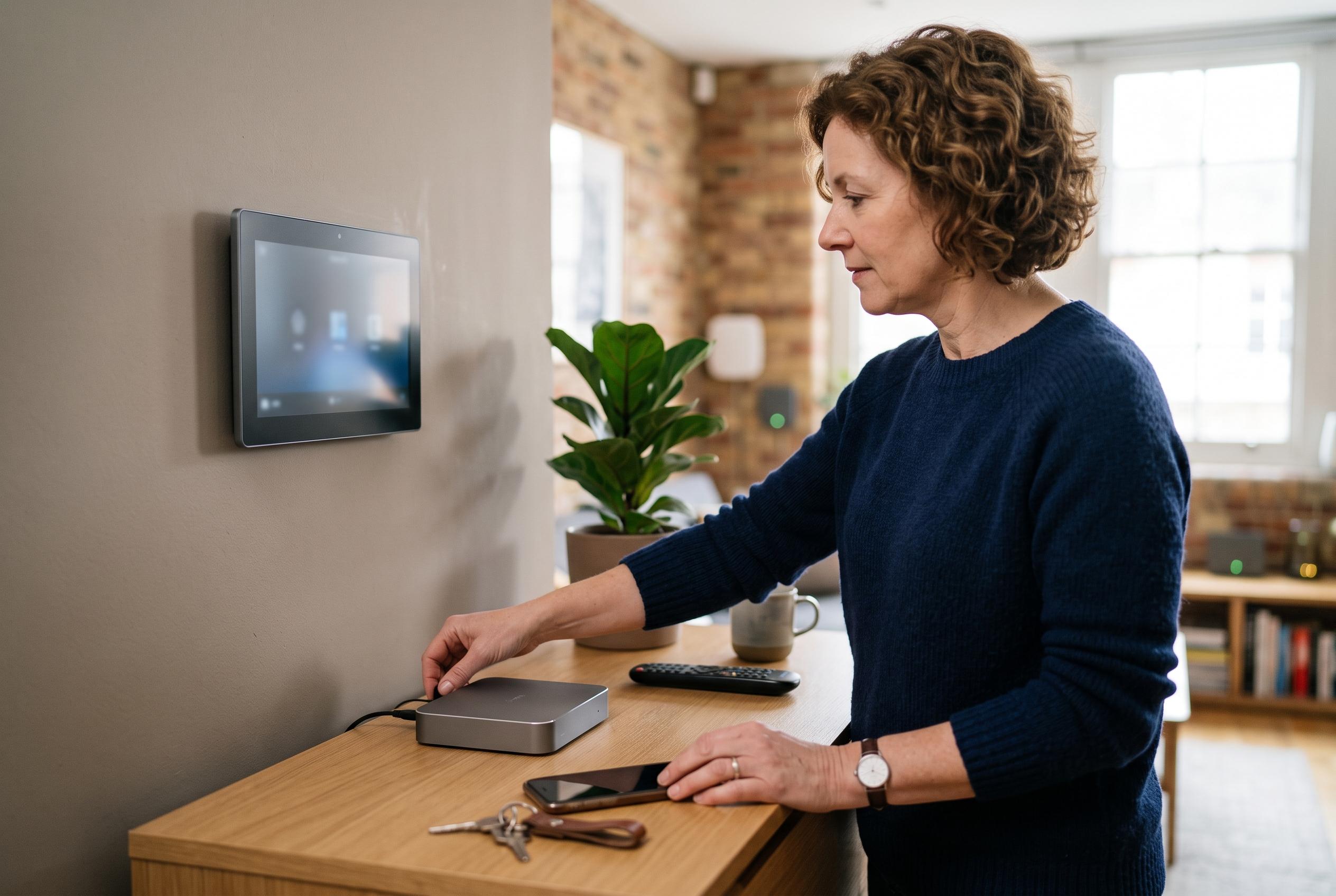

Apple’s upcoming HomePad smart home hub, set for release on 13 October, raises questions about pricing strategy as the tech giant emphasises hardware ownership over subscription models in a market increasingly dominated by recurring fees from rivals.
Apple’s planned smart home hub is shaping up to be one of the company’s most revealing product launches in years, not because of what it is expected to do, but because of what Apple has so far refused to say about it. The device, widely referred to as the HomePad, is reported to be due on 13 October and is expected to combine a compact touchscreen, Siri AI, speakers and microphones in a design that recalls the original iMac G4. Yet, despite the attention around its display size, industrial design and smart-home role, Apple has still not publicly set a price.
That omission matters because it places the HomePad in a very different position from much of the rest of the connected-home market. According to recent reporting, Apple is preparing two versions of the device, including a tabletop model and a wall-mounted variant, while also tying it closely to FaceTime, intercom functions and smart-home controls. Other reports say the launch may sit alongside refreshed versions of the HomePod mini and Apple TV, suggesting a broader push into the home rather than a single hardware release.
The pricing question has become the central point of interest because Apple’s rivals are leaning hard into recurring fees. Google’s smart-home offering is being sold through subscription tiers, Meta has introduced layered access plans, and Amazon’s Alexa+ is free only at a basic level, with fuller use tied to Prime or a monthly fee. Microsoft and LG, by contrast, have taken a different route by offering functionality without an added subscription charge. In that context, Apple’s silence is itself a strategy, allowing the company to keep the discussion focused on hardware ownership rather than on monthly billing.
That distinction could be commercially important. If Apple does price the HomePad at the level being discussed by analysts, the device would present buyers with a one-off purchase rather than the accumulated cost of a service plan over time. For consumers already facing subscription fatigue, that may be a more persuasive proposition than a long list of AI features. It would also reinforce Apple’s long-standing preference for selling devices as finished products rather than as gateways to ongoing payments.
The company is also entering a market where the design language matters as much as the software. Reports describe the HomePad as a small, screen-based hub intended to sit at the centre of the home, with facial recognition and Siri-driven personalisation said to be part of the package. If that is accurate, the device would aim to blend utility, privacy and presentation in a way that fits Apple’s broader brand identity.
There is also a longer competitive horizon. OpenAI is reportedly developing its own speaker for 2027, with a projected price range that would put it in the same broad category as the HomePad. For now, though, Apple appears to have the field to itself. The question is no longer whether the HomePad is coming, but whether Apple can turn a smart-home product into a statement about ownership at a time when the rest of the industry is pushing access, bundles and subscriptions.
Disclaimer: This content is intended for informational purposes only. Readers are advised to exercise their own judgement, conduct due diligence, or consult a qualified expert before acting on any information provided.