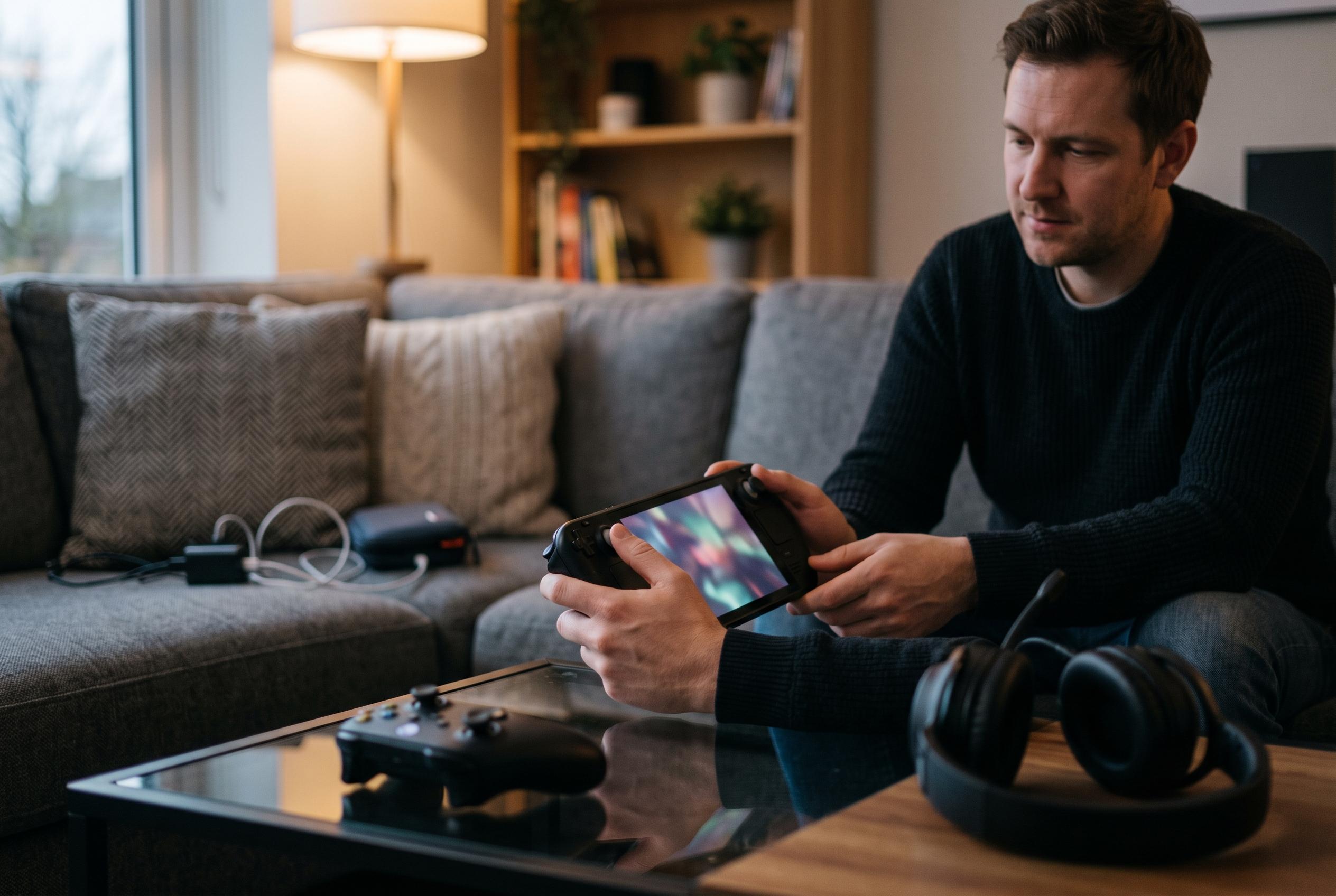

ASUS launches the ROG Xbox Ally X, blending high-performance PC gaming with handheld comfort, targeting gamers seeking a premium portable experience with desktop-level specifications.
ASUS’s ROG Xbox Ally X is aimed squarely at players who want PC games in a form factor that feels closer to a console handheld than a laptop. According to ASUS, the device pairs an AMD Ryzen AI Z2 Extreme processor with 24GB of LPDDR5X-8000 memory, a 1TB M.2 2280 SSD and a 7-inch Full HD display running at 120Hz with variable refresh support. The company has also leaned into comfort, using contoured grips that take cues from Xbox controllers, while Windows 11 Home provides access to the broader PC ecosystem.
That specification sheet matters because it places the Ally X among the more ambitious handheld gaming PCs on sale. Tom’s Hardware and PC Gamer both note that the machine is positioned as a high-end device, not a budget alternative, with advanced connectivity including Wi‑Fi 6E and modern USB-C options. Notebookcheck similarly highlights the Ryzen Z2 Extreme architecture, Radeon 890M graphics and support for Adaptive Sync, all of which help explain why ASUS is pitching the machine as a serious mobile gaming platform rather than a novelty.
In practical use, that approach is what gives the ROG Xbox Ally X much of its appeal. Reviews from TechRadar, PCGamesN and PC Gamer describe strong performance in demanding games, with the handheld able to handle recent releases while also offering the flexibility expected from a Windows machine. The trade-off is familiar to anyone who has used a gaming PC in portable form: users may need to manage updates, launchers and driver maintenance, but they also gain the freedom to tune power settings, resolution and frame-rate limits to suit the game and battery life.
Comfort is another major part of the Ally X’s case. ASUS says the grips are shaped for long sessions, and independent reviews broadly agree that the ergonomics are a strength, with the controller-like layout making the device easier to hold than many rivals. The seven-inch screen is also a key part of the experience: it offers enough sharpness and refresh rate for fast-moving games, while the overall size keeps the unit suitable for sofa play, bed use or travel. Reviewers from Tom’s Hardware and TechRadar also point out that the higher-capacity battery and performance controls are central to the handheld’s flexibility, though they do not turn it into a device with outstanding endurance.
Battery life remains respectable rather than exceptional. Depending on the workload and performance profile, the machine is expected to deliver a few hours away from the charger, which is broadly in line with other powerful handheld gaming PCs. The bigger obstacle for many buyers is price. Tom’s Hardware and TechRadar both identify the Ally X as an expensive option, and ASUS’s own launch materials underline that this is a premium product with specifications intended to justify the cost. For readers who want a portable PC that can double as a gaming machine and a remote-play companion, it is compelling; for everyone else, the value proposition will be harder to defend.
Disclaimer: This content is intended for informational purposes only. Readers are advised to exercise their own judgement, conduct due diligence, or consult a qualified expert before acting on any information provided.