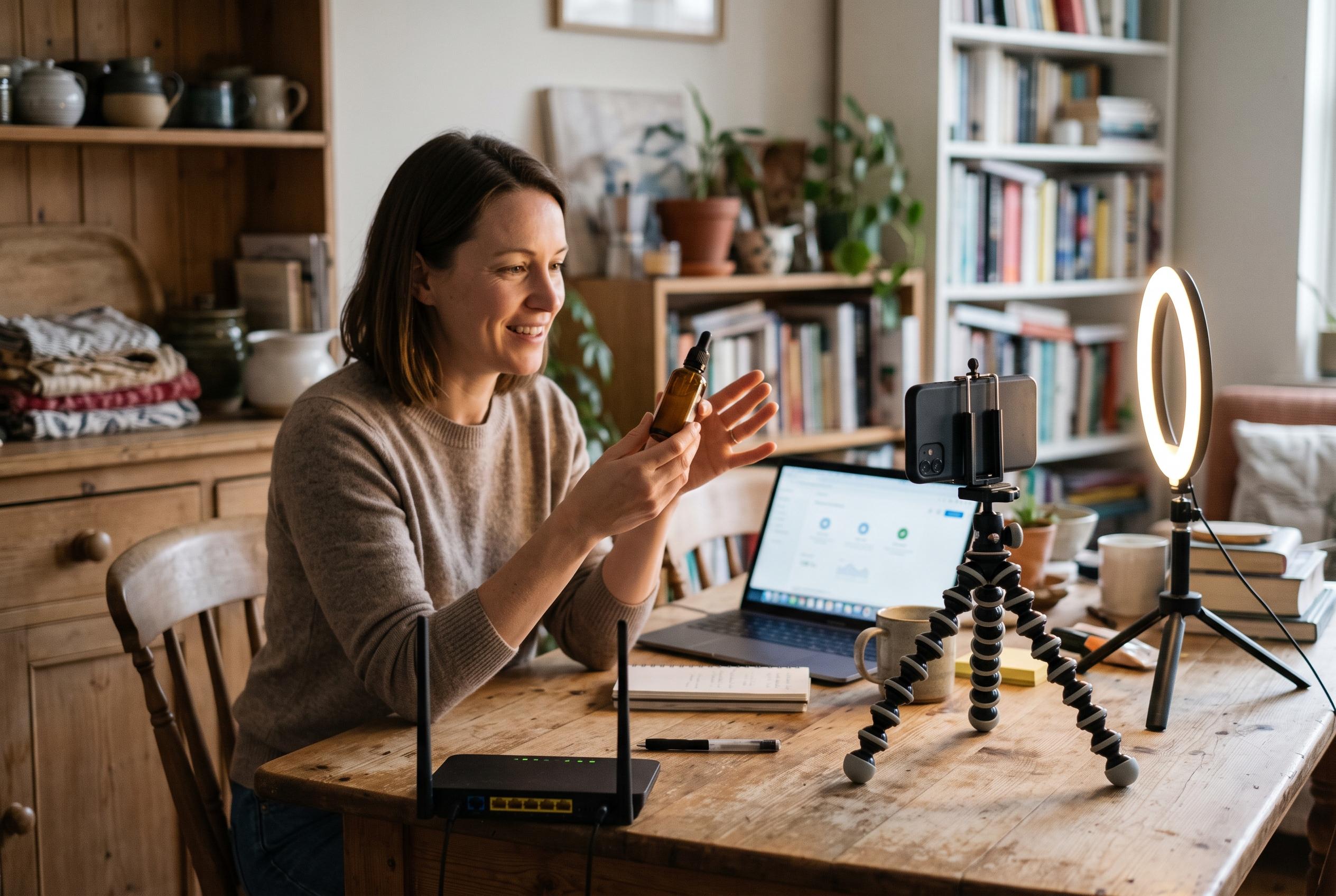

With minimal equipment, a smartphone, good lighting, and reliable internet, beginners can produce professional-looking live streams that drive sales, challenging the belief that expensive rigs are necessary for success.
Live selling has moved from novelty to a serious sales channel, but the equipment threshold is lower than many would assume. WhatGadget argues that most sellers do not need a purpose-built studio to begin; a recent smartphone, a stable tripod, sensible lighting and reliable audio are enough to produce a stream that looks professional and converts. That is consistent with other beginner guides from Voolist and Live Sell Academy, which make the same point: the priority is not an expensive camera rig, but a clean, steady and well-lit presentation that lets shoppers judge the product accurately.
The phone is the obvious starting point. Modern handsets are more than capable of producing a usable live-selling image, and they fit the way platforms such as TikTok Shop and Whatnot are designed to work. What matters more is stability. A rigid tripod with a phone mount is a far better investment than hand-holding the device, because even small movements make product demonstrations look unsteady and undermine confidence. Several guides also caution against overcomplicating the video side with gimbals or DSLR setups, which add cost and complexity without delivering a meaningful advantage on a phone screen.
Lighting is where the most important money should go. WhatGadget and Blame the Fame both stress that colour accuracy is critical in live commerce, particularly for clothing and other visually judged products. A basic ring light can be enough to start, but two soft lights positioned either side of the host generally give a more even result and reduce harsh shadows. Daylight-balanced bulbs around 5,500K help keep whites neutral and colours closer to reality. The practical rule is simple: light the product area as carefully as the presenter, otherwise garments can disappear into shadow at the very moment a buyer needs to inspect them.
Audio is just as important as picture quality, and often more decisive. The built-in microphone on a phone will pick up echo, background noise and the sound of items being moved around on a table. A wireless lavalier microphone clipped close to the speaker solves most of that problem and keeps the voice clear while the host moves through the inventory. The advice from multiple live-selling guides is similar: a desk microphone may suit a seated podcast, but it is awkward for a format that depends on movement, quick handling and constant demonstration.
The final requirement is a stable connection. According to WhatGadget, a practical minimum is around 10 Mbps upload speed, while Blame the Fame recommends a wired link where possible rather than relying on Wi‑Fi. That is because a dropped stream during an auction or timed sale can destroy momentum immediately. The less glamorous but equally necessary pieces are a product staging area, a second screen for watching the live feed and chat, and stock that is organised before the stream starts. Live Sell Academy and WhatGadget both note that a complete starter setup can be assembled for only a few hundred pounds if the seller already owns the phone, with the real long-term decision being whether the inventory is consistent enough to build repeat sales.
Disclaimer: This content is intended for informational purposes only. Readers are advised to exercise their own judgement, conduct due diligence, or consult a qualified expert before acting on any information provided.