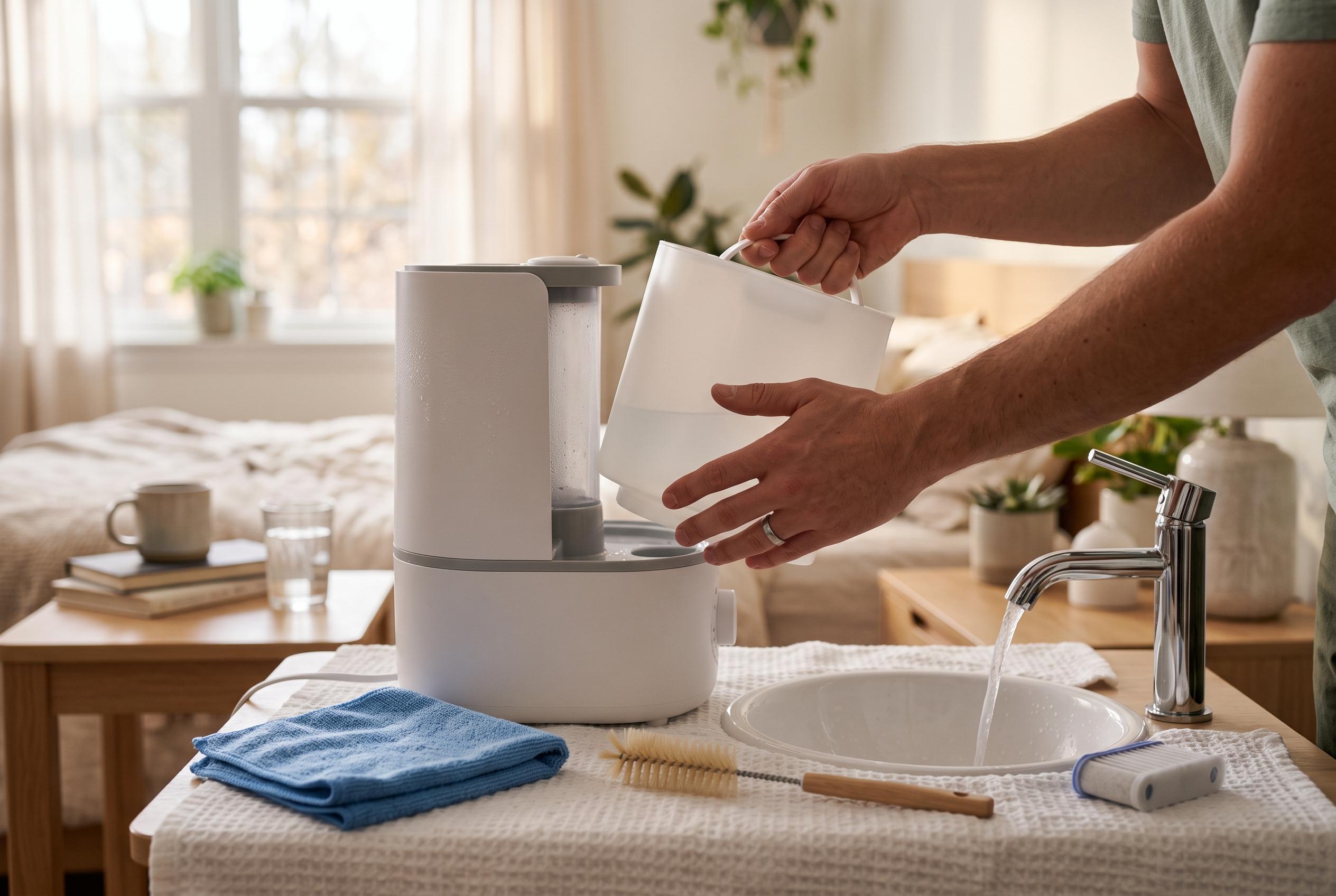

Proper and routine upkeep of humidifiers is essential for optimal performance and hygiene, according to expert guidance and manufacturer recommendations, to prevent bacterial growth, mineral buildup, and equipment failure.
A humidifier can seem simple until output falls, odours develop or mineral scale starts to collect inside the tank. At that point, performance is usually not the only issue. Regular upkeep also matters for hygiene, because stagnant water and residue can encourage bacterial and mould growth if the appliance is left unattended. The most reliable approach is to treat maintenance as a routine process rather than an occasional chore: empty the water, clean the parts that are meant to be washed, check consumable components and replace them when they are worn. The exact steps should always follow the owner’s manual, because cleaning methods vary by model and not every part is designed to be removed or submerged. According to guidance from the US Environmental Protection Agency, portable humidifiers should be emptied daily and cleaned regularly, while whole-home units should be serviced according to the manufacturer’s instructions. Healthline and Dyson both also stress that thorough drying is important after cleaning.
For portable units, daily discipline makes the biggest difference. Fresh water should be added rather than continually topping up stale water, and visible residue should be checked before the tank is refilled. A more thorough clean is generally needed every few days, especially in appliances that run for long periods. Consumer Reports recommends regular deep cleaning to reduce the risk of mould and bacteria, while HVAC.com advises a steady routine for both portable and central systems during the heating season. The same principle applies to whole-home humidifiers, which need routine checks for mineral deposits, clogs and leaks. Bryant’s maintenance guidance for whole-home units adds a further point: the water panel, also known as the evaporator pad, should be replaced annually, often at the start of the heating season, and humidity settings should be adjusted as indoor conditions change.
Cleaning should be targeted, not improvised. The tank, reservoir, distribution tray and other water-contact surfaces should be cleaned in the way the manufacturer specifies, with a full rinse when cleaning products are used. Descaling and disinfecting are not the same task, and they should not be treated as interchangeable. Consumer Reports warns against mixing cleaners, and notes that harsh products such as bleach can damage plastics and seals. Instead, many maintenance guides recommend vinegar-based cleaning for mineral deposits, provided the model allows it. Good Housekeeping similarly advises users to unplug the appliance, disassemble only the approved parts and use a soft brush for scale. Electrical housings, power cords and control panels should never be submerged or scrubbed as if they were removable components.
Consumable parts deserve as much attention as the tank itself. Evaporative humidifiers rely on a wick or filter that gradually traps minerals and loses effectiveness over time. That part should be inspected for crusting, stiffness, odour or reduced output, rather than replaced by guesswork alone. Some discolouration is normal, but heavy buildup is a sign that the material is approaching the end of its useful life. Other models use cartridges, pads or additional filters that also wear out and must be replaced according to the manufacturer’s timetable. Bryant’s whole-home guidance is clear on this point, and several consumer guides agree that replacing filters or water panels on schedule is usually more effective than trying to restore them through cleaning.
Water quality can make a noticeable difference to how often maintenance is needed. Tap water varies in mineral content, and harder water tends to leave scale more quickly on internal surfaces and evaporative media. The EPA says lower-mineral water can reduce deposits in some humidifiers, while several consumer and manufacturer guides recommend distilled water where the appliance allows it. That said, distilled water is not a universal requirement and will not remove the need for cleaning, inspection or replacement of worn parts. If a humidifier repeatedly develops heavy residue, the owner should check the model’s instructions and consider whether water choice is contributing to the problem. Practical signs that the unit needs attention include weaker mist output, persistent smell, visible crust, leaking and dampness around the appliance.
End-of-season storage is the point at which many humidifiers are neglected most badly. The unit should not be put away with standing water inside it or with residue left to harden over the summer. Manufacturer guidance commonly calls for a complete clean, full drainage and thorough drying before storage, and some brands specifically warn against keeping water in the reservoir or tank. Disposable wicks or filters may need to be discarded before the appliance is packed away. A clean, dry storage space helps prevent odours and makes the unit easier to return to service when the heating season begins again. In practice, the simplest maintenance routine is also the most effective: empty the tank, clean the approved parts, inspect the consumables, replace them when needed and keep the appliance dry between uses.
Disclaimer: This content is intended for informational purposes only. Readers are advised to exercise their own judgement, conduct due diligence, or consult a qualified expert before acting on any information provided.