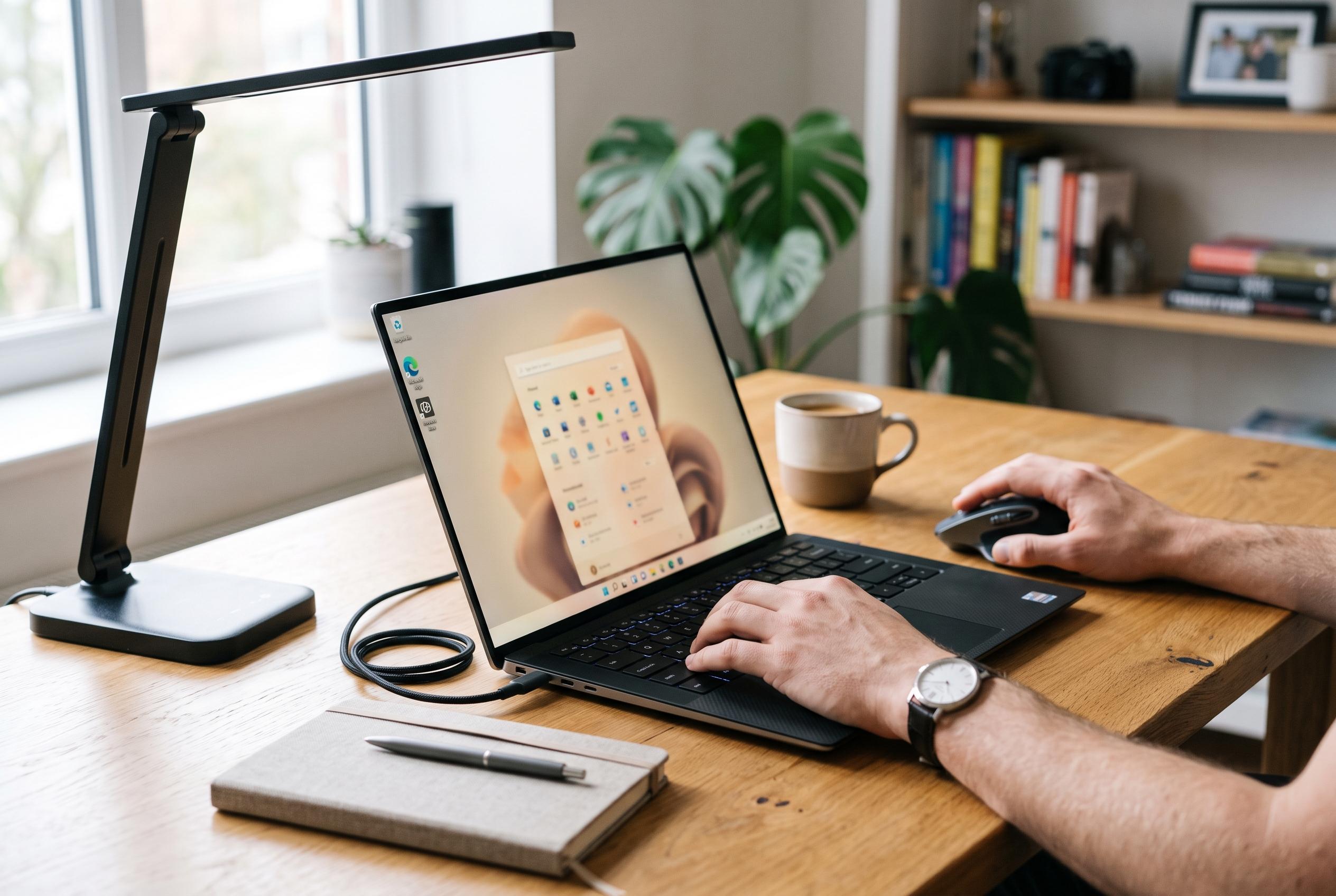

As the market diversifies, the Dell XPS 14 emerges as the top choice for users seeking a portable, high-quality Windows machine that balances display, performance, and versatility, while newer models and platforms redefine professional and creative workflows.
For buyers looking at premium Windows laptops, the crucial question is not which model has the flashiest badge, but which one matches the way the machine will actually be used. The Dell XPS 14 with 32GB RAM remains the most balanced all-round option in the field described here, because it combines a compact chassis, a sharp OLED touchscreen and enough memory to handle heavy multitasking without immediately running into limits. The broader choice set splits neatly into three camps: portable productivity machines, larger business laptops with more practical ports and memory, and graphics-focused systems that trade mobility for more headroom.
The Dell XPS 14 stands out because its display is doing much of the work. In reviews of the 2026 model, RTINGS and Tom’s Guide both pointed to its premium build quality, attractive design and 120Hz OLED touchscreen, while also noting strong CPU and integrated graphics performance. That combination makes it a convincing fit for users who care about visuals, general performance and portability. The main constraint is that this is still an integrated-graphics laptop, so it is not intended for users who need discrete GPU power. In practical terms, that makes it better for design-adjacent work, media consumption and everyday professional use than for serious 3D or render-heavy workloads.
For buyers who want a larger screen and more workload capacity, the Dell 16 Premium is the more specialised choice. Tom’s Guide described it as a premium machine with a customisable performance profile and a striking 4K OLED display, but also noted design compromises that may matter to some users. That makes it easier to recommend when graphics output, local memory and a bigger workspace matter more than compactness. The roundup’s own specifications reinforce that point: 32GB of RAM and an RTX 5050 give it the strongest case for creative work in this group, even though the display is not as sharp or touch-friendly as the XPS 14’s OLED panel.
There is also a meaningful distinction between Intel-based and Snapdragon-based Windows laptops. The Surface Laptop 7 15-inch is positioned as the battery-conscious alternative for mobile users who value a larger screen and ARM efficiency, while the Intel Surface Laptop for Business line is better suited to users who want broader software compatibility and a more familiar Windows setup. That trade-off matters because compatibility is still the main reason to favour Intel in professional environments. Snapdragon may be attractive for day-to-day productivity, but buyers who rely on specialist software, older peripherals or tightly controlled business deployments should be cautious and verify support before buying.
The business-oriented machines in the list are less glamorous, but in some cases more sensible. The Dell Pro 16 stands out for capacity rather than aesthetics, with 64GB of RAM, a 1TB SSD and ports such as HDMI 2.1, RJ-45, USB-A and USB-C that reduce the need for adapters. Its display is functional rather than premium, so it is not the right choice for colour-critical work, but it is a serious option for office users who value wired connectivity and heavy multitasking. The Dell 16 Plus sits slightly lower in the hierarchy: it offers a large screen and good memory capacity, but its display and upgrade-condition caveats mean it looks more like a practical office tool than a polished premium machine.
The Surface Laptop and Surface Pro options fill narrower but useful roles. Microsoft’s 15-inch Surface Laptop for Business is the straightforward clamshell pick for users who want Windows 11 Pro, a 3:2 screen and the reassurance of an Intel platform, while the Surface Pro remains the only clearly tablet-first option in the group. That distinction matters. The Surface Pro is best treated as a flexible 2-in-1, not as a direct replacement for a conventional notebook, because its keyboard is an accessory rather than part of the base package. For people who present, read and annotate more than they type for long sessions, that flexibility can be worth the compromise.
Overall, the right premium Windows laptop is the one that aligns with workload, not just price. Display quality, memory capacity, graphics, operating system edition and processor platform all matter more than marketing language. The Dell XPS 14 remains the safest recommendation for most buyers because it balances portability, screen quality and performance better than the rest. The Dell 16 Premium is the better answer for graphics-heavy tasks, while the Dell Pro 16 is the more practical choice for memory-hungry office work. For everyone else, the deciding factor should be whether the machine’s platform and form factor suit the software you actually use.
Disclaimer: This content is intended for informational purposes only. Readers are advised to exercise their own judgement, conduct due diligence, or consult a qualified expert before acting on any information provided.