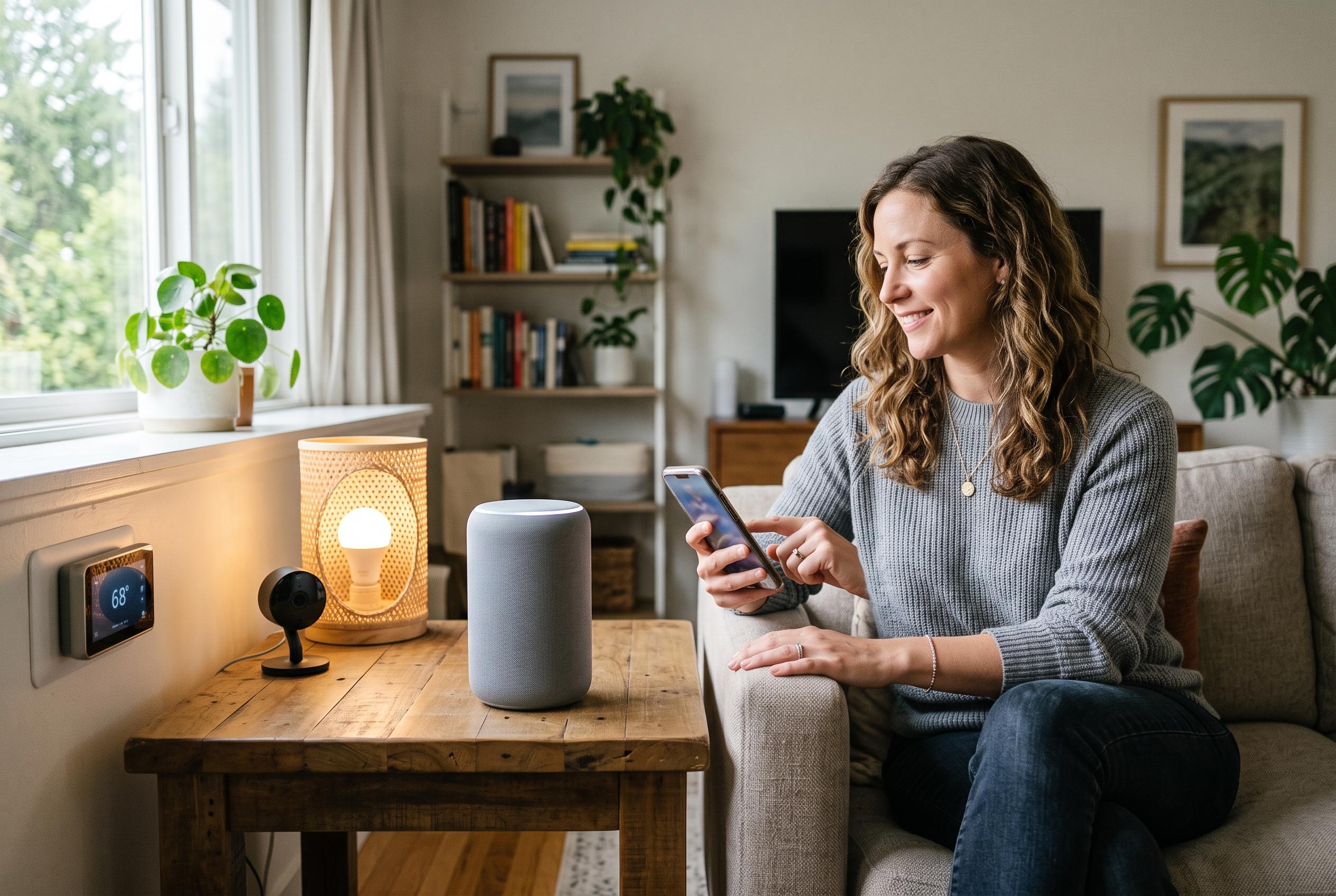

After a year of testing, Amazon’s upgraded assistant is markedly better at controlling connected devices but remains unreliable as a general-purpose personal assistant.
A year of using Alexa Plus suggests that Amazon has solved one problem only to expose several others. In Jennifer Pattison Tuohy’s review for The Verge, the upgraded assistant emerges as a far stronger voice interface for the home than the old Alexa, particularly when it is handling lights, thermostats, timers and multi-step commands. That improvement is echoed in broader coverage from Consumer Reports and Tom’s Guide, which both describe a more conversational system that is better at interpreting natural language and managing connected devices than Amazon’s earlier assistant. Yet the same reviews point to a recurring weakness: once Alexa Plus moves beyond simple home control, its usefulness becomes uneven and its judgement far less dependable.
The most convincing gains are in smart home control. Tuohy reports that Alexa Plus now understands looser, more human requests, so users can speak in everyday language rather than memorising precise device names and routines. Consumer Reports also found that the system makes controlling connected devices feel more practical, while Tom’s Guide said the assistant’s conversational style and interface refinements were among its strongest improvements. Those changes matter because they make Alexa feel less like a set of scripted commands and more like a household control layer that can respond to context, family use and changing routines.
Amazon is also leaning heavily on Alexa Plus as a subscription product, and that commercial shift is central to the experience. TechRadar says the service is tied to Amazon’s broader move towards AI-infused assistance, with access on Echo devices depending on either Prime membership or a paid monthly subscription in the United States. The Verge review shows why that pricing model may prove contentious: the Echo Show line, which is meant to showcase the assistant, now serves as a frequent vehicle for advertising and promotional content. According to Tuohy, Amazon has introduced an optional paid Photo Gallery Unlimited feature to remove homescreen ads, but the fact that users must pay extra to avoid them may push many people towards speaker-only devices instead.
Where Alexa Plus struggles most is in its attempt to behave like a general personal assistant. Tuohy says the system can be impressive one moment and forgetful the next, particularly when it is asked to remember household details, manage time-sensitive requests or complete more complex tasks through partners such as Uber Eats, Thumbtack and OpenTable. That criticism aligns with Tom’s Guide, which noted that third-party service integration remains inconsistent, and with Consumer Reports, which flagged the continuing awkwardness of the Alexa app itself. In practice, Amazon appears to have advanced the assistant’s conversational front end faster than the underlying workflows that would make it truly dependable.
The result is a product that feels genuinely useful in one domain and unfinished in another. On the one hand, Alexa Plus is now a strong choice for people who want voice control over lights, cameras, music, schedules and appliances, especially across a large home with multiple devices. On the other, its memory features, task completion and partner integrations still fall short of what most people would expect from something marketed as a personal assistant. TechRadar’s coverage of Amazon’s launch framed Alexa Plus as a major step in the company’s AI strategy, and that is still true; however, the year-long review shows that ambition alone does not solve the problem of reliability.
Tuohy’s verdict is ultimately that Amazon should resist the temptation to turn Alexa Plus into a catch-all AI bot and instead refine it into a smarter operating layer for the home. That view is reinforced by the wider reporting: Amazon’s newer Echo hardware and Omnisense sensing are meant to deepen the assistant’s understanding of household patterns, while the company’s developer tools are intended to give device makers more room to expose richer controls. Even so, the core test remains the same. A useful home assistant must be accurate, consistent and unobtrusive. Alexa Plus is closer to that ideal than the old Alexa ever was, but the review suggests it is still not yet the assistant many households actually need.
Disclaimer: This content is intended for informational purposes only. Readers are advised to exercise their own judgement, conduct due diligence, or consult a qualified expert before acting on any information provided.