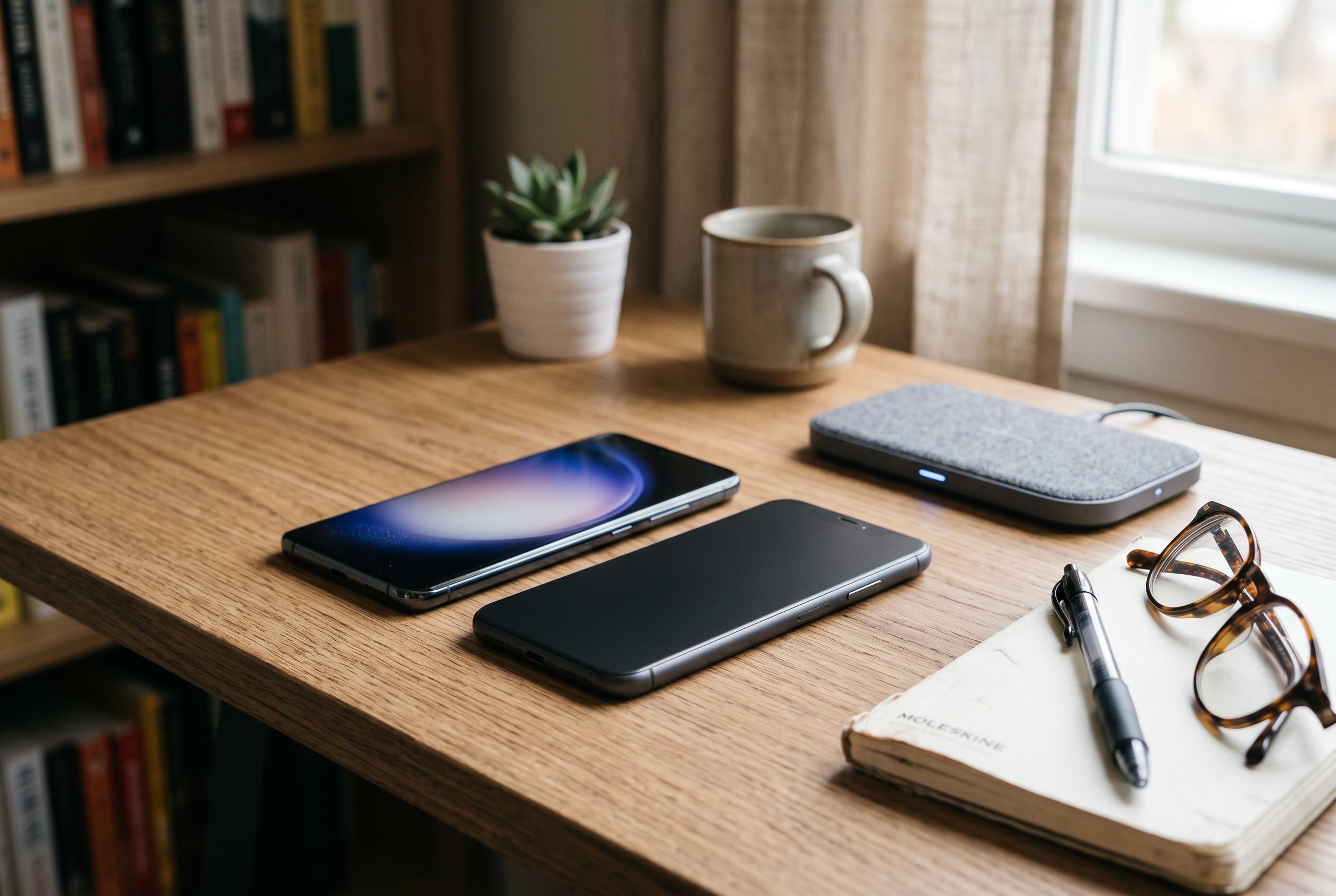

The Find X10 brings an 8,000mAh battery, 144Hz display and higher-resolution cameras, but the sharply discounted Find X9 remains the better choice for buyers prioritising value and a lighter design.
OPPO’s latest standard-model flagship is making the case that buyers do not always need to move straight to a Pro version. The Find X10 arrives with a much larger battery, higher-end camera hardware and a more advanced screen, yet the previous Find X9 has fallen to a far lower price, creating a difficult choice for buyers weighing value against novelty. The gap is now wide enough that the decision is less about specifications alone and more about whether the extra features justify the premium. According to the comparison published by SMZDM and specification listings from NanoReview and PhoneArena, the two phones sit close in size but diverge sharply in a few key areas.
On design, the Find X9 remains the easier phone to live with. It is thinner and lighter, at 7.99mm and 203g, while the Find X10 measures 8.35mm and 216g. Both use a 6.59-inch AMOLED panel, so the footprint is familiar, but the newer model is noticeably bulkier in the hand. That extra mass is the price of a bigger battery and more ambitious camera hardware. In practical terms, the X9 is the more comfortable option for users who value one-handed use and a lighter flagship feel, while the X10 is clearly built around specification growth rather than compactness.
The display upgrade on the Find X10 is more meaningful than the size figures suggest. The panel resolution is broadly unchanged, but the newer phone moves to a 144Hz refresh rate in supported scenarios, up from 120Hz on the Find X9, and raises peak brightness to 2,000 nits from 1,800 nits. The bigger story, however, is eye comfort. SMZDM says the X10 adds a new low-brightness mode and 3,840Hz PWM dimming, along with additional low-blue-light and high-red-light measures. NanoReview also notes the jump to 144Hz, while the overall display experience is otherwise very similar. For most buyers, the upgrade here is about comfort and outdoor readability rather than a radical visual leap.
Performance is less dramatic. The Find X9 uses MediaTek’s Dimensity 9500, while the Find X10 moves to the Dimensity 9600M. The change appears to be an iteration rather than a generational break, with reports indicating modest frequency and efficiency tuning rather than a wholesale redesign. In daily use, that means both phones should feel fast, with little to separate them for messaging, browsing or general app work. For buyers expecting a clear step forward in speed, the X10 does not appear to offer enough to make the processor alone a deciding factor.
The camera system is where the Find X10 makes its strongest claim, and also where the value argument becomes more complicated. The newer model swaps the Find X9’s triple 50-megapixel arrangement for a dual 200-megapixel setup on the main and telephoto cameras, alongside a 50-megapixel ultrawide. SMZDM says the main and zoom sensors are larger on the X10, the front camera climbs from 32 megapixels to 50 megapixels with autofocus, and video support extends to 8K recording, Dolby Vision and Log capture. That sounds like a major upgrade, and in bright light or for cropping and reframing, the extra resolution should offer clear advantages. But high pixel counts do not automatically mean better images in all conditions. In more difficult lighting, the X9’s simpler 50-megapixel setup may still be easier to process and more predictable for many users.
Battery life may be the X10’s most tangible everyday gain. The Find X9 already has a large 7,025mAh battery, which is unusually generous for a mainstream flagship. The Find X10 increases that to 8,000mAh while keeping 80W wired charging and 50W wireless charging. That difference is large enough to matter over a full day of heavy use and may prove more valuable than the camera upgrade for some buyers. Both phones also carry strong ingress protection ratings, with NanoReview listing IP69 resistance, and the X10 adds USB 3.2 Gen 1 and Bluetooth 6.2, which round out a more complete hardware package.
Taken together, the Find X10 is the more ambitious phone, but it is not the cleaner buy for everyone. The Find X9, now available at a much lower price, still offers a slim body, strong battery life, a capable triple-camera system and flagship-class smoothness. Notebookcheck’s review of the X9 also describes it as a compact flagship with a very large battery and a premium feature set, even while noting that price remains an issue in some markets. The Find X10 is better equipped on paper, yet its biggest gains are concentrated in areas that will matter unevenly from one user to the next. For shoppers focused on value, the older model remains the sharper proposition; for those who want the newest screen, bigger battery and the most advanced imaging hardware, the X10 is the more complete flagship.
Disclaimer: This content is intended for informational purposes only. Readers are advised to exercise their own judgement, conduct due diligence, or consult a qualified expert before acting on any information provided.