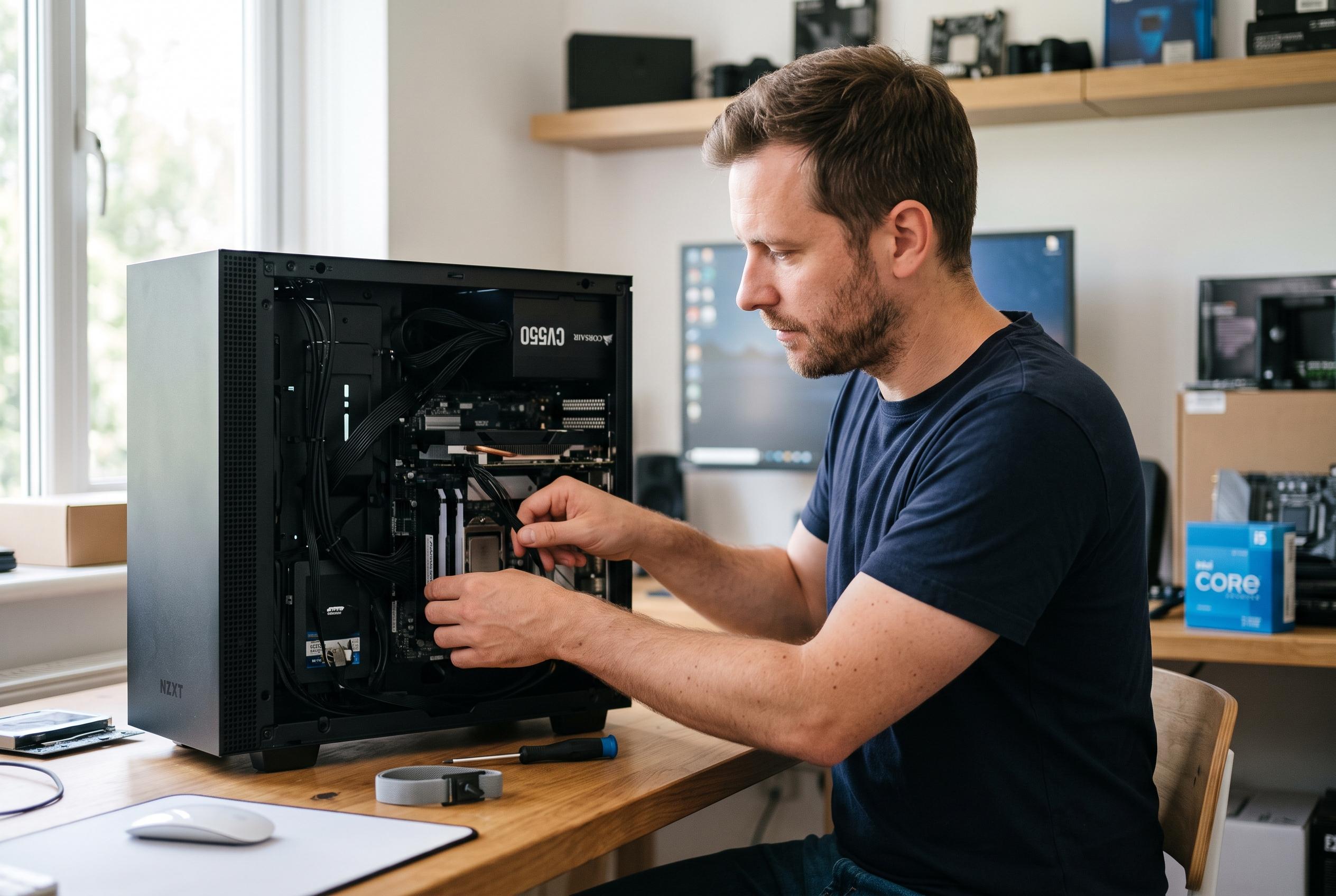

AMD remains the favourite for gaming PCs, but Intel’s Core i5-14400F combines strong performance with DDR4 support and a broader upgrade path, making it a persuasive choice for cost-conscious builders.
Intel has slipped into the background for many PC builders, particularly those focused on gaming, where AMD’s 3D V-Cache chips have dominated recent attention. Yet the buying patterns on Amazon after Prime Day still show that Intel has not vanished from the market. The best-selling lists were heavily weighted towards AMD, but Intel still held a place, led by older high-end parts and a recent Core Ultra model. That picture suggests preference has shifted, rather than disappeared, and it leaves room for a more nuanced argument about value in a budget build. According to How-To Geek, that is exactly where Intel still deserves consideration.
The clearest example is the Core i5-14400F. On paper, it is not the sort of chip that generates much excitement, but that is precisely why it is easy to overlook. PassMark’s comparison with AMD’s Ryzen 5 5500 shows the Intel chip ahead in both single-thread and multi-thread results, with 10 cores and 16 threads against the Ryzen’s 6 cores and 12 threads. Both are rated at 65W, but the Intel part offers a noticeably stronger benchmark profile, which matters once a machine is expected to do more than launch games and browse the web. HowManyFPS, which compared the two across more than 100 games, found the i5-14400F marginally faster overall, even if the AMD alternative remains cheaper.
The wider appeal of the 14400F is not just performance, however. Intel’s LGA1700 platform gives budget builders more flexibility than many might expect. It supports both DDR4 and DDR5, which is significant at a time when memory prices remain volatile and DDR5 has yet to become the automatic low-cost choice. That allows a builder to pair the chip with DDR4 and reduce the total system cost without abandoning a modern enough platform. PCBench also notes the same memory support split, underlining why the 14400F can fit into leaner builds without forcing an expensive move to newer RAM.
That platform also offers a more substantial stepping-stone within the same socket. A buyer can start with a modest Core i5 and later move up to chips such as the Core i7-14700K or Core i9-14900K, giving the system a much broader range of potential performance than AMD’s ageing AM4 platform. On the AMD side, the strongest AM4 upgrade for gamers is still generally regarded as the Ryzen 7 5800X3D, while productivity users are left looking at parts such as the 5900X. Tom’s Hardware has also reported that AMD continues to serve budget builders with newer low-cost chips, including the Ryzen 5 5500F and Ryzen 5 7500, which reflects how persistent value competition has become across both camps.
For builders weighing cost, longevity and practical performance, the conclusion is less about crowning a winner than about refusing to default to one brand. AMD remains the obvious choice for many gaming-first systems, particularly where frame rates matter above all else. But Intel’s Core i5-14400F shows why a cheaper, DDR4-friendly build can still make sense, especially when the money saved on the processor and memory can be redirected towards the graphics card. In that context, Intel is not the obvious enthusiast pick, but it is still a credible one for buyers who want a balanced machine rather than a fashionable one.
Disclaimer: This content is intended for informational purposes only. Readers are advised to exercise their own judgement, conduct due diligence, or consult a qualified expert before acting on any information provided.