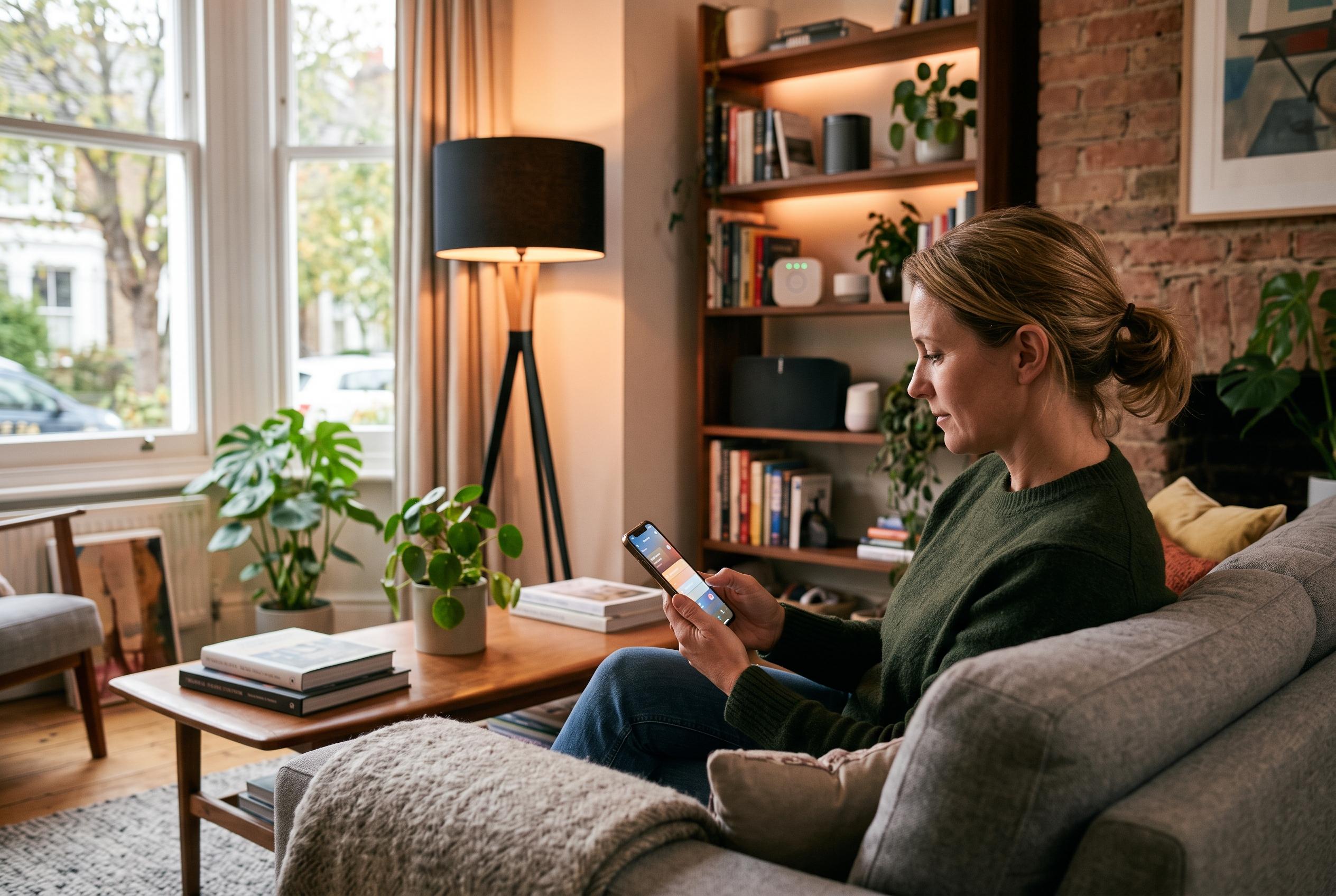

Google’s latest Home app update lets existing Philips Hue bridge users control their lights locally, promising faster responses and continued operation during internet outages without requiring a new setup.
Google Home’s latest app update appears to push Philips Hue further towards a more resilient smart-lighting experience, with Google now enabling local Matter control for existing Hue bridges through Home hubs. According to Google’s own support materials, the change is designed to improve response times and reliability, and it does not require users to pair their devices again. In practical terms, that means Hue lights should respond more quickly inside the Google Home environment, while remaining controllable even if the internet connection drops, provided the devices stay on the same home network.
The update is notable because Philips Hue has long been associated with cloud-linked lighting ecosystems, even as it has gradually adopted newer standards such as Matter. By shifting more of the control path onto the local network, Google is reducing dependence on external servers for routine commands such as switching lights on and off, dimming them, or changing colour. For households that already use a Hue Bridge with Google Home, the change should happen in the background, which lowers friction for users who may be reluctant to rebuild a working setup.
Google says the same release improves local Matter control more broadly, with faster response times and stronger reliability across supported devices. It has also redesigned the core controls used for third-party lights, plugs and switches, a visual change that should affect Hue devices as well. That suggests the update is not only technical but also intended to make mixed-device smart homes feel more consistent inside the Home app.
The move fits neatly with Google’s own guidance on smart-light setup, which emphasises that compatible devices need to be on the same Wi-Fi network and properly linked to Google Home before voice or app control will work reliably. Philips Hue’s setup instructions follow a similar pattern, requiring a Hue Bridge, the Google Home app and account permission before the system can be controlled through Google Assistant or the Home app. The new local Matter route keeps that general model intact, but gives it a more direct and potentially more robust control layer.
Disclaimer: This content is intended for informational purposes only. Readers are advised to exercise their own judgement, conduct due diligence, or consult a qualified expert before acting on any information provided.