
The Hisense U7 offers the highest stated refresh rate in this group, while LG’s C5, TCL’s QM7L and Roku’s Pro OLED target different gaming priorities from low latency to bright-room visibility.
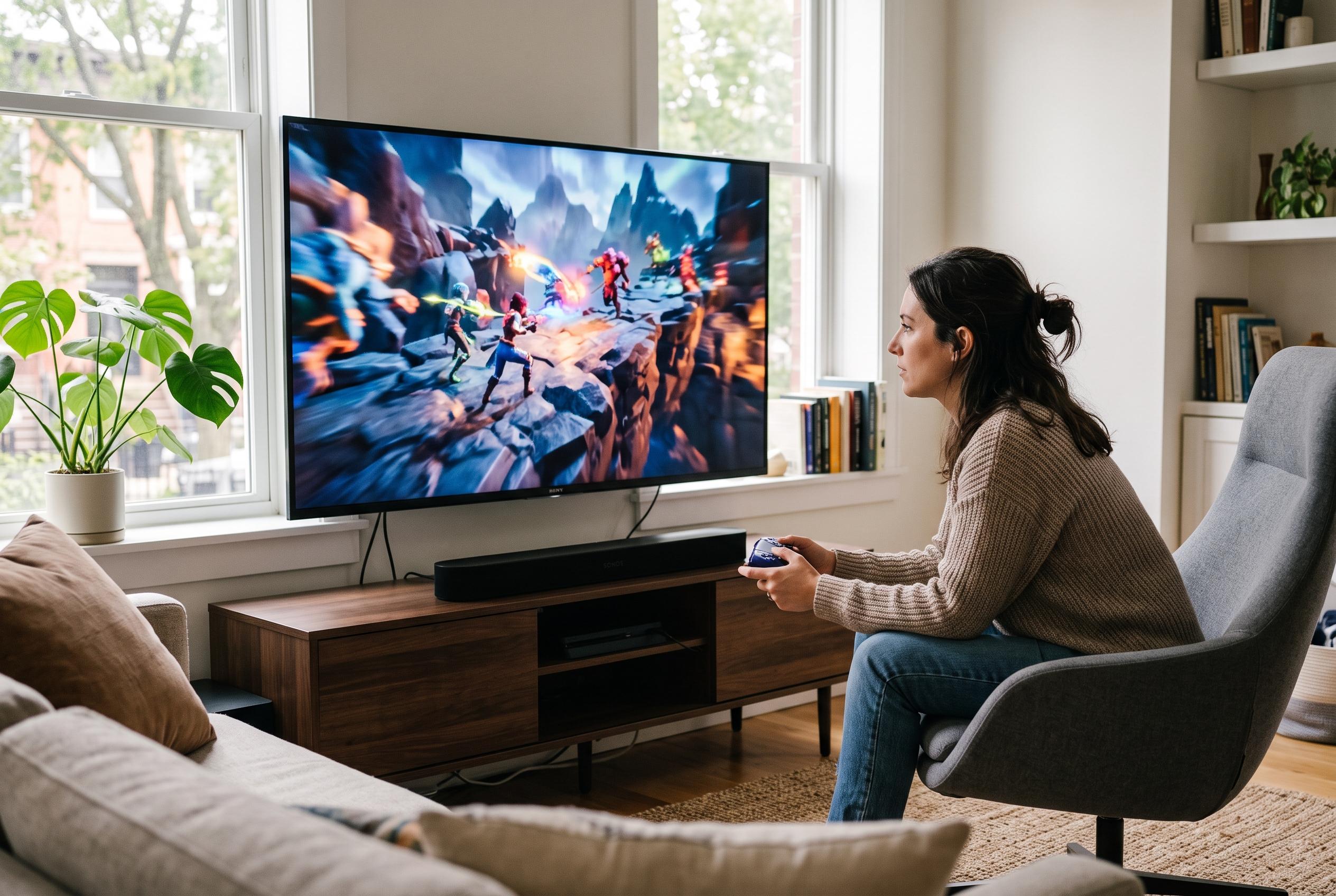
A 65-inch gaming television has to serve more than film playback. For console and PC use, the key checks are a panel that can run at 120Hz or above, support for variable refresh rate, and, where possible, HDMI 2.1 and auto low latency mode. Tom’s Guide’s review of the Hisense U7SG and LG’s C5 coverage both reinforce why those specifications matter: the former combines a high refresh panel with full-bandwidth inputs and strong HDR output, while the latter is built around very low input lag and a gaming overlay that keeps controls close at hand.
Among the sets considered here, the Hisense U7 stands out on paper for speed. Hisense lists a native 165Hz refresh rate and a VRR band in the model title, while Tom’s Guide found the 65-inch U7SG variant to include four HDMI 2.1 ports and very low gaming latency. That makes it the clearest fit for players who want the highest stated refresh in this group, particularly in bright rooms where the anti-reflection treatment and high peak brightness should help preserve contrast and detail.
The LG C5 takes a different route, favouring completeness over sheer refresh headline. LG states up to 144Hz, four HDMI 2.1 inputs, VRR, NVIDIA G-Sync and AMD FreeSync Premium, while Tom’s Guide measured input lag of just 9.1ms in gaming mode. That combination is important for both consoles and gaming PCs, especially if the same display also serves as a desktop screen. What Hi-Fi’s reporting on LG’s newer OLED line underlines the company’s continued emphasis on high refresh gaming support alongside strong picture quality, though OLED owners still need to accept the usual care considerations over time.
The TCL QM7L is the more practical choice for a bright living room with a Radeon-based PC. TCL lists 144Hz, Game Accelerator 288 VRR, AMD FreeSync Premium Pro and an anti-reflective HVA 2.0 Pro panel. The emphasis here is less on absolute speed than on visibility and flexibility. By contrast, the Roku Pro OLED is the straightforward option for players who want OLED plus automatic low latency mode, with Roku naming 120Hz, FreeSync Premium, VRR and ALLM. That ALLM support means the TV should switch to its low-latency preset automatically when a console wakes, reducing manual setup.
At the lower end of the price range, the Samsung M70H is the least ambitious but still usable gaming option. Samsung lists Motion Xcelerator plus DLG 120Hz and a Mini LED backlight, alongside Gaming Hub for console and cloud services. It does not claim VRR, ALLM or HDMI 2.1 in the material reviewed here, so it is best seen as the budget pick for buyers who simply want a 120Hz 65-inch screen rather than a fully specified gaming monitor replacement.
Disclaimer: This content is intended for informational purposes only. Readers are advised to exercise their own judgement, conduct due diligence, or consult a qualified expert before acting on any information provided.