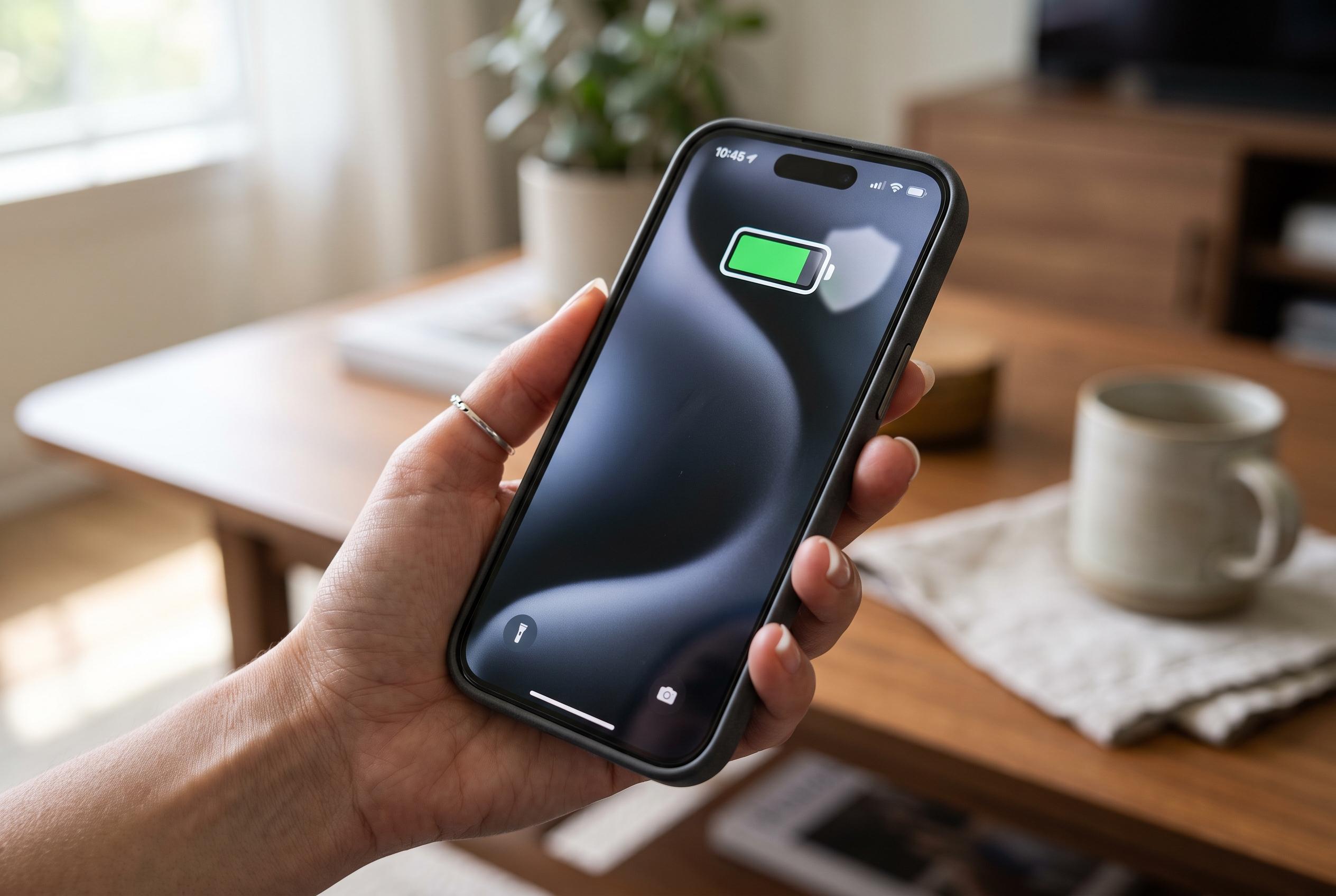

The shield beside the battery symbol shows that Samsung’s Battery Protection feature is limiting charging to reduce long-term wear on the phone’s lithium-ion cell.
A small shield icon beside the battery indicator on some Samsung Galaxy phones is not a warning of an attack or a fault. It is a sign that Battery Protection is enabled, meaning the phone is managing charging more cautiously to reduce long-term wear on the battery. Reports from Samsung-focused technology guides say the feature is designed to keep the battery away from prolonged periods at full charge, which can gradually affect lithium-ion cells over time.
Samsung’s controls for the feature sit in the Battery section of Settings, where users can choose between different charging limits. Basic mode stops charging at 100% and resumes only when the level falls to 95%, making it the least intrusive option. Maximum mode applies a stricter ceiling, usually between 80% and 95%, which offers more protection but less daily runtime. Sleep Time Protection is intended for overnight use, learning sleep patterns and pausing charging around 80% before finishing shortly before wake-up.
That distinction matters because battery health is influenced less by a single full charge than by repeated exposure to high charge levels over many hours. The shield icon therefore indicates a preventative measure rather than a problem. It is most useful for people who regularly leave their phone on charge overnight, on a desk or on a wireless pad, where the handset may sit connected for long stretches without being used.
For travellers, heavy users and anyone who needs maximum endurance on a long day, charging to 100% remains the more practical choice. The setting can be changed when needed, so users are not locked into one charging behaviour. The wider point is simple: the shield is not a security alert, but a reminder that the phone is trying to preserve battery longevity in the background.
Disclaimer: This content is intended for informational purposes only. Readers are advised to exercise their own judgement, conduct due diligence, or consult a qualified expert before acting on any information provided.